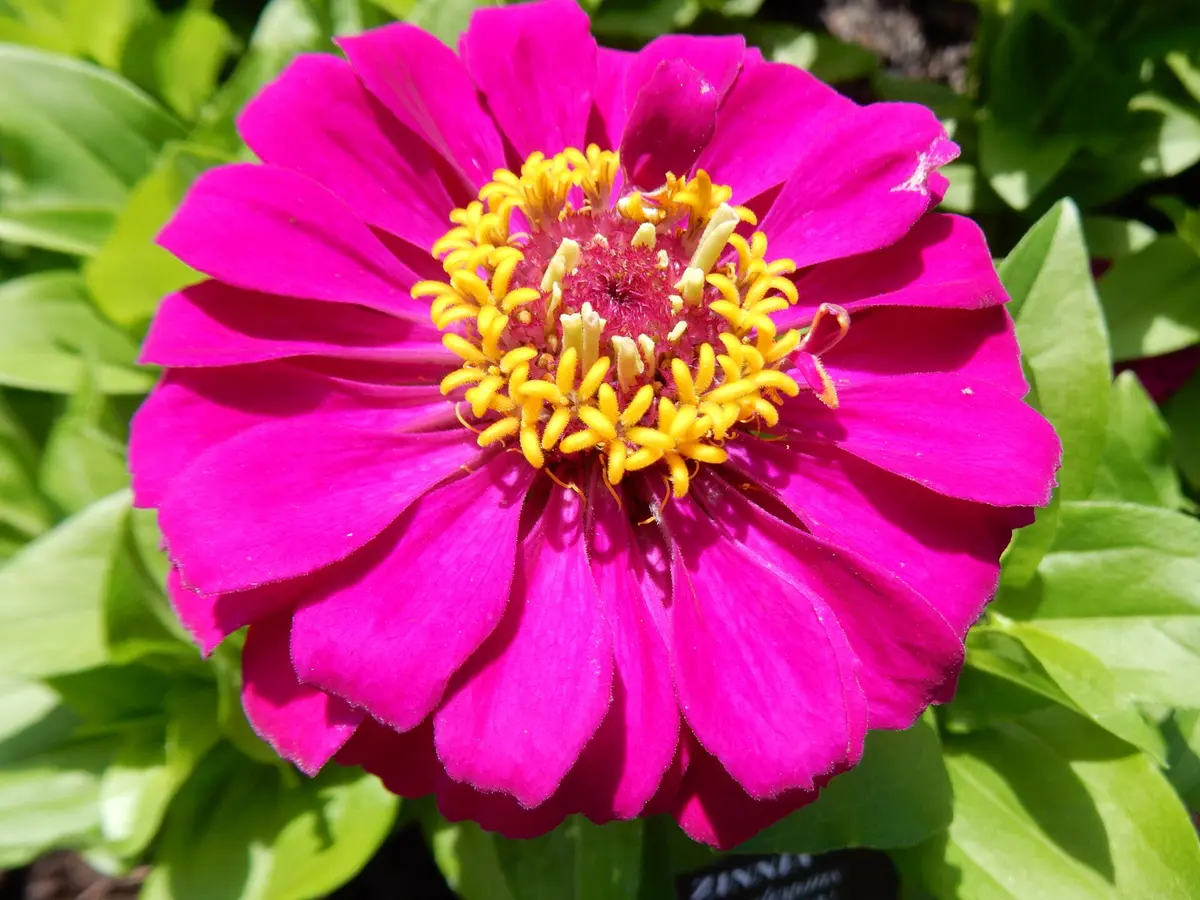
Zinnia 'Benary's Giant Lilac'
Zinnia elegans 'Benary's Giant Lilac'
A towering cottage-garden annual with large, fully double lilac blooms on long stems all summer — a butterfly magnet and one of the finest fresh-cut flowers in the garden.
Keep reading Show less
Zinnia elegans ‘Benary’s Giant Lilac’ is a tall, vigorous cultivar of the common zinnia, an annual in the aster family (Asteraceae) with origins in Mexico. The Benary’s Giant series was bred specifically for the cut-flower trade and produces blooms up to 4–5 inches across on straight, sturdy stems that hold up beautifully in vases.
A summer-to-frost spectacle
Plants grow 3–4 feet tall with an upright habit, and once they begin flowering in early summer they do not stop until frost kills them. The fully double blooms in soft lilac-purple are produced in profusion above rough, opposite leaves. Butterflies, bees, and hummingbirds visit constantly. Deadheading spent flowers is the most important task — it diverts energy to new buds and keeps the display going for months.
Care tips
Zinnias are among the easiest annuals to grow. Direct-sow seeds in a sunny spot after the last frost date; they germinate quickly in warm soil and resent root disturbance, so transplanting is less successful than direct seeding. Water at the base rather than overhead — good air circulation and dry foliage dramatically reduce powdery mildew, which is the only common problem. In humid climates, spacing plants widely and choosing disease-resistant cultivars helps. Cut stems freely all summer; the more you cut, the more the plant flowers.
Fun Fact
Zinnias were first formally described for science by Johann Gottfried Zinn (1727–1759), and the genus was named in his honour — making him one of the few scientists commemorated in a plant they personally studied. Spanish explorers who first encountered wild Mexican zinnias reportedly called them 'mal de ojos' (eyesores) because the untamed plants were scraggly and dull — it took European breeders nearly two centuries to produce the big, vibrant blooms we know today.
Habitat & form
Where it's from and what to expect.
- Native range
- Mexico
- Plant type
- Annual
- Mature size
- 3–4 ft. tall, 8–12 in. wide; upright, erect habit.
- Bloom
- Large fully double 4–5 inch lilac-purple blooms continuously from early summer until frost. Deadheading spent flowers keeps production strong.
- Hardiness
- Annual (USDA zones 2–11). Direct-sow outdoors after the last frost date.
Care
How to keep it happy.
- Sunlight
- Full sun (6+ hours); essential for best flowering and disease resistance.
- Water
- Low to moderate; drought tolerant once established. Water at the base to keep foliage dry and reduce powdery mildew risk.
- Soil
- Loamy or organically rich, well-drained soil. Adaptable to a wide pH range.
- Planting distance
- 9–12 in apart.
- Propagation
- Readily grown from seed
- Pruning
- No pruning needed. Pinch seedlings at 8–12 inches for bushier plants. Deadhead spent blooms regularly to extend the blooming season.
- Pet safety
- Non-toxic