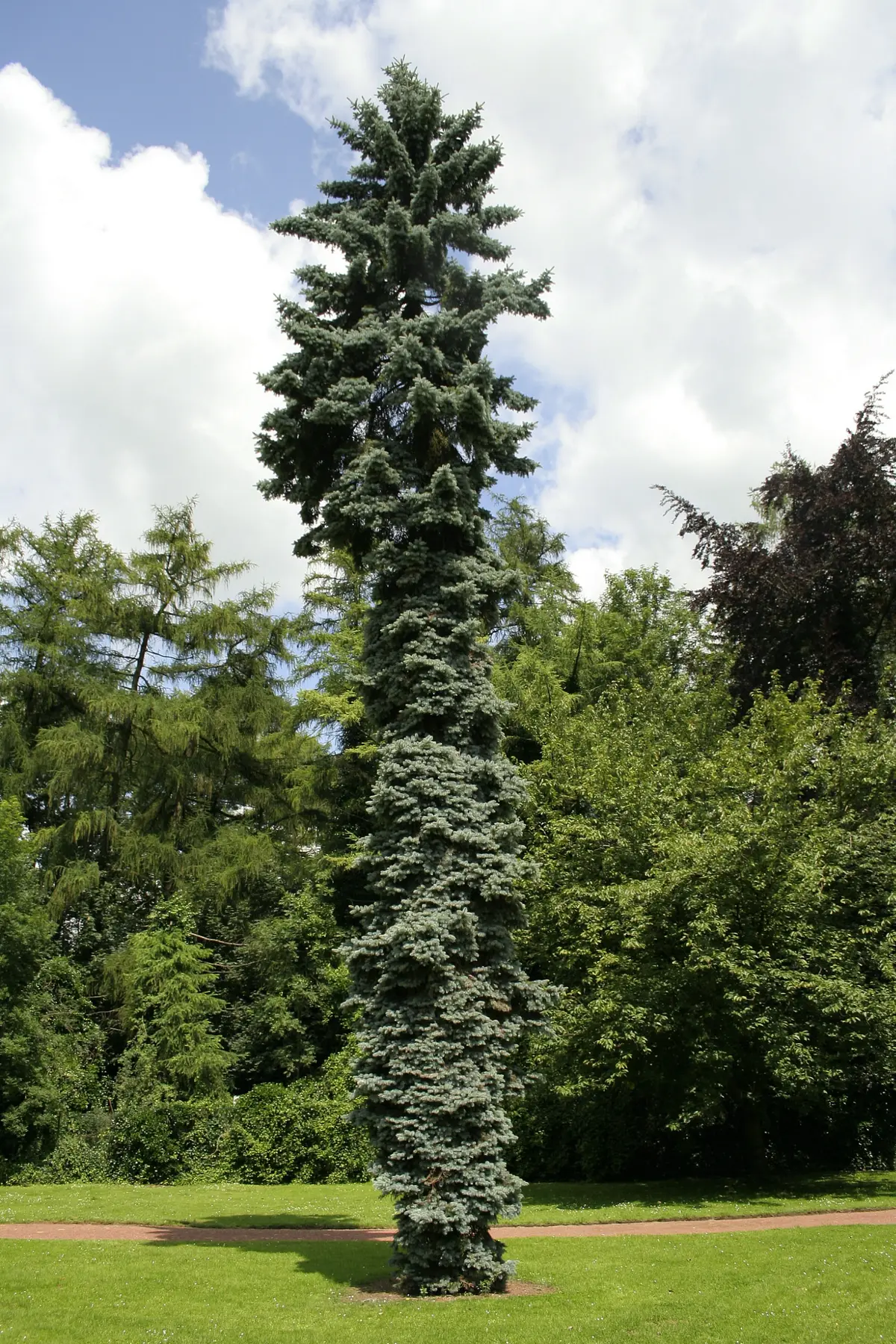
Weeping Blue Spruce
Picea pungens 'Pendula'
- Evergreen
- Cold hardy
- Drought tolerant
- Specimen tree
- Architectural
A dramatic, sculptural conifer with silvery-blue needles and branches that cascade downward, taking whatever shape it is trained to — narrow and upright or low and sprawling.
Keep reading Show less
Picea pungens ‘Pendula’ — the weeping blue spruce — is a striking, sculptural form of the Colorado blue spruce whose branches cascade and drape downward. No two specimens look quite alike: trained up a stake it becomes a tall, narrow column of silvery-blue weeping branches, while left to its own devices it can sprawl into a low, ground-hugging mound.
A living sculpture
The icy blue needles carry the same waxy bloom as the species, and the pendulous branches give every plant a one-of-a-kind silhouette. Because its eventual size and shape depend almost entirely on how the central leader is staked and trained, it is a favorite for gardeners who want a dramatic focal point with personality.
Care tips
Plant it in full sun in well-drained soil and decide early how you want it to grow: stake the leader upright for a narrow weeping spire, or let it ramble for a sprawling form. It is exceptionally cold-hardy and drought-tolerant once established, but will not tolerate soggy roots. Prune only to guide its form and to remove any damaged branches.
Fun Fact
No two weeping blue spruces ever look the same. Without staking to guide the central leader, each tree sprawls along the ground or folds over itself in a completely individual form. Every mature 'Pendula' is essentially a one-of-a-kind living sculpture.
Habitat & form
Where it's from and what to expect.
- Native range
- Garden cultivar of the species native to the Rocky Mountains, western North America
- Plant type
- Conifer
- Mature size
- Highly variable depending on staking — commonly 6–15 ft tall and 4–6 ft wide as a narrow weeping column.
- Bloom
- None — grown for its evergreen silvery-blue needles and weeping form rather than flowers.
- Hardiness
- Very cold-hardy — USDA zones 2–8.
Care
How to keep it happy.
- Sunlight
- Full sun for the best blue color and healthiest growth.
- Water
- Water regularly while establishing; mature trees are drought-tolerant but dislike waterlogged soil.
- Soil
- Well-drained soil of most types; tolerates a range of pH but resents standing water.
- Pruning
- Maintenance: low. Stake a leader to set the height, then prune only to guide form and remove damaged growth in spring.