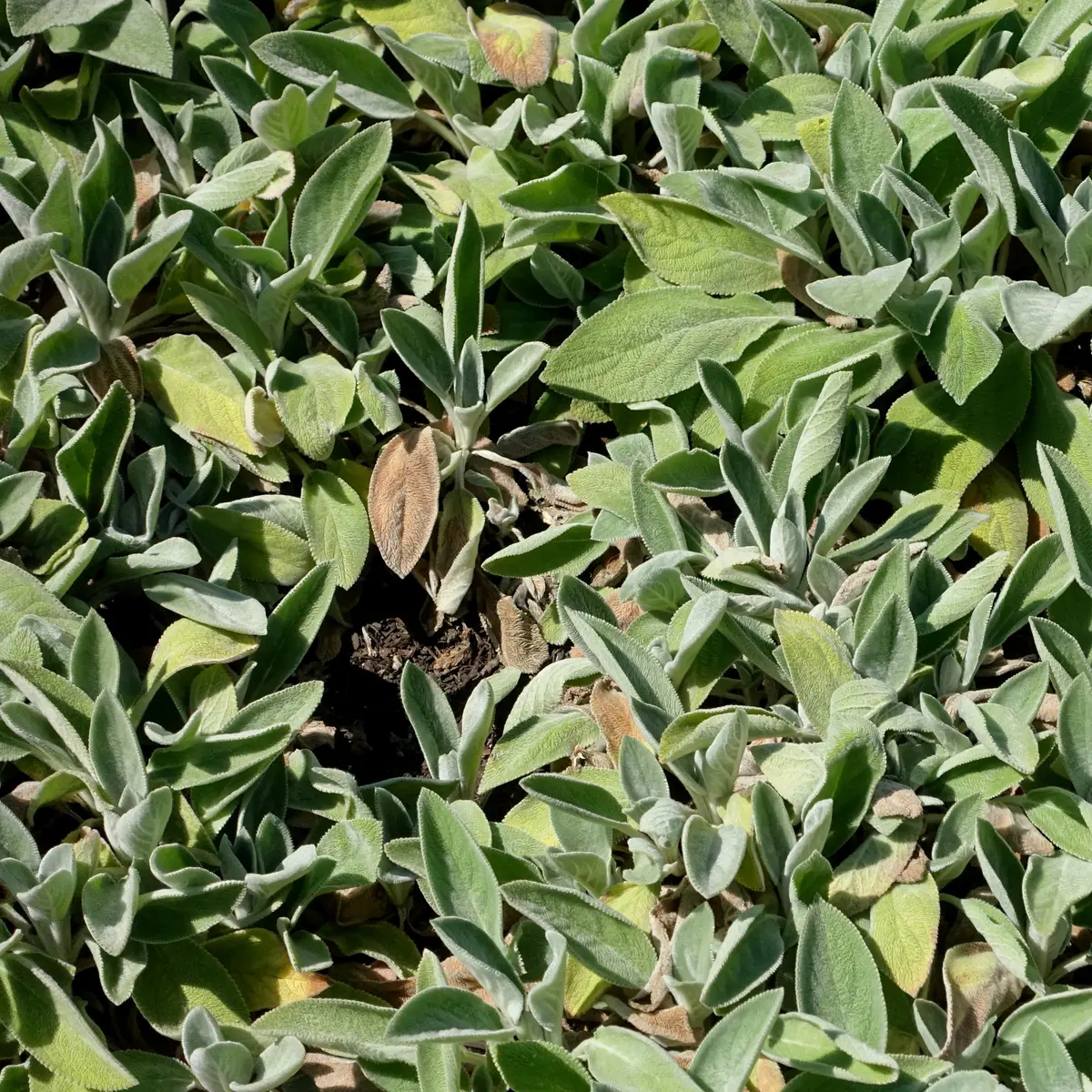
Lamb's Ears 'Helen von Stein'
Stachys byzantina 'Helen von Stein'
A low-growing lamb's-ears cultivar valued for its oversized, velvety silver leaves; it rarely flowers and spreads into a soft foliage mat.
Keep reading Show less
Lamb’s ears ‘Helen von Stein’ is grown primarily for its broad, woolly silver foliage. The leaves overlap to form a soft-looking mat that brightens sunny borders and edges, and the cultivar usually produces few or no flower stalks.
Silver foliage for sunny edges
This selection spreads by creeping stems and can make an effective low ground cover in well-drained soil. Its fuzzy leaves are especially conspicuous in a sunny planting, where they contrast with green foliage and dark soil.
Care tips
Give lamb’s ears full sun and soil that drains freely. Once established, it tolerates dry spells; consistently wet soil can cause the foliage and crowns to rot. Remove damaged leaves as needed and divide the clump if it spreads beyond its allotted space.
Sources: Missouri Botanical Garden, Gardenia, Gardeners’ World: Silver Carpet cultivar.
Fun Fact
This cultivar is also sold as 'Big Ears' for its unusually broad, soft leaves, and it flowers much less often than many lamb's-ears plants.
Habitat & form
Where it's from and what to expect.
- Native range
- Turkey, Armenia, and Iran
- Plant type
- Perennial
- Mature size
- About 1 ft tall and 1–1.5 ft wide.
- Bloom
- Rarely flowers; grown mainly for its large silver leaves.
- Hardiness
- USDA zones 4–8.
Care
How to keep it happy.
- Sunlight
- Full sun; light afternoon shade is helpful in hot climates.
- Water
- Dry to medium moisture; drought tolerant once established. Avoid overwatering.
- Soil
- Well-drained soil; avoid heavy, persistently wet ground.
- Planting distance
- 12–18 in. apart for ground cover.
- Propagation
- Divide clumps in spring.
- Pruning
- Remove damaged leaves and any flower stalks that appear; little routine pruning is needed.
- Pet safety
- Unknown
Prevent chewing.