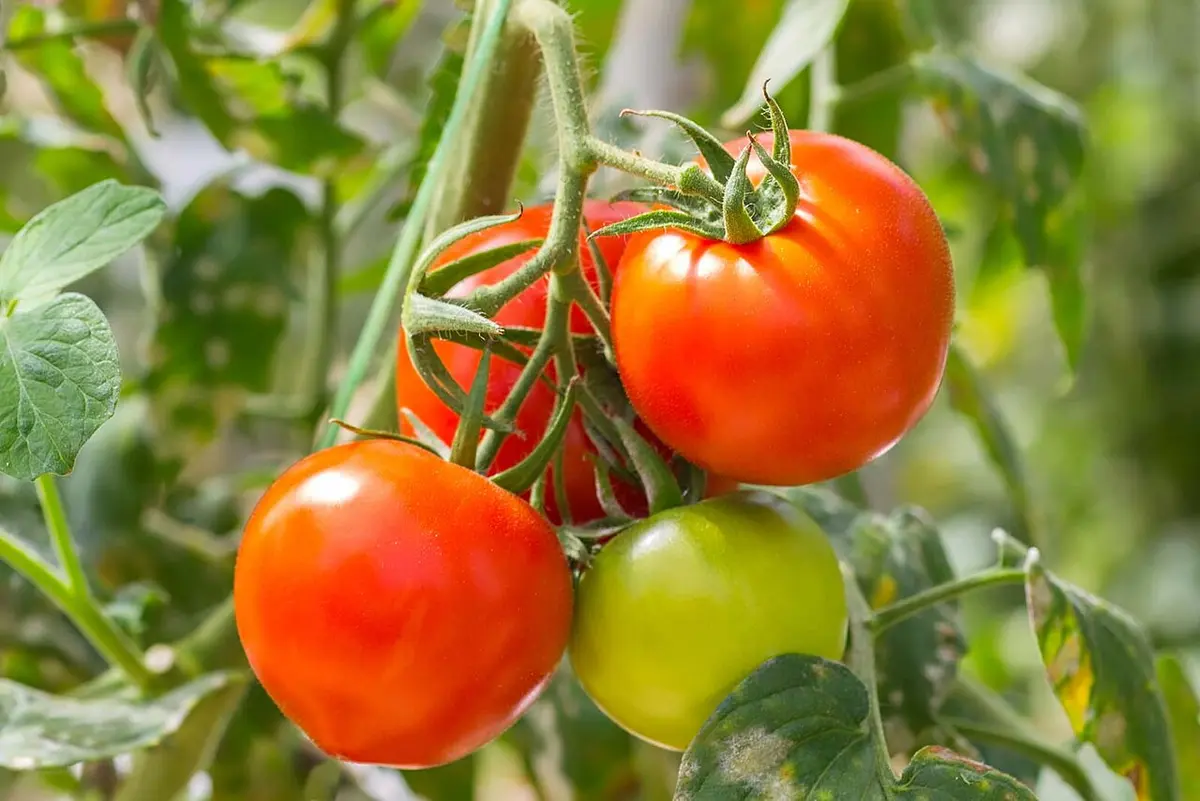
Tomato 'Carbon'
Solanum lycopersicum 'Carbon'
A richly flavored black heirloom beefsteak with meaty texture and dark, olive-shouldered fruit that resists cracking.
Keep reading Show less
‘Carbon’ is a celebrated black heirloom beefsteak, producing big, blocky-round fruit that ripens from dark olive shoulders to a deep brick red. It is grown above all for flavor — rich, complex, and full, with the dense, meaty texture prized in dark tomatoes.
A better-behaved black
Large black tomatoes are notorious for cracking and cat-facing, but ‘Carbon’ resists both better than most, while keeping a well-balanced, productive plant. It is grown to USDA Organic standards.
Care tips
Grow in full sun with strong staking or caging for the indeterminate vines. Harvest when the fruit has fully colored and gives slightly to a gentle squeeze.
Tomato care covers seed starting and cultivation.
Fun Fact
'Carbon' is called a black tomato, though ripe fruit is dark reddish-purple with olive-colored shoulders.
Habitat & form
Where it's from and what to expect.
- Native range
- Western South America (the species); this heirloom was developed in the United States
- Plant type
- Annual · Vegetable
- Mature size
- Indeterminate, with a well-balanced habit.
- Bloom
- Yellow flowers during the growing season.
- Harvest
- Blocky-round 10–14 oz. fruit, dark olive shoulders fading to dark brick red; about 76 days to harvest.
- Hardiness
- Warm-season annual; frost-tender — transplant out only once nights stay reliably warm.
Care
How to keep it happy.
- Sunlight
- Full sun — at least 6–8 hours of direct sun a day.
- Water
- Deep, consistent moisture at the roots. Uneven watering invites cracking and blossom-end rot; water the soil, not the foliage.
- Soil
- Rich, fertile, well-drained soil high in organic matter; slightly acidic pH (about 6.2–6.8).
- Fertilizer
-
Use complete granular vegetable fertilizer only when soil is nutrient-deficient.
Before planting into warm soil
Use nitrogen fertilizer only when additional nitrogen is needed.
When the first fruits enlarge
- Planting distance
- 24–36 in apart in rows 4–5 ft apart, staked or caged.
- Propagation
- Start seed indoors 5-6 weeks before planting out; transplant after frost danger has passed.
- Pruning
- Maintenance: pinch out the suckers in the leaf joints and remove lower leaves for airflow as the indeterminate vines climb their stakes; top the plant late in the season to ripen the last fruit.
- Pet safety
- Mildly toxic
Keep pets from eating foliage or unripe fruit.