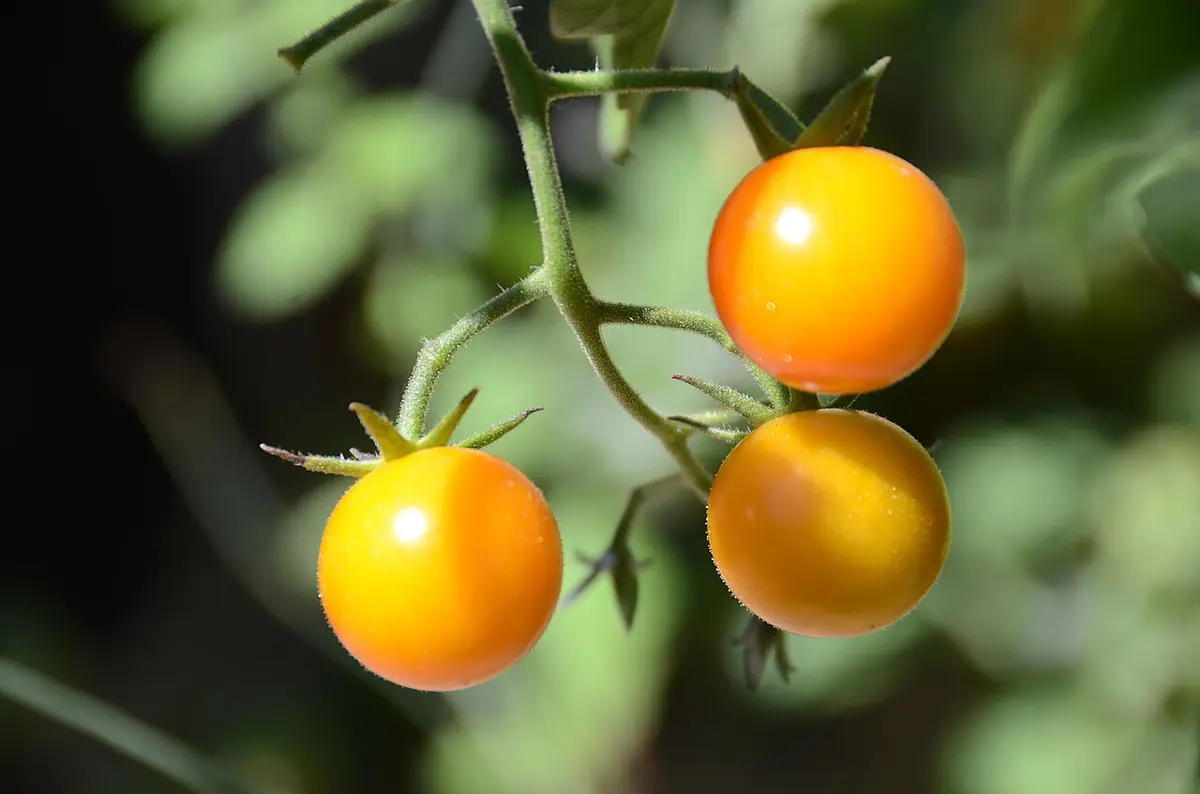
Tomato 'Sunrise Bumble Bee'
Solanum lycopersicum 'Bumble Bee Sunrise'
A high-vigor cherry tomato with sweet, yellow-and-red bicolor fruit — one of the sweetest in the Artisan collection.
Keep reading Show less
‘Bumble Bee Sunrise’ is a standout in the Artisan cherry tomato collection, producing small, sunny fruit splashed in yellow and red. It is one of the sweetest of the bumble bee series, balancing that sweetness with a bright, tangy finish.
A vigorous producer
These indeterminate plants are high in vigor and keep producing fruit all season, making them a generous addition to any sunny garden. The variety is grown to USDA Organic standards.
Care tips
Give the plants full sun and sturdy support — as an indeterminate, the vines keep growing and fruiting until frost. Pick the fruit when fully colored for the sweetest flavor.
Tomato care covers seed starting and cultivation.
Fun Fact
Its yellow-and-red stripes make ripe fruit look different from ordinary red cherry tomatoes.
Habitat & form
Where it's from and what to expect.
- Native range
- Western South America (the species); this variety was bred in the United States
- Plant type
- Annual · Vegetable
- Mature size
- Indeterminate.
- Bloom
- Yellow flowers during the growing season.
- Harvest
- Yellow-and-red bicolor fruits, 20–25 g each; about 70 days to harvest.
- Hardiness
- Warm-season annual; frost-tender — transplant out only once nights stay reliably warm.
Care
How to keep it happy.
- Sunlight
- Full sun — at least 6–8 hours of direct sun a day.
- Water
- Deep, consistent moisture at the roots. Uneven watering invites cracking and blossom-end rot; water the soil, not the foliage.
- Soil
- Rich, fertile, well-drained soil high in organic matter; slightly acidic pH (about 6.2–6.8).
- Fertilizer
-
Use complete granular vegetable fertilizer only when soil is nutrient-deficient.
Before planting into warm soil
Use nitrogen fertilizer only when additional nitrogen is needed.
When the first fruits enlarge
- Planting distance
- 24–36 in apart in rows 4–5 ft apart, staked or caged.
- Propagation
- Start seed indoors 5-6 weeks before planting out; transplant after frost danger has passed.
- Pruning
- Maintenance: thin the suckers and strip the lower leaves to improve airflow on the tall indeterminate vines, keeping them tied to a stout support.
- Pet safety
- Mildly toxic
Keep pets from eating foliage or unripe fruit.