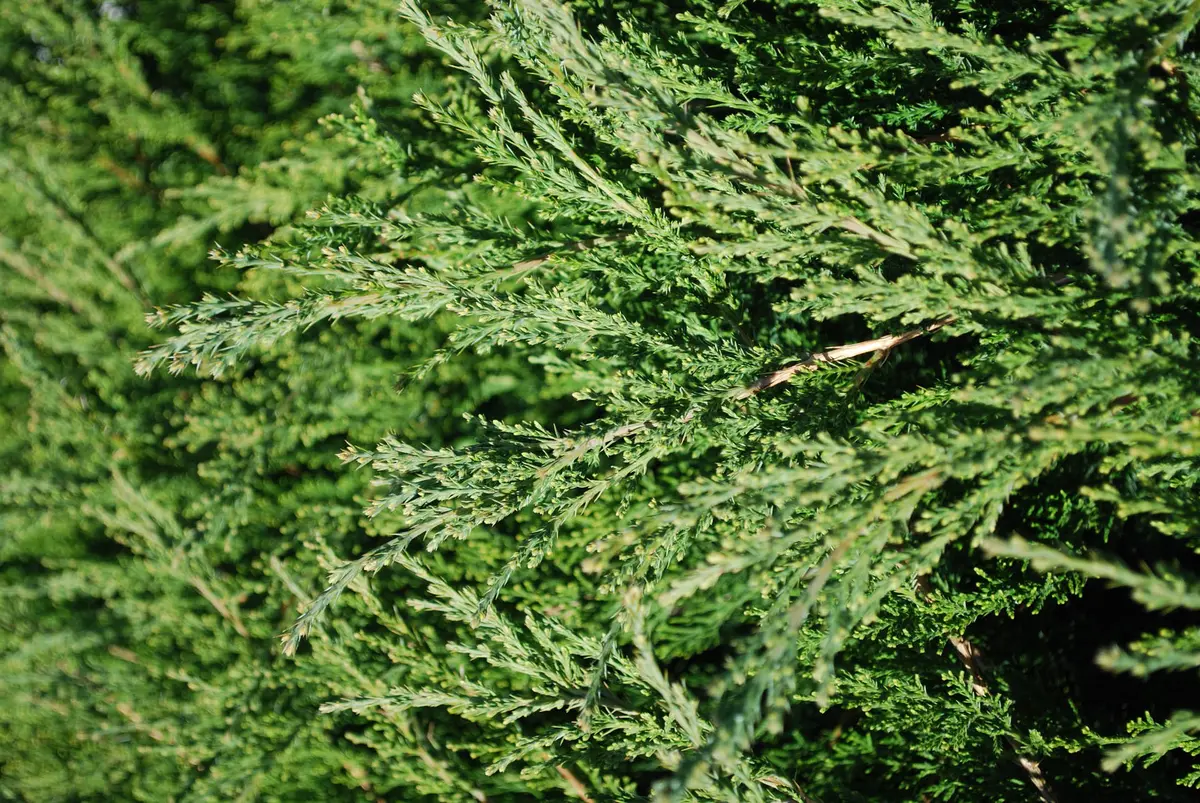
Chinese Juniper 'Sea Green'
Juniperus × pfitzeriana 'Sea Green'
An evergreen Chinese juniper with dark green foliage and arching branches that form a fountain-like shrub.
Keep reading Show less
Sea Green Juniper is a compact evergreen with dark green foliage and arching branches that create a fountain-like outline. Plant it in full sun and well-drained soil; once established, it tolerates some drought, but standing water can cause decline.
Naming and sources
NC State Extension lists this cultivar under Juniperus chinensis, while Missouri Botanical Garden places it in Juniperus × pfitzeriana and identifies the Pfitzer group as hybrids of J. chinensis and J. sabina. The latter name is used here.
Fun Fact
Its fountain-like outline comes from arching branches rather than repeated shearing.
Habitat & form
Where it's from and what to expect.
- Native range
- A garden cultivar in the Pfitzer hybrid group, with parent species native to Asia and Eurasia.
- Plant type
- Shrub · Perennial · Conifer
- Mature size
- Typically 4–6 ft tall and 6–8 ft wide.
- Bloom
- Non-flowering conifer; small seed cones may form, but foliage is the main ornamental feature.
- Hardiness
- USDA zones 4–9.
Care
How to keep it happy.
- Sunlight
- Full sun keeps the foliage dense; too little sun can leave the plant thin.
- Water
- Medium water needs; water regularly while establishing, then during extended dry spells. Avoid soggy soil.
- Soil
- Average, well-drained soil; tolerates clay and a broad pH range but not persistently wet conditions.
- Fertilizer
- No routine fertilizer for healthy, established plants.
- Planting distance
- Allow 6–8 ft for its mature spread; space plants about 6–8 ft apart in a mass planting.
- Propagation
- Take semi-hardwood cuttings from mature current-season growth, typically from mid-July to early fall, to preserve the cultivar; seed-grown plants may not come true.
- Pruning
- Prune lightly to maintain the desired height or remove damaged growth; the natural fountain-like habit needs little routine shaping.
- Pet safety
- Unknown
Prevent chewing; contact a veterinarian if any plant material is eaten.