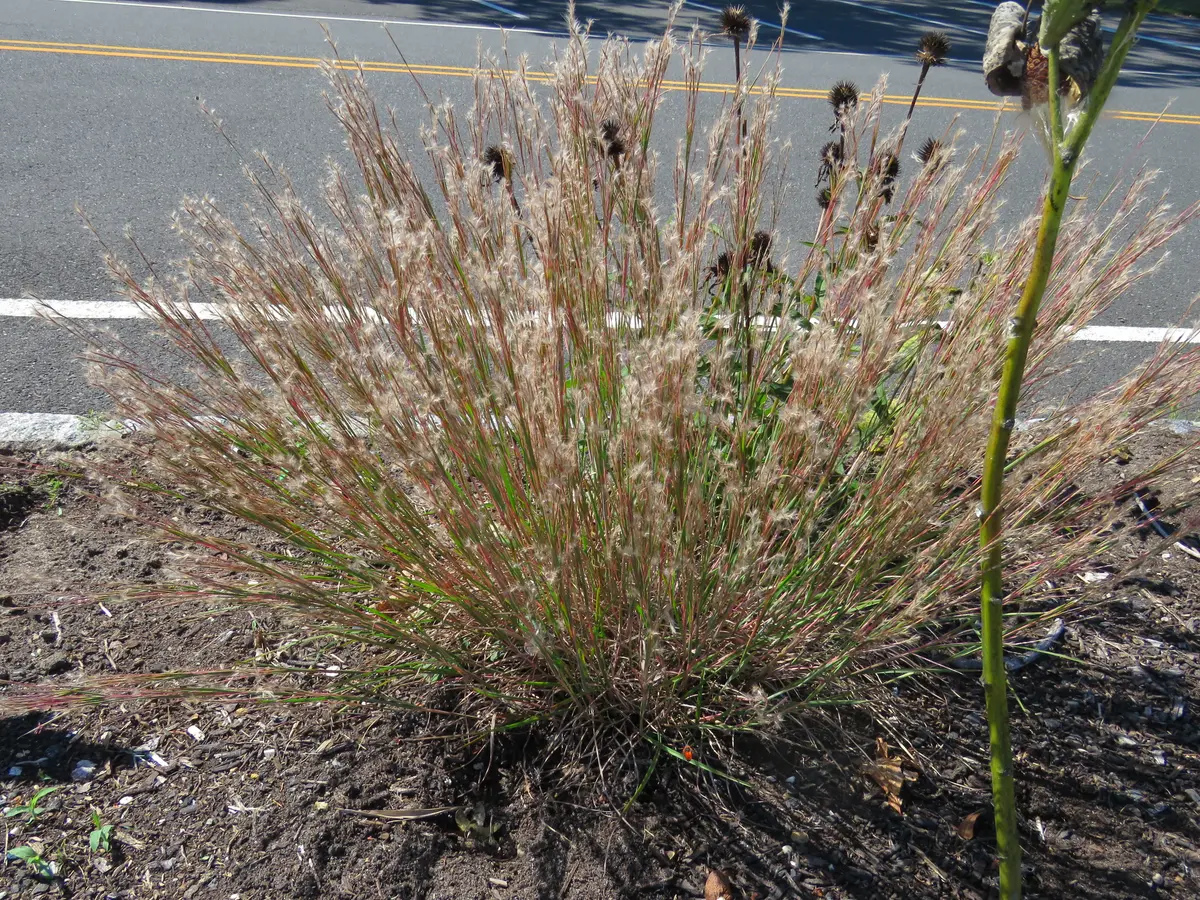
Little Bluestem 'Standing Ovation'
Schizachyrium scoparium 'Standing Ovation'
A tough native prairie grass with blue-green summer foliage that turns fiery orange and maroon in fall, holding its fluffy silver seed heads through winter.
Keep reading Show less
Schizachyrium scoparium ‘Standing Ovation’ is a selection of little bluestem, a warm-season bunchgrass native to prairies and open woodlands across most of North America. It brings fine-textured, upright structure to sunny borders and naturalistic plantings, with vivid seasonal color changes from blue-green summer foliage to blazing orange-red fall color.
Built to stand tall
The straight species of little bluestem is beloved for its color but notorious for flopping open in late summer, especially in richer garden soil. ‘Standing Ovation’ was selected specifically for a stiffer, more upright clump that holds its shape through the season. In late summer, airy purplish-bronze flower clusters appear atop the foliage, maturing into fluffy silvery-white seed heads that catch the low fall and winter light and persist well into the cold months.
Care tips
Little bluestem thrives in full sun and average-to-dry, well-drained soil — it’s at its best in lean conditions and can flop or lodge if overfed or overwatered. Once established it’s exceptionally drought tolerant and needs no supplemental water. The only regular maintenance is an annual cutback to a few inches above the ground in late winter or very early spring, before new blades emerge. Left standing through winter, its seed heads provide food and cover for birds.
Fun Fact
'Standing Ovation' was bred for a sturdier, more upright habit than the wild species, which can flop open by late summer. Its seed heads feed birds through winter and its foliage is a larval host for several native skipper butterflies.
Habitat & form
Where it's from and what to expect.
- Native range
- North America (prairies and savannas); cultivated selection
- Plant type
- Ornamental grass
- Mature size
- 2–4 ft tall in flower, spreading 1.5–2 ft wide.
- Bloom
- Airy, purplish-bronze flowers in late summer mature into fluffy, silvery seed heads that persist through winter.
- Hardiness
- USDA zones 3–9.
Care
How to keep it happy.
- Sunlight
- Full sun. Needed for the strongest, most upright habit and best fall color.
- Water
- Excellent drought tolerance once established; needs regular water only during its first season.
- Soil
- Very adaptable — clay, sandy, or shallow rocky soils, tolerant of a wide pH range. Prefers average to dry, well-drained conditions; avoid rich soil or heavy fertilizing, which causes floppy growth.
- Planting distance
- 18–24 in apart.
- Propagation
- Divide in spring
- Pruning
- Cut back close to the ground in late winter or early spring, before new growth emerges.
- Pet safety
- Non-toxic