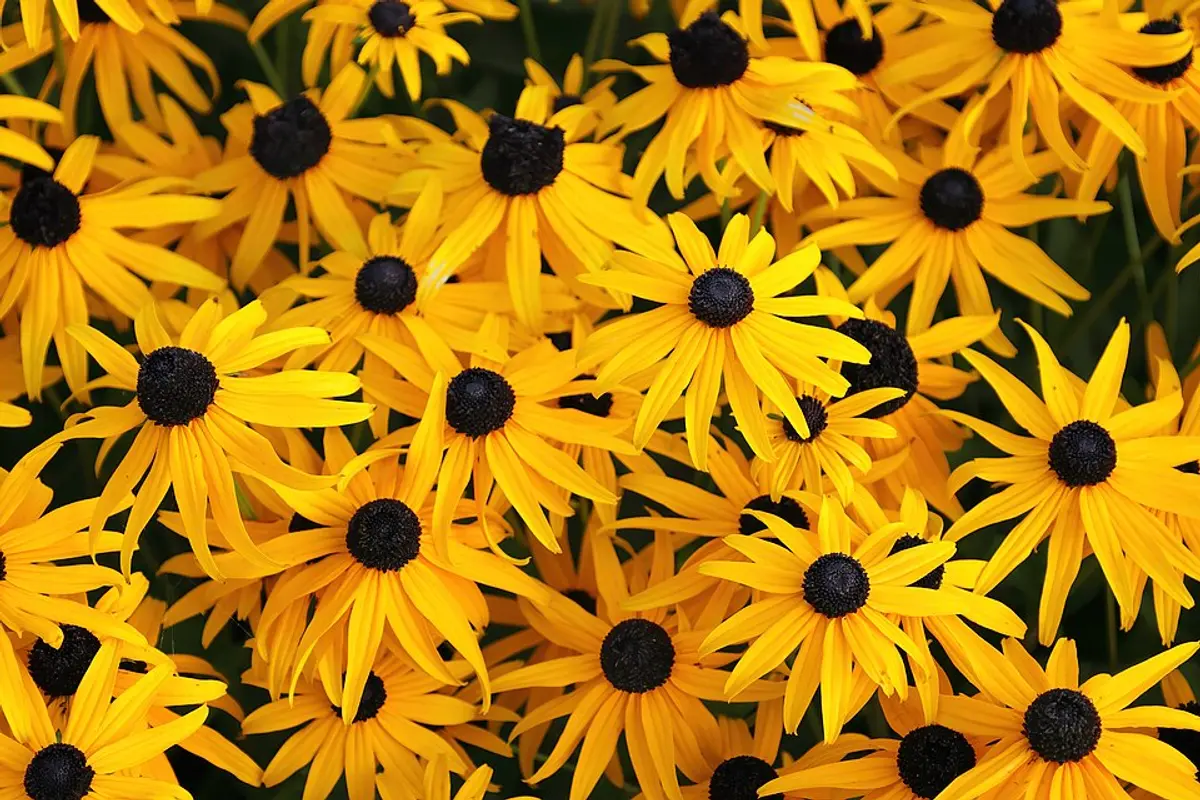
Black-eyed Susan 'Goldblitz'
Rudbeckia fulgida 'Goldblitz'
A long-blooming, sturdy black-eyed Susan with bright golden-yellow daisies and dark chocolate centers, lighting up the border from midsummer into fall.
Keep reading Show less
Rudbeckia fulgida ‘Goldblitz’ is a sturdy, upright black-eyed Susan that delivers a long season of golden-yellow daisies with rich brown centers, starting in midsummer and carrying on well into fall. It’s a dependable, low-fuss performer for sunny borders and cutting gardens alike.
A workhorse for late-summer color
‘Goldblitz’ holds its own through summer heat and keeps flowering long after many perennials have finished for the season. It tolerates average soil, including clay, and needs little beyond an occasional deadheading to keep the blooms coming.
Care tips
Plant in full sun to light shade in well-drained soil. Once established, it handles dry spells well, though regular watering will extend the bloom display. Deadhead through the season to encourage more flowers, cut the whole plant back after frost or in early spring, and divide congested clumps every few years to keep them vigorous.
Fun Fact
Black-eyed Susans are named for their signature dark, dome-shaped centers, which stand out against golden petals — a color combo that makes them one of the most reliable magnets for bees and butterflies in a late-summer border.
Habitat & form
Where it's from and what to expect.
- Native range
- Garden cultivar of the species native to eastern and central North America
- Plant type
- Perennial
- Mature size
- Grows 24–28 in. tall and about 18–24 in. wide.
- Bloom
- Golden-yellow daisy flowers with dark brown centers from midsummer through fall.
- Hardiness
- USDA zones 3–9.
Care
How to keep it happy.
- Sunlight
- Full sun to light shade.
- Water
- Average water needs; drought-tolerant once established, though regular water encourages more blooms.
- Soil
- Average, well-drained soil; adaptable to clay.
- Planting distance
- 18–24 in apart.
- Propagation
- Divide in spring or fall
- Pruning
- Deadhead spent blooms to prolong flowering; cut back to the ground in late fall or early spring, and divide clumps every 3–4 years.
- Pet safety
- Non-toxic