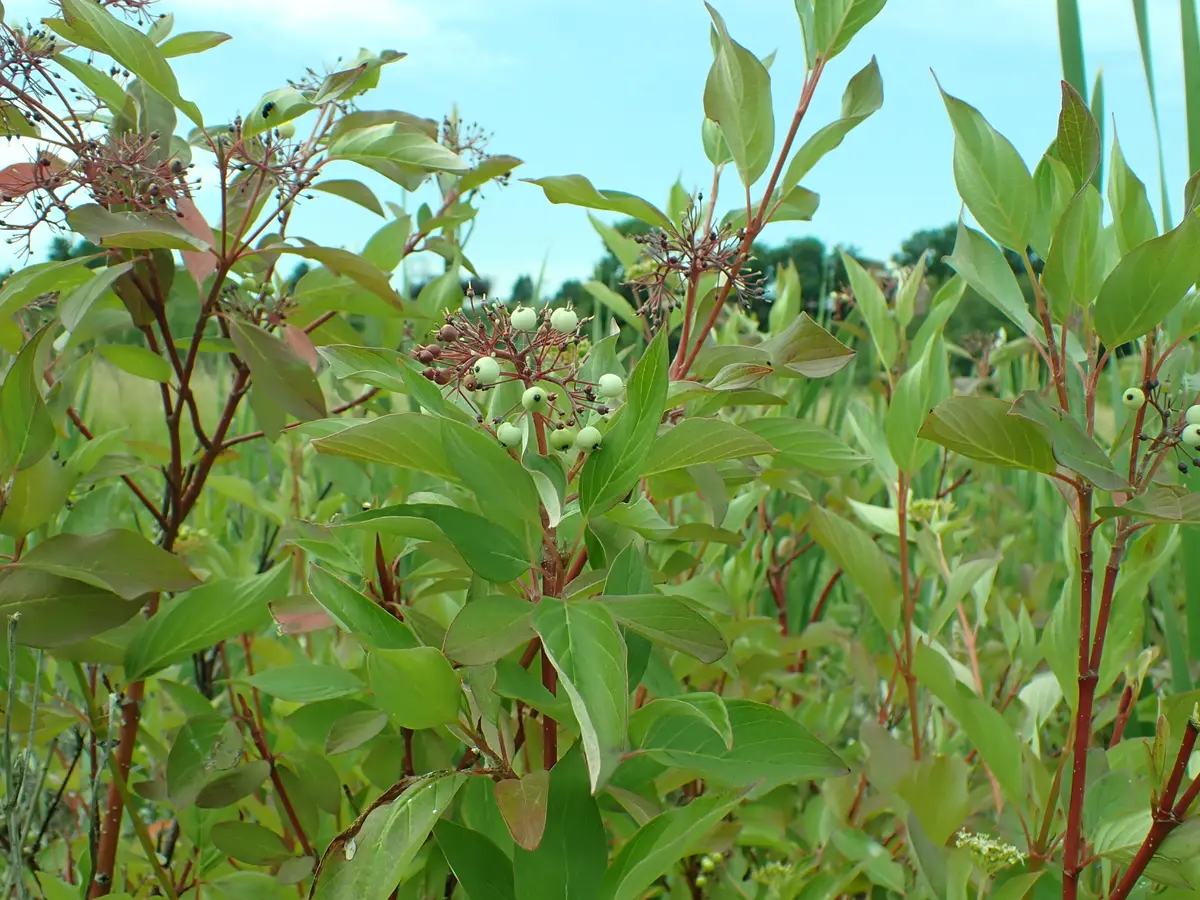
Red-twig Dogwood 'Arctic Fire'
Cornus sericea 'Arctic Fire®'
A compact, native-species dogwood grown for its vivid red winter stems, tidy habit, and tolerance of wet sites.
Keep reading Show less
Red-twig dogwood (also called red osier dogwood) is a native, multi-stemmed, deciduous shrub found across most of North America, typically along streambanks, wetland margins, and other damp, low-lying ground. This compact selection keeps all of the species’ best traits — the brilliant red winter stems, wildlife value, and toughness — in a smaller, tidier package suited to an ordinary garden bed rather than a wild thicket.
Through the seasons
Small, fragrant white flowers appear in flattened clusters in late spring, followed by white berries (sometimes tinged blue) that songbirds relish through summer and fall. The medium-green leaves turn shades of orange, red, or purple in autumn. Once the leaves drop, the shrub’s true feature takes over: bare stems that glow bright red all winter, especially striking against snow.
Care tips
This is an easy, adaptable shrub as long as it gets consistent moisture — it’s an excellent choice for a rain garden, low spot, or streamside planting, and it tolerates clay and even occasional standing water without complaint. Give it full sun for the most vivid stem color. The single most important task is renewal pruning: cut about a fifth to a quarter of the oldest stems to the ground each spring, since the brightest red color comes from young growth and fades as stems age.
Heads up: This species can be stressed by hot, humid summers south of its comfort zone (roughly USDA zone 7). In warmer climates, give it some afternoon shade and consistent moisture to keep it healthy.
Fun Fact
The red color is strongest on young stems — leaving old wood in place actually dulls the winter show, which is why cutting a portion of the oldest stems to the ground each spring is the single most important thing you can do for this plant.
Habitat & form
Where it's from and what to expect.
- Native range
- Most of North America (species), from Canada and Alaska south through the northern and western United States
- Plant type
- Shrub
- Mature size
- 3–5 ft tall and wide — a compact selection of a species that can otherwise reach 6–9 ft.
- Bloom
- Flat clusters of small, fragrant white flowers in late spring, followed by white (sometimes blue-tinged) berries in summer. The real show is the bright red stems, most vivid in winter.
- Hardiness
- USDA zones 3–7.
Care
How to keep it happy.
- Sunlight
- Full sun to part shade. Best red stem color develops with more direct sun.
- Water
- Medium to wet — thrives in consistently moist soil and tolerates occasional standing water.
- Soil
- Organically rich, moist soils preferred, but tolerant of clay, wet, or average garden soil.
- Planting distance
- 3–4 ft apart for a hedge or mass planting.
- Propagation
- Roots easily from softwood cuttings taken in summer.
- Pruning
- Prune out about 20–25% of the oldest stems down to the ground each year in early spring — new stems carry the brightest winter color, so regular renewal keeps the display vivid. Remove any unwanted root suckers at the same time.
- Pet safety
- Non-toxic