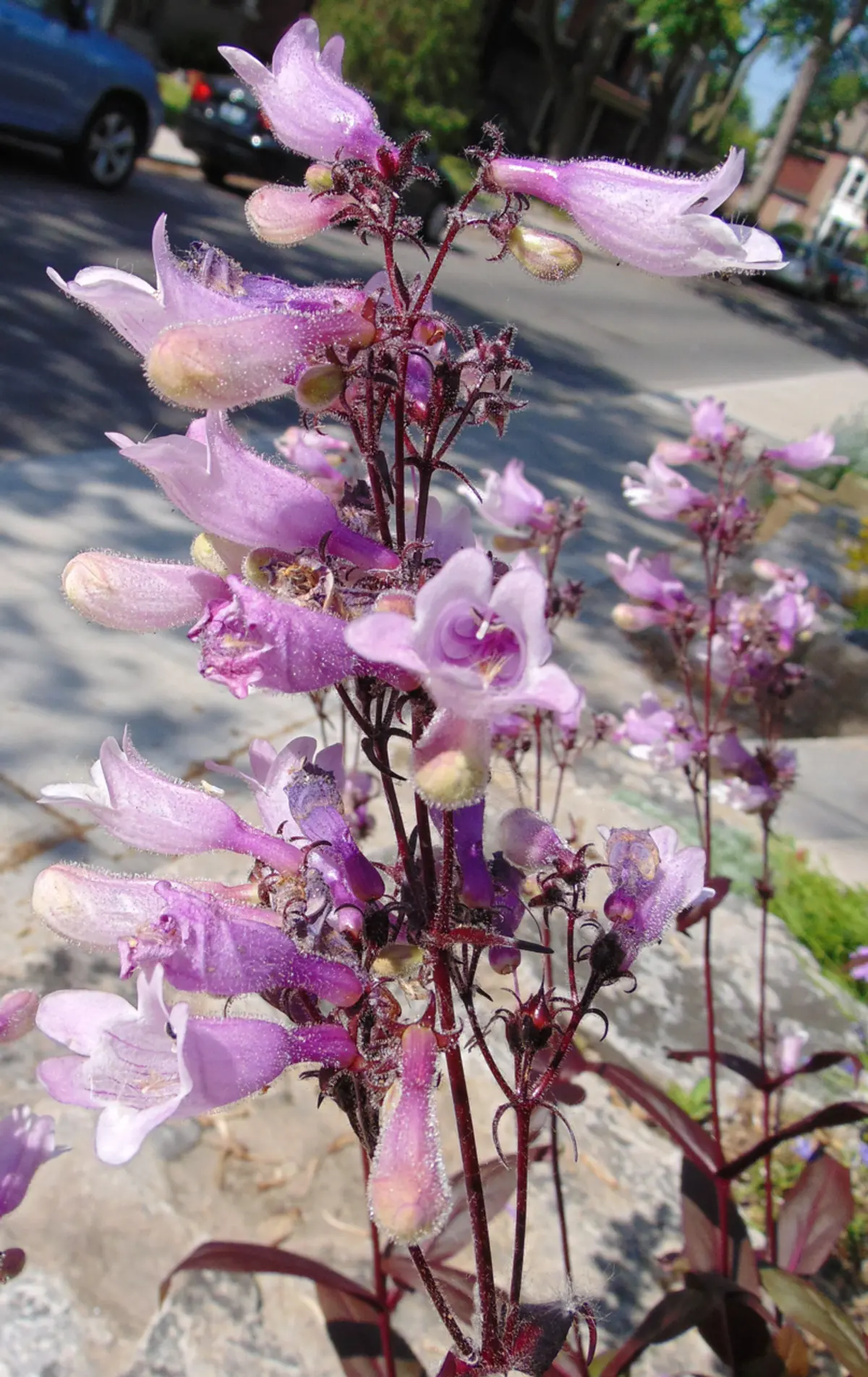
Beardtongue 'Dark Towers'
Penstemon 'Dark Towers'
A tall, tough beardtongue hybrid with dark burgundy stems and foliage, topped in early summer by loose spires of pale pink, tubular flowers that bees and hummingbirds visit constantly.
Keep reading Show less
Penstemon ‘Dark Towers’ is a clump-forming hybrid beardtongue bred at the University of Nebraska, prized for foliage and stems that hold a deep burgundy colour all season, capped in early summer by tall, airy spires of pale pink tubular flowers.
Taller towers of pale pink
The flower spires rise well above the basal foliage clump, opening loose panicles of two-lipped, tubular blooms that are perfectly sized for bees and hummingbirds. Deadheading spent spikes extends the display, and the ornamental seed heads that follow can be left standing for winter interest.
Care tips
‘Dark Towers’ is easy and drought tolerant once established — the main thing to avoid is wet, poorly drained soil, especially over winter, which invites root rot. Full sun brings out the darkest foliage colour; light shade is tolerated but foliage turns more blue-green. Leave the seed heads through winter, cut old growth back in late winter, and divide clumps every few years to keep them vigorous. Deer generally avoid it.
Fun Fact
'Dark Towers' was bred by Dr. Dale Lindgren at the University of Nebraska — the same breeding program behind 'Husker's Red' — as a cross of 'Husker's Red' with two other Penstemon species, selected for taller flower spires and darker, more persistent foliage colour through the heat of summer.
Habitat & form
Where it's from and what to expect.
- Native range
- Garden hybrid bred at the University of Nebraska (the parent species are native to North America)
- Plant type
- Perennial
- Mature size
- Basal foliage clump 1–2 ft across; flowering spires rise 2–3 ft tall.
- Bloom
- Loose, open panicles of pale pink, two-lipped tubular flowers about 1.5 in. long, from late spring into summer.
- Hardiness
- USDA zones 3–8.
Care
How to keep it happy.
- Sunlight
- Full sun for the deepest foliage colour and sturdiest stems; tolerates light shade.
- Water
- Dry to medium; drought tolerant once established. Wet, poorly drained winter soil is its main enemy.
- Soil
- Average to dry, well-drained soil; adapts to most textures and pH as long as drainage is good.
- Planting distance
- 12–18 in apart.
- Propagation
- Stem cuttings in summer
- Pruning
- Maintenance: low. Deadhead to prolong bloom, leave winter seed heads for interest, then cut old stems back in late winter. Divide every few years.
- Pet safety
- Non-toxic