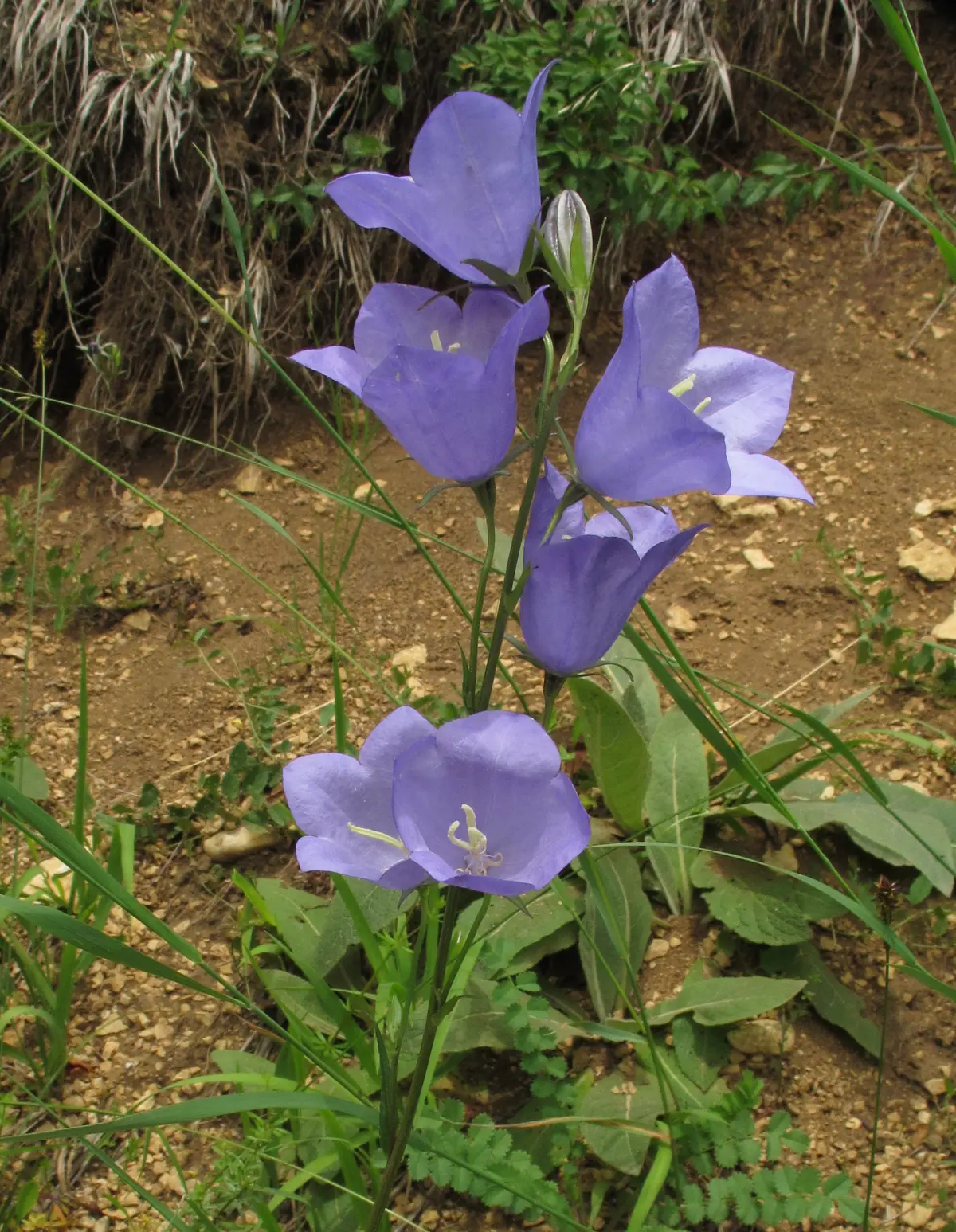
Peachleaf Bellflower 'Takion Blue'
Campanula persicifolia 'Takion Blue'
A compact, easy-care perennial with erect stems bearing large, outward-facing lavender-blue bell flowers in early summer above a neat mound of narrow, bright green leaves.
Keep reading Show less
Campanula persicifolia — peachleaf bellflower — is a clump-forming herbaceous perennial native to meadows and shrubby slopes across Europe and western Asia. The species name persicifolia means “having leaves like a peach,” a reference to the narrow, leathery, bright-green foliage arranged in basal rosettes. ‘Takion Blue’ is a compact, mounded selection reaching just 1–2 feet, with lavender-blue, upward- and outward-facing bells appearing in June and July.
A classic cottage garden flower
Tall, slender stems rise from the basal leaves and carry loose racemes of large, bell-shaped flowers that hold their own as cut flowers in a vase. Unlike some bellflowers, ‘Takion Blue’ is notably tidy — its mounded habit and compact height make it well-suited to the front of a perennial border or a cottage-style cutting garden. Bees, butterflies, and hummingbirds are regular visitors.
Care tips
Peachleaf bellflower is unfussy in average, well-drained soil and tolerates a wide hardiness range (zones 3–7). In hot summer climates (zone 7), give it afternoon shade and extra water. Deadhead spent blooms promptly to extend the flowering season and prevent excessive self-seeding. Clumps can be divided every 2–4 years in spring to keep them vigorous.
Fun Fact
Campanula persicifolia has been grown in European gardens since at least the 1500s, making it one of the oldest perennials in continuous cultivation. The genus name Campanula is simply the Latin word for 'little bell' — coined by 16th-century botanist Valerius Cordus and still perfectly apt today. Unlike several of its more rambunctious relatives, this species stays as a well-behaved clump, politely self-seeding without ever taking over the border.
Habitat & form
Where it's from and what to expect.
- Native range
- Europe and western Asia
- Plant type
- Perennial
- Mature size
- 1–2 ft tall, 1–1.5 ft wide. 'Takion Blue' is a compact, mounded selection.
- Bloom
- Large, outward-facing, bell-shaped lavender-blue flowers on slender, erect stems above a rosette of narrow, toothed, bright green leaves. Blooms June to July.
- Hardiness
- USDA zones 3–7.
Care
How to keep it happy.
- Sunlight
- Full sun to part shade. Afternoon shade is appreciated in zone 7 and warmer; full sun is fine in cooler climates.
- Water
- Average moisture — keep the soil consistently moist but well-drained. Water more frequently in warm climates (zone 7); will struggle in prolonged drought.
- Soil
- Average, well-drained soil with reasonable organic matter. Tolerates loam to sandy soils; prefers neutral to slightly alkaline pH.
- Planting distance
- 12–18 in apart.
- Propagation
- Divide in spring or fall
- Pruning
- Deadhead spent flowers promptly to encourage reblooming and limit self-seeding. Divide clumps every 2–4 years in spring to keep them vigorous.
- Pet safety
- Non-toxic