Parsley
Petroselinum crispum
A Mediterranean culinary herb and black swallowtail host plant, usually grown as an annual for its fresh green leaves.
Keep reading Show less
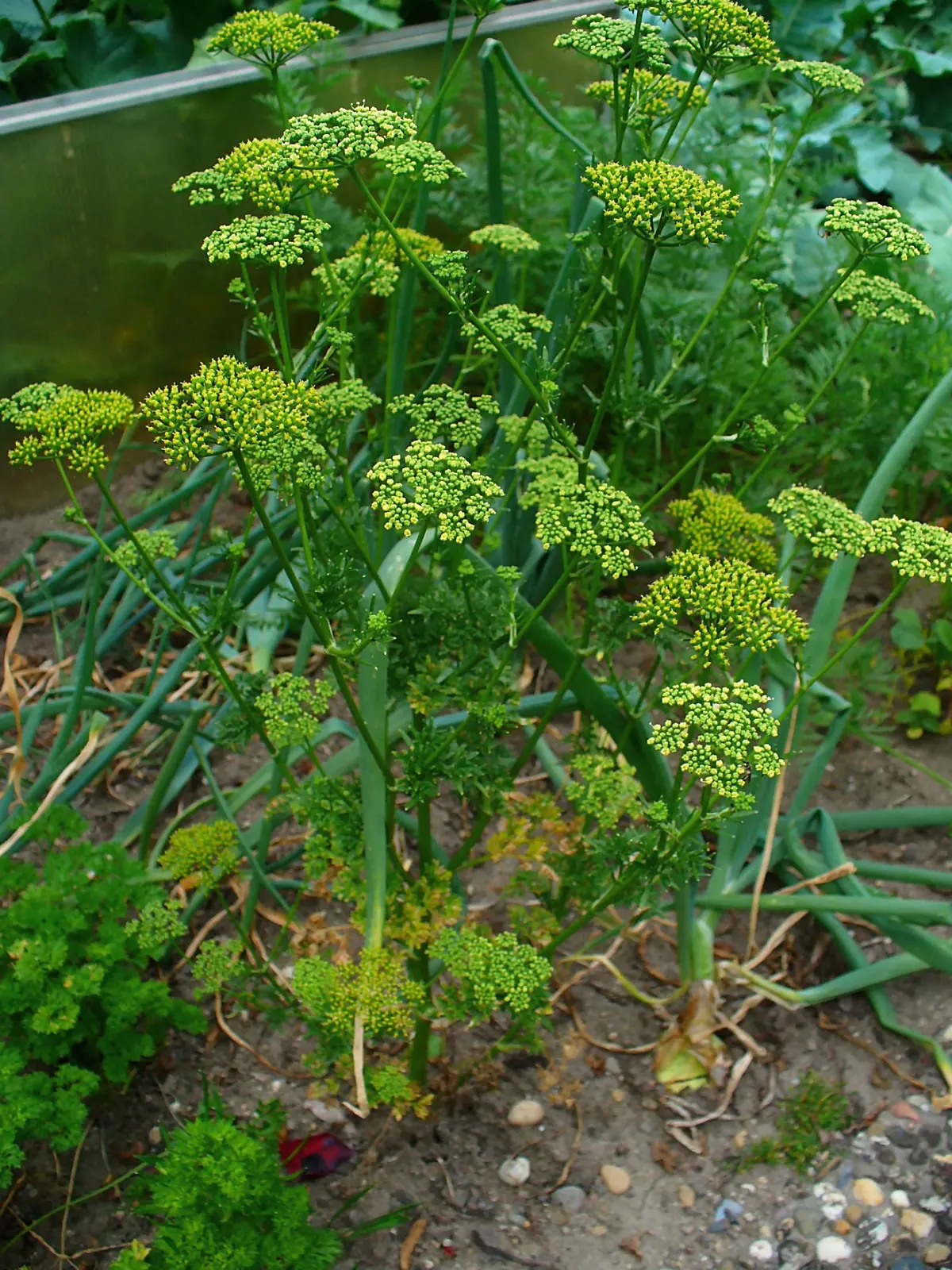
Parsley (Petroselinum crispum) is a biennial herb native to the Mediterranean, grown worldwide both as a culinary staple and an ornamental edging plant. It forms a neat rosette of bright green, deeply divided leaves in its first year, and sends up tall flower stalks in the second. Plants prefer cool weather and perform best in spring and fall; in hot climates afternoon shade helps delay bolting.
Sow seeds directly outdoors 3–4 weeks before the last frost, or start indoors 6–8 weeks earlier. Germination is notoriously slow — up to 3–4 weeks — and soaking seeds overnight speeds things up considerably. Because parsley is a biennial, plants allowed to overwinter will flower in their second year, after which leaf quality declines. Most gardeners treat it as an annual and replant each spring. Harvest by snipping the oldest outer stems at the base to encourage continuous new growth from the center. Parsley is also an important host plant for black swallowtail butterfly caterpillars, and its second-year flowers attract beneficial insects to the garden.
Fun Fact
Petroselinum combines the Greek words for 'rock' and 'celery', reflecting its Mediterranean habitat.
Habitat & form
Where it's from and what to expect.
- Native range
- Mediterranean region, southern Europe
- Plant type
- Biennial · Vegetable
- Mature size
- 8–12 in tall in first year; up to 2–3 ft with flower stalks in second year
- Bloom
- Greenish-yellow compound umbels appear in summer of the second year. Flowers attract beneficial insects including hoverflies and parasitic wasps.
- Hardiness
- Zones 5–9 (biennial, overwinters); grown as an annual in colder zones
Care
How to keep it happy.
- Sunlight
- Full sun to partial shade (6–8 hours; benefits from afternoon shade in hot climates).
- Water
- Average to moderate; keep soil consistently moist but not waterlogged. Mulch around plants to retain moisture and suppress weeds. Water at the base to reduce fungal disease.
- Soil
- Fertile, moist, well-drained loam; pH 6.0–7.0.
- Planting distance
- 6–8 in apart.
- Propagation
- Sow seed in spring; soak overnight first. Germination can take 2–4 weeks.
- Pruning
- Harvest outer stems at the base. Remove flower stalks to prolong leaf harvest.
- Pet safety
- Mildly toxic
Seeds/oil highest concern; small culinary amounts generally low-risk