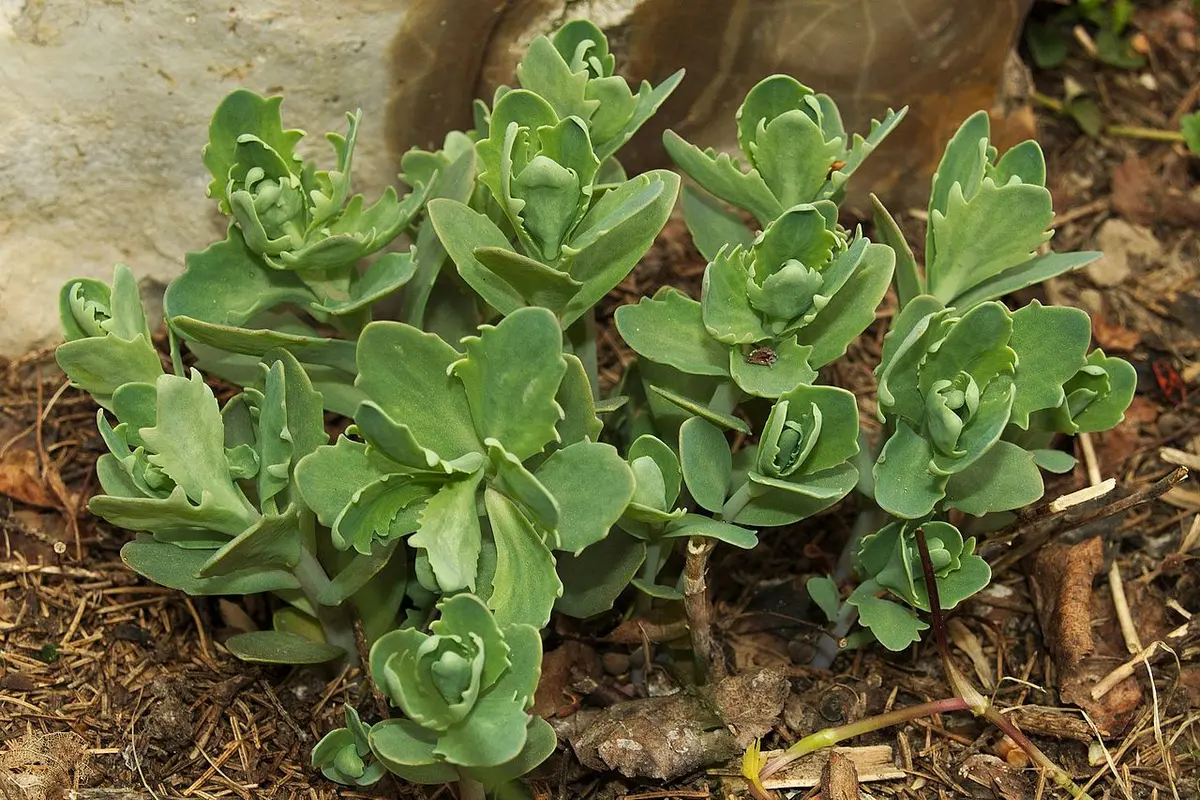
Orpine
Hylotelephium telephium
- Succulent
- Easy to grow
- Drought tolerant
- Nectar plant
- Rock garden
An upright succulent perennial whose fleshy stems are crowned in late summer with dense clusters of pink to ruby flowers.
Keep reading Show less
Orpine is an upright succulent perennial — once classified as Sedum telephium — grown for its fleshy, blue-green foliage and the broad clusters of tiny, star-shaped pink to ruby flowers that open from late summer into fall. As the blooms age they deepen to a rich burgundy that holds well into the cooler months.
Easy and architectural
The erect, fleshy stems give beds a bold, structural look, and many stay standing through winter for off-season interest. Bees and butterflies flock to the late nectar.
Care tips
Plant it in full sun and gritty, well-drained soil; like most succulents it will rot in soggy ground. It propagates almost effortlessly from division, stem cuttings, or even a single leaf. Look for the popular cultivars ‘Matrona’, ‘Purple Emperor’, and ‘Xenox’ for darker foliage.
Fun Fact
In European folk tradition, pairs of picked orpine stems were hung indoors as love oracles on Midsummer's Eve: if the stems arched toward each other, the relationship would flourish; if they withered apart, trouble lay ahead. The plant was called 'midsummer-men' for this custom.
Habitat & form
Where it's from and what to expect.
- Native range
- Europe and Asia
- Plant type
- Succulent
- Mature size
- 2–2.5 ft tall and 1.5–2 ft wide.
- Bloom
- Tiny star-shaped pink to purplish-red flowers in dense clusters from August to October, fading to burgundy.
- Hardiness
- USDA zones 3–9.
Care
How to keep it happy.
- Sunlight
- Full sun.
- Water
- Low — medium to dry soils. Its taproots store water, and it rots in wet conditions.
- Soil
- Sandy or shallow-rocky soil with good drainage; neutral to alkaline pH.
- Pruning
- Maintenance: leave the seed heads standing for winter interest, then cut old stems to the ground in early spring; an optional late-spring 'Chelsea chop' keeps the plant compact and upright. Divide every few years to rejuvenate.