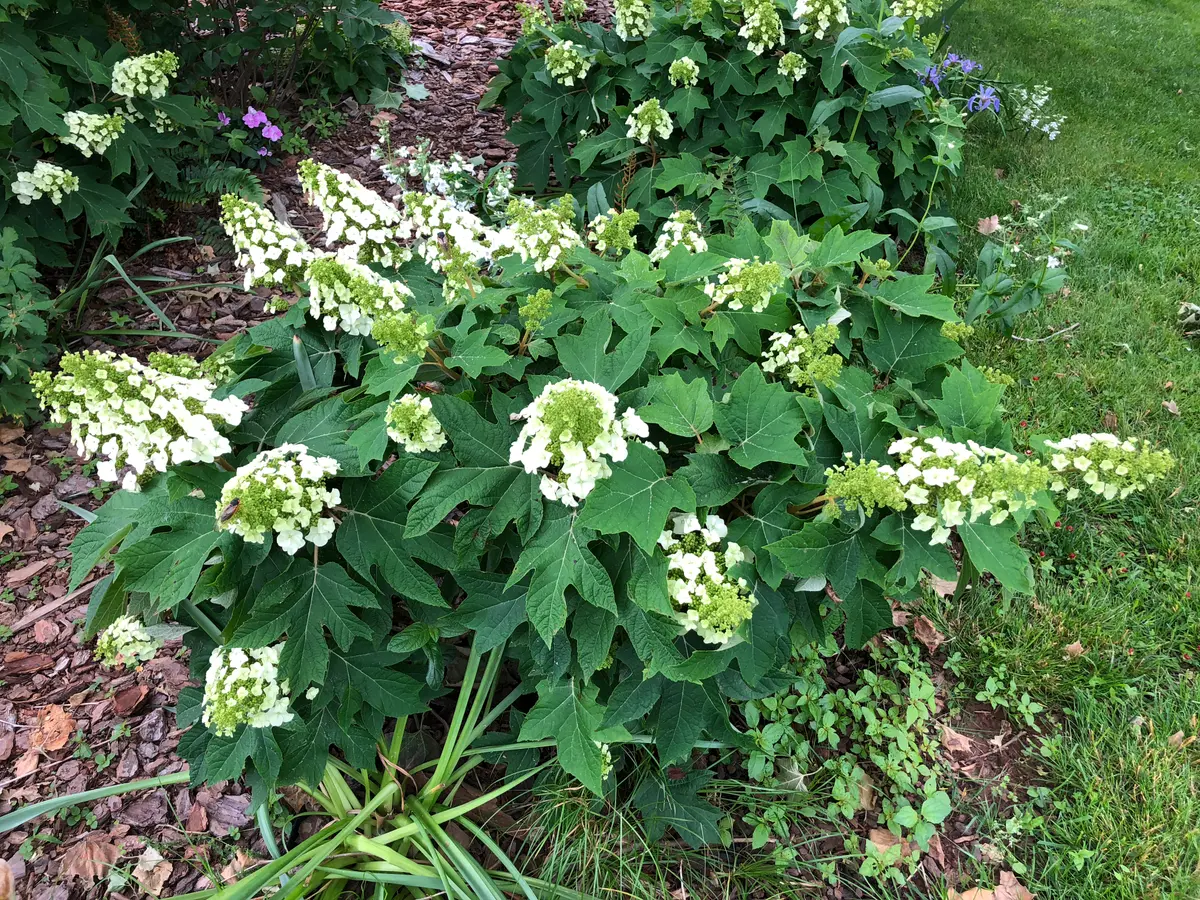
Oakleaf Hydrangea 'Gatsby Moon'
Hydrangea quercifolia 'Gatsby Moon®'
A native-species hydrangea with huge, full white mophead panicles, bold oak-shaped leaves, and exfoliating winter bark.
Keep reading Show less
Oakleaf hydrangea is an upright, multi-stemmed, deciduous shrub native to moist woodlands and stream banks of the southeastern United States. This cultivar keeps the species’ hallmark oak-shaped foliage and huge mophead flower clusters, prized as a specimen or accent shrub wherever there’s room for its full size.
Through the seasons
In early to mid-summer, the shrub is topped with large, dense, cone-shaped panicles of white flowers that age gracefully to green and then a soft pinkish-tan, remaining showy for weeks even as they fade. The large, deeply-lobed leaves resemble oak foliage — hence the name — and turn a striking burgundy to wine-red in fall. On mature stems, reddish-brown bark exfoliates in winter, adding an extra season of textural interest once the leaves have dropped.
Care tips
Give this shrub organically rich, well-drained soil with consistent moisture, and some daily sun — it tolerates more shade than most hydrangeas, but flowering and fall color are both better with a few hours of direct light. Because it blooms on old wood, prune only right after flowering; a late-winter or spring pruning removes the coming season’s flower buds. In hot climates, afternoon shade and mulch help it cope with summer stress.
Heads up: This hydrangea needs room — at 6 to 8 feet tall and wide, plan its spot as a specimen or informal hedge rather than a foundation plant, unless you have the space to let it reach full size.
Fun Fact
Its deeply lobed leaves — the reason for the name "oakleaf" — turn a rich burgundy-wine red in fall, and its older stems peel away in curls of reddish-brown bark, giving this hydrangea two seasons of interest that most hydrangeas skip entirely.
Habitat & form
Where it's from and what to expect.
- Native range
- Southeastern United States (species), where it grows in moist woods and along stream banks
- Plant type
- Shrub
- Mature size
- 6–8 ft tall and 6–8 ft wide at maturity.
- Bloom
- Large, very full, cone-shaped white flower panicles in early to mid-summer, aging to soft green and eventually pinkish-tan.
- Hardiness
- USDA zones 5–9.
Care
How to keep it happy.
- Sunlight
- Part sun to full sun. The most shade-tolerant hydrangea, but needs some daily sun for its best blooms and fall color; give it afternoon shade in hot climates.
- Water
- Medium moisture; prefers organically rich, well-drained soil and benefits from summer mulch.
- Soil
- Rich, well-drained soil with medium moisture. Avoid consistently wet sites.
- Planting distance
- 6–8 ft apart as a specimen or informal hedge.
- Propagation
- Softwood cuttings in early summer, or layering low branches.
- Pruning
- Blooms on old wood, so prune only right after flowering if shaping is needed. Remove winter-damaged or dead stems in early spring.
- Pet safety
- Mildly toxic
All parts toxic, especially flower buds and young leaves