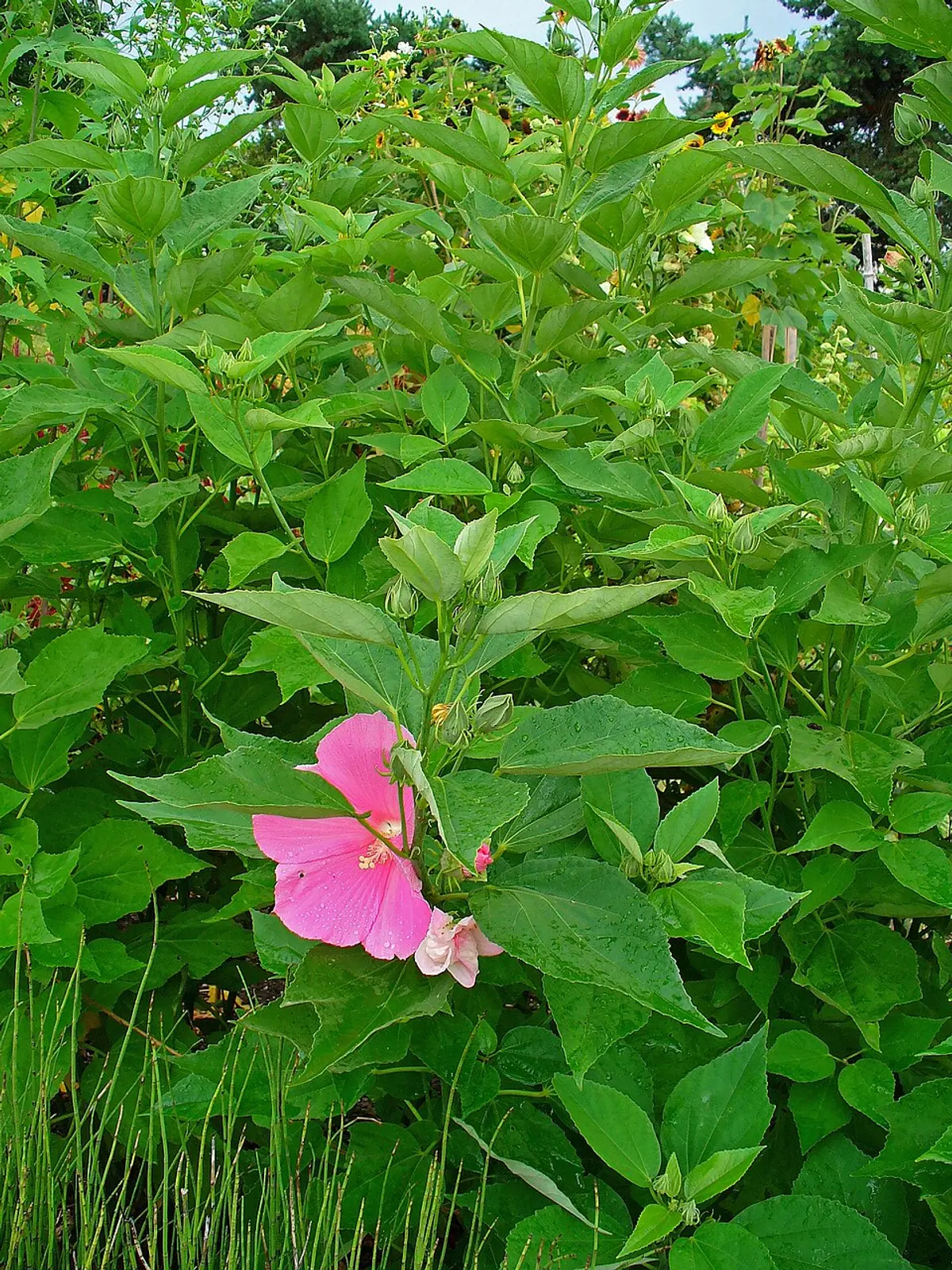
Rose Mallow
Muenchhusia moscheutos
A native wetland perennial with enormous, dinner-plate-sized pink or white flowers and a dark red eye, bringing a tropical look to late-summer borders and rain gardens.
Keep reading Show less
Muenchhusia moscheutos (formerly classified as Hibiscus moscheutos), known as rose mallow, is a native wetland perennial that produces some of the biggest flowers you’ll find in a perennial border — broad, saucer-shaped blooms in shades of pink, red, or white, each with a distinctive dark eye at the center. Despite its tropical appearance, it’s fully hardy and dies back to the ground each winter, re-emerging late in spring to put on its dramatic summer show.
A native for wet spots
In the wild, rose mallow grows in marshes, wet meadows, and along ponds and streams throughout the eastern and southeastern U.S. It’s an excellent choice for rain gardens or any spot that stays consistently moist, though it adapts well to average garden soil as long as it gets regular water.
Care tips
Plant in full sun in rich, moisture-retentive soil for the heaviest bloom. Because it emerges quite late in spring, mark its spot to avoid accidentally disturbing the crown while other perennials are already up. Cut the dead stems to the ground in late fall, or leave them standing through winter for structure, and expect the whole plant to reappear reliably once the soil warms.
Fun Fact
Rose mallow produces some of the largest flowers of any perennial hardy in temperate gardens — blooms can reach the size of a dinner plate, rivaling tropical hibiscus despite the plant dying back to bare ground every winter.
Habitat & form
Where it's from and what to expect.
- Native range
- Marshes, wet meadows, and pond and stream edges of the eastern and southeastern United States
- Plant type
- Perennial
- Mature size
- Grows 3–7 ft tall and 2–4 ft wide, dying back to the ground each winter.
- Bloom
- Huge, saucer-shaped pink, red, or white flowers, often 6–8 in. across, from midsummer into early fall.
- Hardiness
- USDA zones 5–9.
Care
How to keep it happy.
- Sunlight
- Full sun for the best flowering; tolerates light shade.
- Water
- Prefers consistently moist to wet soil; thrives at pond edges and in rain gardens, but adapts to average garden soil with regular water.
- Soil
- Rich, moist soil; tolerates heavy clay.
- Planting distance
- 3–4 ft apart, based on mature spread.
- Propagation
- Readily grown from seed
- Pruning
- Cut stems to the ground in late fall after they die back, or leave for winter interest; emerges late in spring, so mark its location.
- Pet safety
- Non-toxic