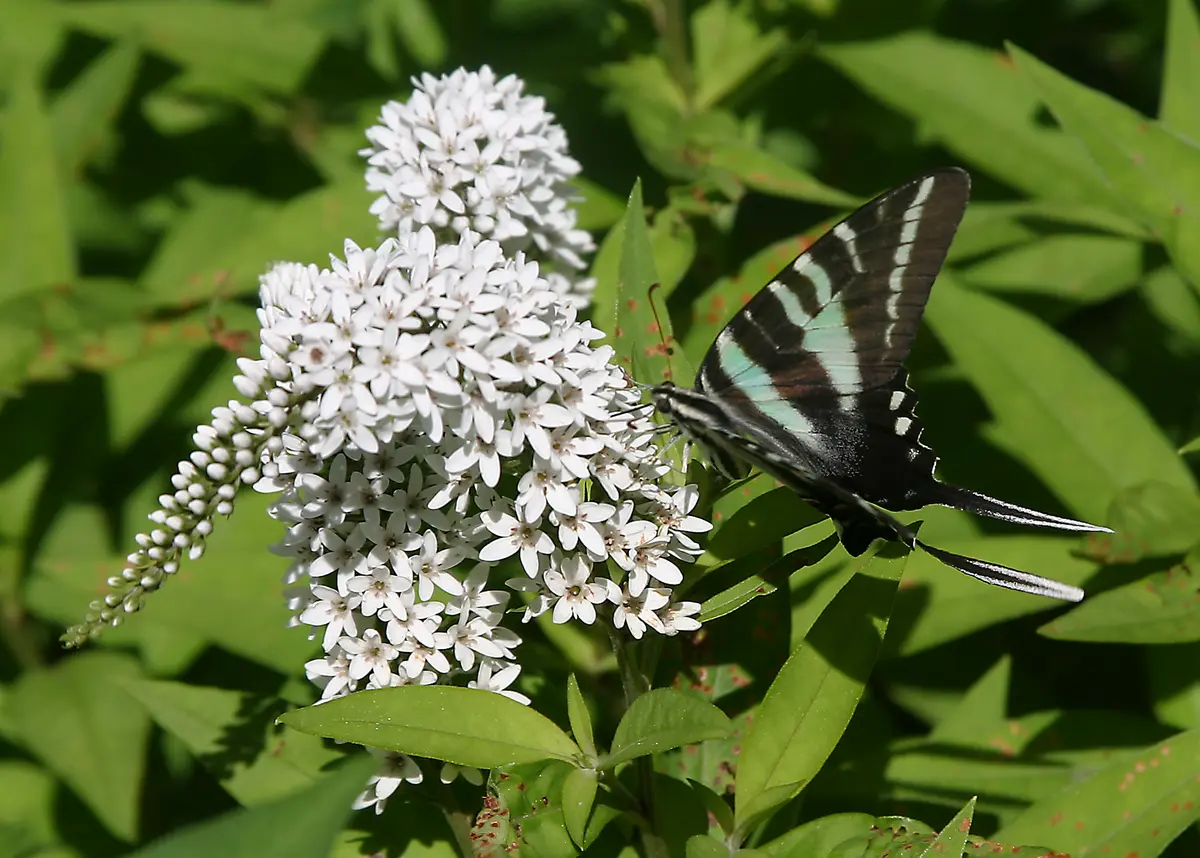
Gooseneck Loosestrife
Lysimachia clethroides
A carefree perennial topped with arching white flower spikes that curl like a goose's neck — showy in summer, but spreads with real enthusiasm.
Keep reading Show less
Lysimachia clethroides — gooseneck loosestrife — is a herbaceous perennial from East Asia grown for its distinctive summer flower spikes: slender white racemes that arch over at the tip so every bloom faces the same direction, exactly like a goose craning its neck. It is easy, showy, and utterly undemanding.
An easy summer show
From midsummer into early fall the plant sends up dozens of curved white spikes that sway above the foliage and draw in bees and butterflies. It asks for little beyond average garden care and shrugs off heat, humidity, and short dry spells once established.
Care tips — and a word of caution
Give it full sun and moist, humusy soil for the showiest bloom; it is equally at home at a pond’s edge or in an ordinary border. The one thing to plan for is its vigorous spread by underground rhizomes — gooseneck loosestrife can travel well beyond where it was planted and crowd out neighbors if left alone. Site it where it can roam, contain it with a buried barrier, or divide it regularly to keep it in check.
Fun Fact
Each flower spike bends over at the tip so all the blooms line up on the upper side — the whole thing curves just like the neck of a goose, which is exactly where the common name comes from.
Habitat & form
Where it's from and what to expect.
- Native range
- East Asia — China, Japan, and Korea
- Plant type
- Perennial
- Mature size
- 2–3 ft tall, spreading 2–4 ft wide — and considerably further if left unchecked.
- Bloom
- Nodding, one-sided white flower spikes that curve like a goose's neck, from midsummer into early fall.
- Hardiness
- USDA zones 3–8.
Care
How to keep it happy.
- Sunlight
- Full sun for the best flowering; tolerates partial shade but grows leggier and blooms less.
- Water
- Consistently moist to wet soil; thrives at pond edges and in rain gardens, though it tolerates average garden moisture too.
- Soil
- Moist, humusy soil is ideal, but adaptable to sand or clay as long as organic matter is worked in.
- Planting distance
- 3–4 ft apart (it spreads aggressively by rhizomes, so give it room or install a root barrier).
- Propagation
- Divide rhizomes in spring
- Pruning
- Maintenance: low. Cut back after flowering to tidy the clump; divide or install a root barrier to keep the spread in bounds.
- Pet safety
- Non-toxic