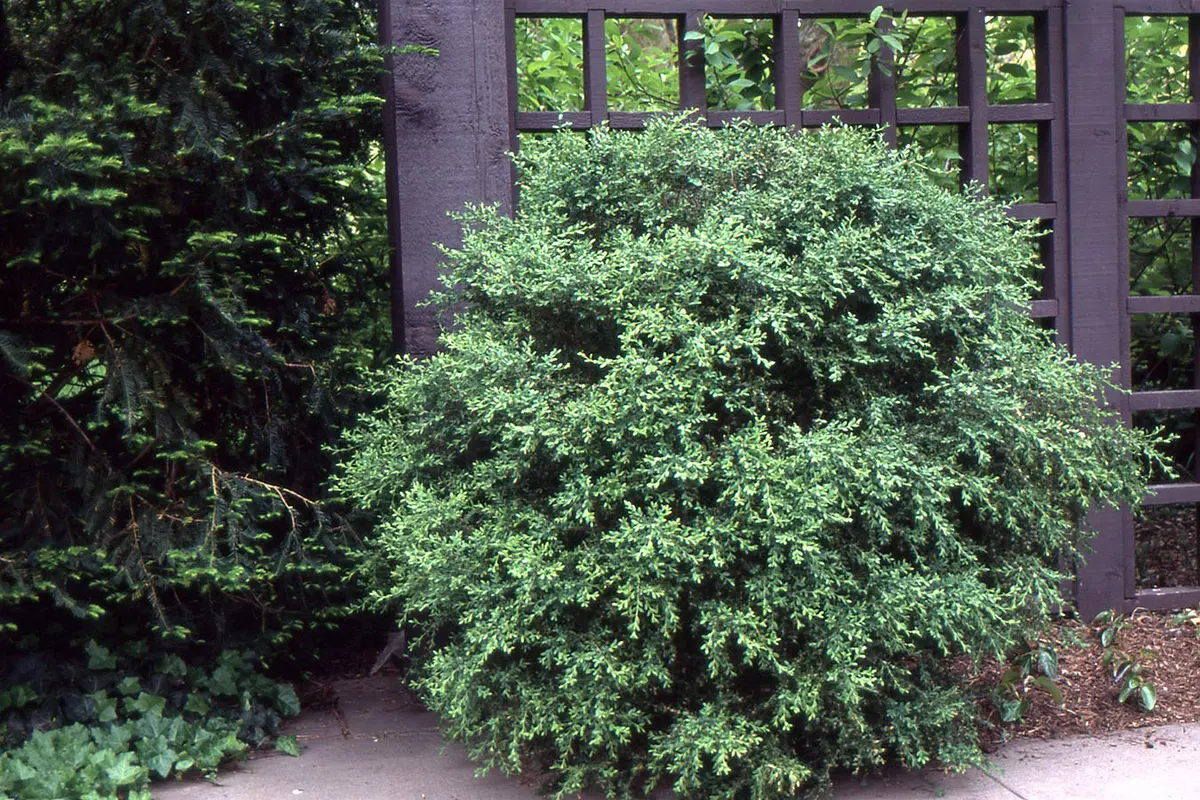
Korean Boxwood 'Wintergreen'
Buxus microphylla var. koreana 'Wintergreen'
A hardy, green-holding Korean boxwood valued for cold tolerance, neat mounded form, and hedge-friendly foliage.
Keep reading Show less
Wintergreen is one of the hardiest boxwood selections in common garden use, grown for its compact mounded habit and its ability to come through winter with less bronzing than many other types. It gives the classic clipped-box look, but with better cold tolerance for exposed or northern sites.
The leaves are small, smooth, and evergreen, holding a rich green tone well into winter. Spring flowers are tiny and lightly fragrant rather than showy, so the plant’s value is mostly architectural: a dependable broad mound for edging, low hedges, foundation beds, or repeated rhythm through a formal planting.
Site it in well-drained soil and protect it from the worst combination of winter wind and blazing reflected sun, especially in colder zones. An annual thinning to improve airflow and a light shaping when needed will keep it dense and healthy. Like other boxwoods, it is toxic if eaten, so place it thoughtfully around curious pets.
Fun Fact
Wintergreen earned its name because it stays greener through cold weather than many boxwoods, which is why it became a go-to choice in northern gardens.
Habitat & form
Where it's from and what to expect.
- Native range
- Korea and nearby northeastern Asia (species group), with this cold-hardy selection maintained in cultivation
- Plant type
- Shrub · Perennial
- Mature size
- Usually 2–4 ft tall and 3–5 ft wide, though older plants can reach about 5 ft if left unpruned for many years.
- Bloom
- Small, greenish-yellow spring flowers are lightly fragrant but insignificant; the evergreen foliage is the main attraction.
- Hardiness
- USDA zones 4–8.
Care
How to keep it happy.
- Sunlight
- Full sun to part shade, though sun-dappled part shade is ideal in colder or windier sites.
- Water
- Average moisture; keep evenly moist while establishing and avoid letting the shallow roots bake or sit wet.
- Soil
- Well-drained, slightly acidic to slightly alkaline soil, especially sandy or loamy ground with added organic matter.
- Fertilizer
-
Use Espoma Plant-tone only when soil is nutrient-deficient.
Late winter to early spring
- Planting distance
- 3–5 ft apart, based on mature spread and whether you want a hedge or individual mounds.
- Propagation
- Stem cuttings
- Pruning
- Tolerates pruning and shearing well. Thin annually for airflow, and shape in late winter to early spring or with a light touch after the spring flush.
- Pet safety
- Mildly toxic
Keep pets from chewing leaves or twigs.