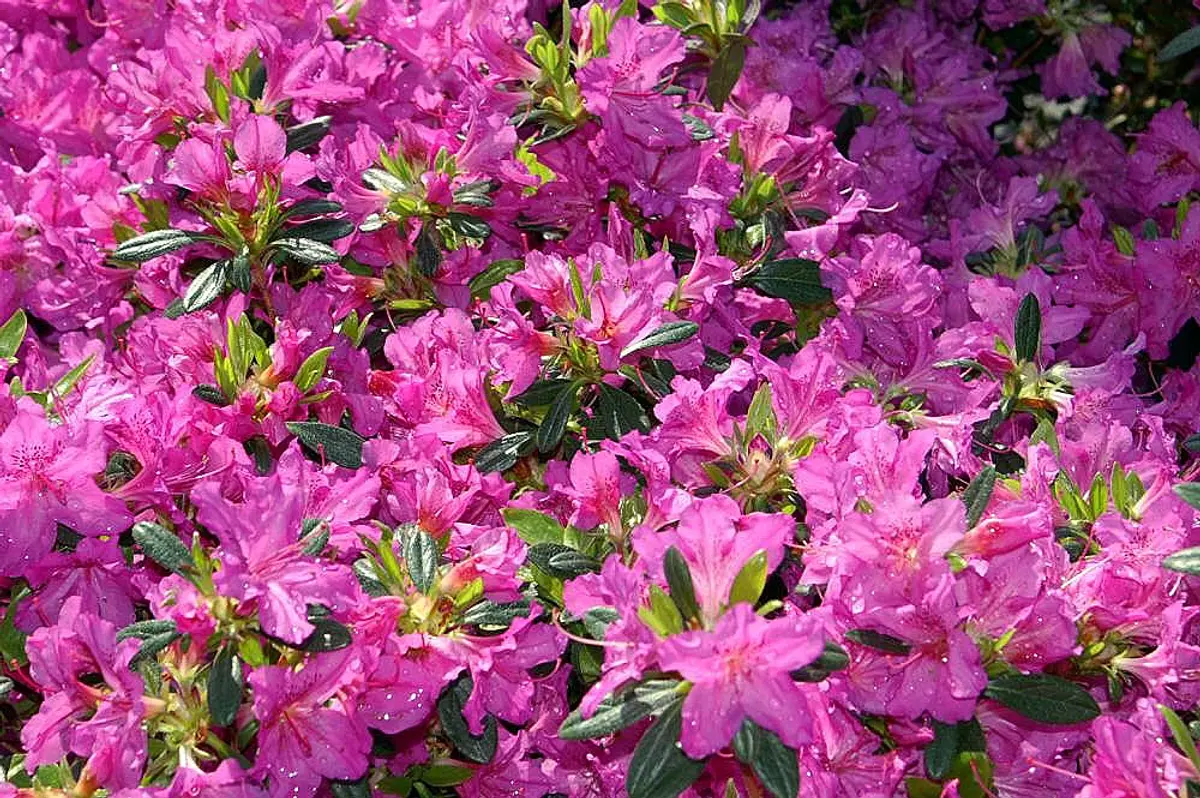
Karen Azalea
Rhododendron 'Karens'
A compact, cold-hardy evergreen azalea that explodes in a cloud of fragrant lavender-pink double flowers in mid-spring — one of the hardiest and most reliable azaleas for northern gardens.
Keep reading Show less
Rhododendron ‘Karens’ — commonly sold as the Karen azalea — is a compact, dense, broadleaf evergreen shrub and one of the most cold-hardy evergreen azaleas you can grow. Developed as part of Peter Girard’s breeding program in Ohio, it was selected specifically for its ability to survive zone 4–5 winters while still delivering a spectacular spring flower display.
A spring showstopper
In mid-spring, before the foliage has fully expanded, the entire shrub disappears beneath a smothering mass of fragrant, double (hose-in-hose) lavender-pink flowers. Each bloom is actually two flowers nested inside each other — a trait that gives them a fuller, ruffled look. The display lasts several weeks and draws in bees, butterflies, and hummingbirds. After the flowers fade, the small, glossy dark-green leaves take over for summer, then gradually deepen to a handsome reddish hue in fall and winter, giving the shrub year-round presence.
Care tips
Karen azalea thrives in part shade with acidic, humus-rich, well-drained soil. Its shallow root system is the key to understanding its care: the roots dry out quickly and need consistent moisture, but they will rot if left sitting in standing water. A deep layer of mulch is the single most helpful thing you can do — it conserves moisture, keeps roots cool, moderates soil temperature, and slowly acidifies the soil as it breaks down.
Pruning is simple: trim lightly right after the spring flowers fade. Because next year’s buds are set on the current year’s growth through the summer, cutting in late summer or fall means cutting away next spring’s show.
Note: Karen azalea prefers a sheltered location — good air circulation helps prevent fungal issues, but protection from harsh winter winds reduces desiccation of the evergreen foliage.
Fun Fact
Despite its name, 'Karens' is not named after a person — it is a Girard hybrid, part of a series of exceptionally cold-hardy evergreen azaleas developed by nurseryman Peter Girard Sr. in Geneva, Ohio. Girard bred his azaleas specifically to survive the brutal winters of the American Midwest, making 'Karens' one of the hardiest evergreen azaleas available for zone 4–5 gardens.
Habitat & form
Where it's from and what to expect.
- Native range
- Garden hybrid (Girard series; parentage from East Asian azalea species)
- Plant type
- Shrub
- Mature size
- 3–4 ft tall and 3–5 ft wide; compact, dense, mounded habit.
- Bloom
- Lavender-pink, fragrant, double (hose-in-hose) flowers blanketing the plant in mid-spring before the foliage fully leafs out. Glossy dark green leaves turn reddish in fall and winter.
- Hardiness
- USDA zones 4–8; noted for excellent winter hardiness among evergreen azaleas.
Care
How to keep it happy.
- Sunlight
- Part shade preferred — dappled or filtered light is ideal. Tolerates full sun where soil stays reliably moist. Afternoon shade reduces heat stress and prolongs bloom.
- Water
- Keep evenly moist but never waterlogged; shallow roots dry out quickly and also rot if standing in water. Water regularly during dry spells, especially in summer heat.
- Soil
- Acidic (pH 5.0–5.5), humus-rich, well-drained soil. Amend with peat moss or pine bark before planting; mulch generously to keep the shallow roots cool and moist.
- Planting distance
- 3–5 ft apart, based on mature spread.
- Propagation
- Semi-ripe cuttings in late summer
- Pruning
- Maintenance: low. Trim lightly immediately after flowering to shape — it blooms on the previous year's wood, so pruning in summer or fall removes next spring's buds. Avoid heavy cutting into old bare wood.
- Pet safety
- Highly toxic
All parts including leaves, stems, flowers, pollen and nectar