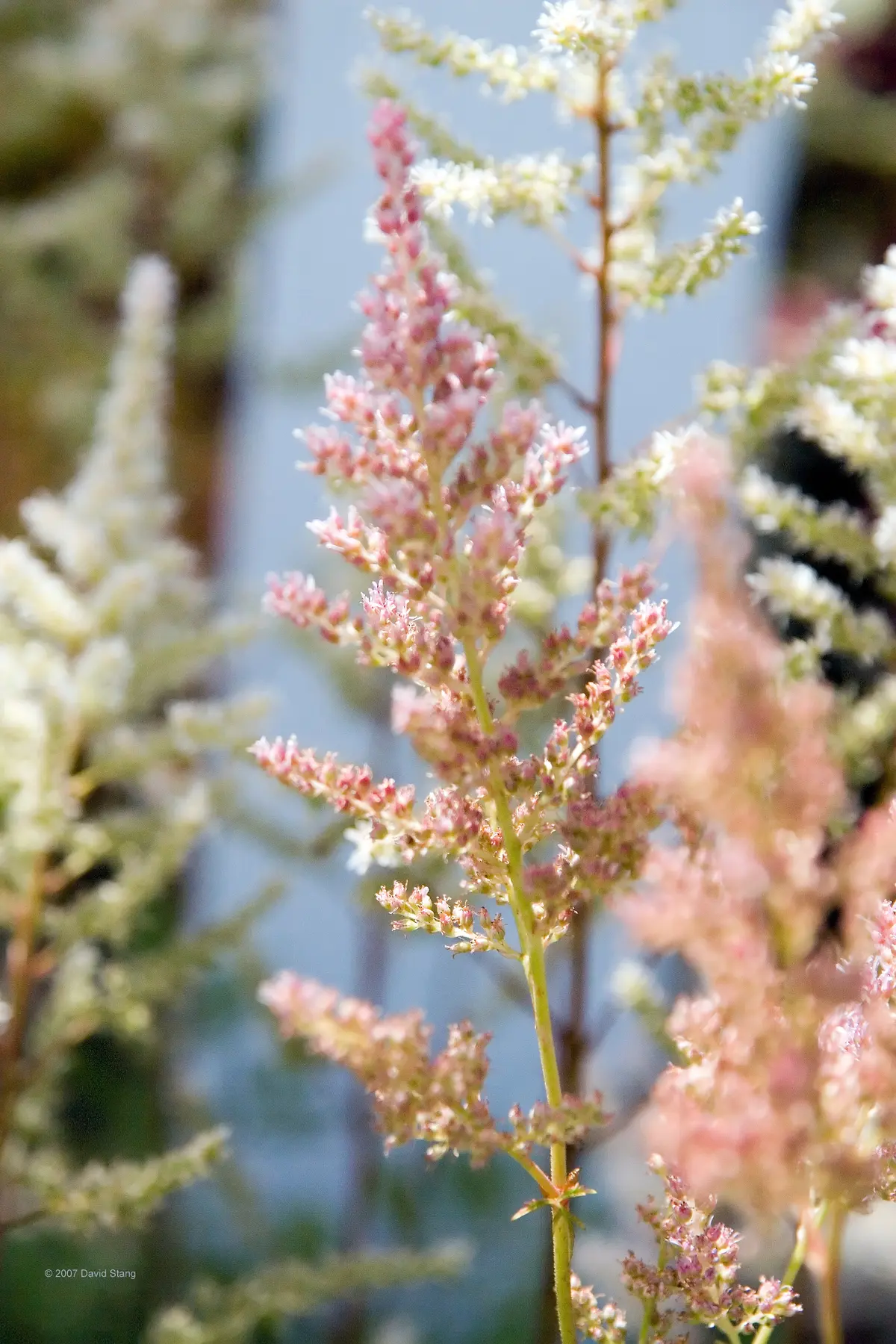
Japanese Astilbe 'Rheinland'
Astilbe japonica 'Rheinland'
One of the very first astilbe japonica hybrids, still grown over a century later for its clear pink flower plumes over neat, deep green foliage in a shady, consistently moist border.
Keep reading Show less
Astilbe japonica ‘Rheinland’ tops neat, deep green foliage with clear pink flower plumes in late spring — a shade perennial with over a century of garden history behind it and still going strong.
An astilbe with a long history
Introduced in 1902 by the German nurseryman Georg Arends, ‘Rheinland’ was among the very first Astilbe japonica hybrids ever bred. Its clean pink color and reliable performance kept it in commerce ever since, long outlasting most of its contemporaries.
Care tips
Site in part to full shade with rich, consistently moist soil — like all astilbes, it declines quickly if allowed to dry out, showing crisp, brown leaf edges. Mulch helps hold moisture through summer heat. Leave the spent plumes standing for winter texture or cut them back for tidiness, and divide clumps every three to four years to keep the planting vigorous.
Fun Fact
'Rheinland' was introduced in 1902 by German nurseryman Georg Arends, making it one of the very first astilbe japonica hybrids ever bred — and it's still a widely grown pink astilbe more than a century later.
Habitat & form
Where it's from and what to expect.
- Native range
- Garden cultivar of the species native to Japan
- Plant type
- Perennial
- Mature size
- Grows 18–24 in. tall (to 30 in. in bloom) and 18–24 in. wide.
- Bloom
- Clear pink flower plumes in late spring to early summer.
- Hardiness
- USDA zones 4–8.
Care
How to keep it happy.
- Sunlight
- Part shade to full shade; tolerates more sun only with constant moisture and cool summers.
- Water
- Requires consistently moist soil; does not tolerate drought. Mulch to help retain moisture.
- Soil
- Rich, humusy, well-drained soil; slightly acidic to neutral pH.
- Planting distance
- 18–24 in apart, based on mature spread.
- Propagation
- Divide in spring
- Pruning
- Deadhead or leave spent plumes for winter interest; divide clumps every 3–4 years.
- Pet safety
- Non-toxic