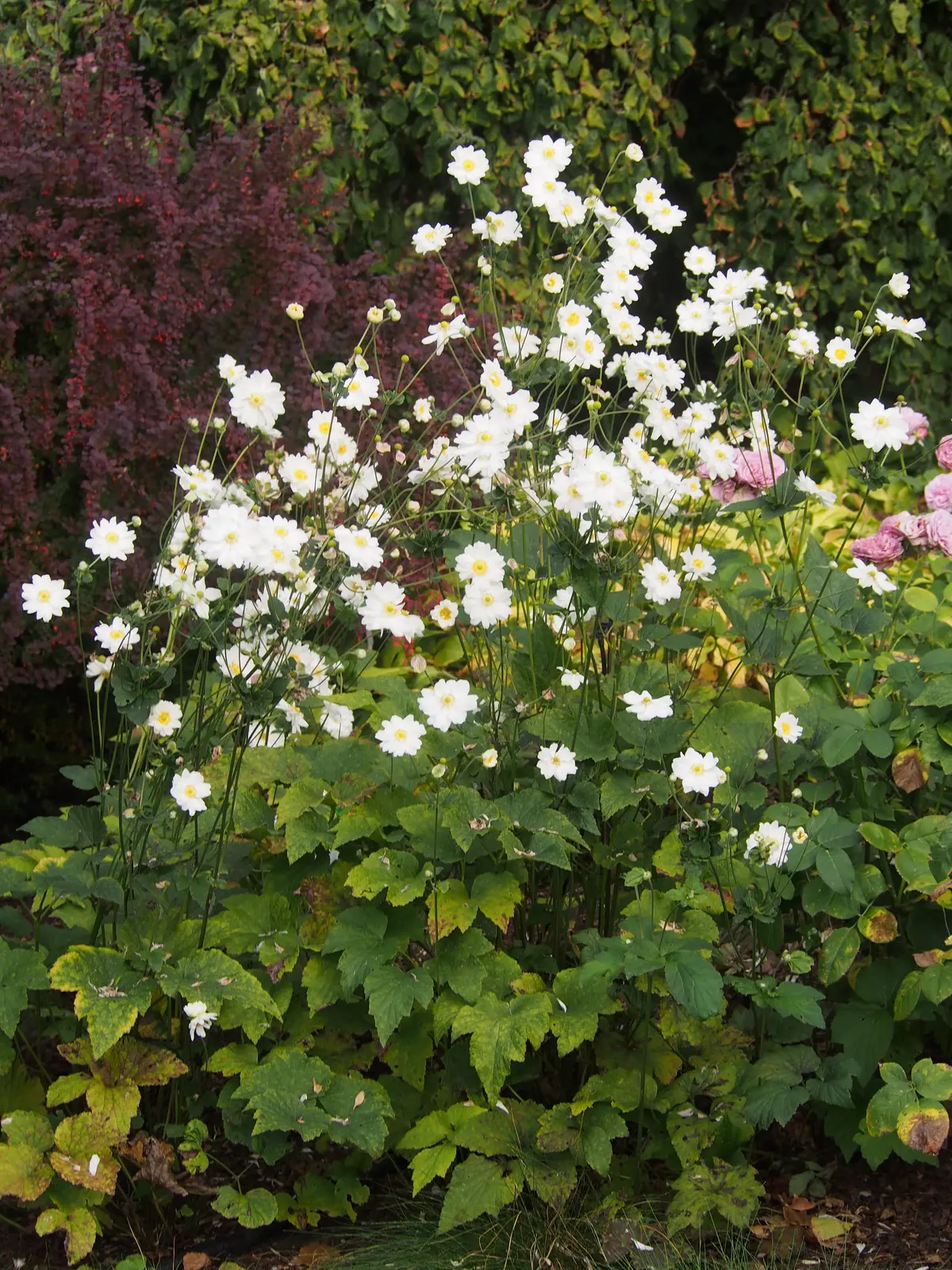
Japanese Anemone 'Whirlwind'
Anemone 'Whirlwind'
A heritage Japanese anemone with semi-double white flowers that seem to hover on tall, wiry stems above handsome dark green foliage, blooming late summer into fall.
Keep reading Show less
Anemone ‘Whirlwind’ brings a late-season lift to the shade garden: airy, semi-double white flowers with bright yellow centers that appear to float on tall, wiry stems well above the foliage, from late summer right through fall.
A long-lived heritage cultivar
‘Whirlwind’ isn’t a new introduction — it dates back to the 1880s, bred by the French nurseryman Victor Lemoine from crosses of Anemone hupehensis and Anemone vitifolia. Its dependable, weather-resistant blooms have kept it in cultivation ever since, and it remains one of the most popular white Japanese anemones sold today.
Care tips
Site in part shade with rich, evenly moist soil — it tolerates more sun if the soil never dries out. Foliage emerges late in spring, which makes it a good companion for spring bulbs as their leaves die back. Once established, avoid moving or dividing the clump; Japanese anemones resent root disturbance but will slowly naturalize into a larger colony if left alone. Cut back the dead foliage after frost each fall.
Fun Fact
'Whirlwind' is a heritage cultivar introduced in the 1880s by the French nurseryman Victor Lemoine, and remains one of the most widely grown white Japanese anemones nearly a century and a half later.
Habitat & form
Where it's from and what to expect.
- Native range
- Garden hybrid of species native to China and Japan
- Plant type
- Perennial
- Mature size
- Grows 30–48 in. tall and 18–36 in. wide.
- Bloom
- Semi-double white flowers with yellow stamens from late summer into fall.
- Hardiness
- USDA zones 4–8.
Care
How to keep it happy.
- Sunlight
- Part shade for best results; tolerates full sun where soil stays consistently moist.
- Water
- Keep evenly moist; avoid letting the soil dry out, but don't let it stay soggy.
- Soil
- Rich, humusy, well-drained soil that holds moisture; tolerates clay, loam, or sandy soils with good drainage.
- Planting distance
- 18–24 in apart, based on mature spread.
- Propagation
- Divide in spring
- Pruning
- Cut back dead foliage after frost; avoid moving or dividing established clumps, which dislike root disturbance.
- Pet safety
- Mildly toxic
All fresh sap-containing parts (leaves, stems, flowers, roots)