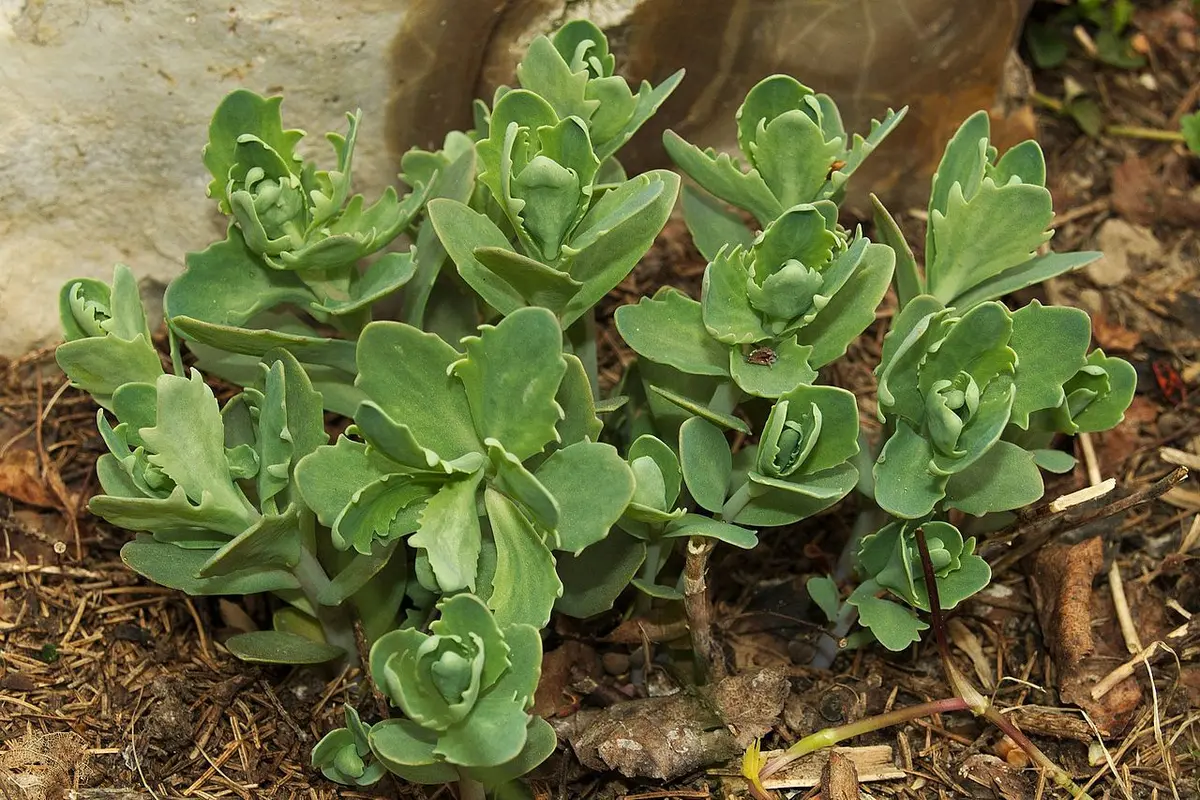
Orpine
Hylotelephium telephium
An upright succulent perennial whose fleshy stems are crowned in late summer with dense clusters of pink to ruby flowers.
Keep reading Show less
Orpine is an upright succulent perennial — once classified as Sedum telephium — grown for its fleshy, blue-green foliage and the broad clusters of tiny, star-shaped pink to ruby flowers that open from late summer into fall. As the blooms age they deepen to a rich burgundy that holds well into the cooler months.
Easy and architectural
The erect, fleshy stems give beds a bold, structural look, and many stay standing through winter for off-season interest. Bees and butterflies flock to the late nectar.
Care tips
Plant it in full sun and gritty, well-drained soil; like most succulents it will rot in soggy ground. It propagates almost effortlessly from division, stem cuttings, or even a single leaf. Look for the popular cultivars ‘Matrona’, ‘Purple Emperor’, and ‘Xenox’ for darker foliage.
Fun Fact
In European folklore, paired orpine stems were used to predict a couple's future on Midsummer's Eve.
Habitat & form
Where it's from and what to expect.
- Native range
- Europe and Asia
- Plant type
- Perennial · Succulent
- Mature size
- 2–2.5 ft tall and 1.5–2 ft wide.
- Bloom
- Tiny star-shaped pink to purplish-red flowers in dense clusters from August to October, fading to burgundy.
- Hardiness
- USDA zones 3–9.
Care
How to keep it happy.
- Sunlight
- Full sun.
- Water
- Low — medium to dry soils. Its taproots store water, and it rots in wet conditions.
- Soil
- Sandy or shallow-rocky soil with good drainage; neutral to alkaline pH.
- Planting distance
- 18–24 in apart.
- Propagation
- Divide in spring
- Pruning
- Leave seedheads for winter; cut back in early spring. Shorten stems in late spring to keep the clump compact.
- Pet safety
- Unknown
Prevent chewing.