Oakleaf Hydrangea 'Ruby Slippers'
Hydrangea quercifolia 'Ruby Slippers'
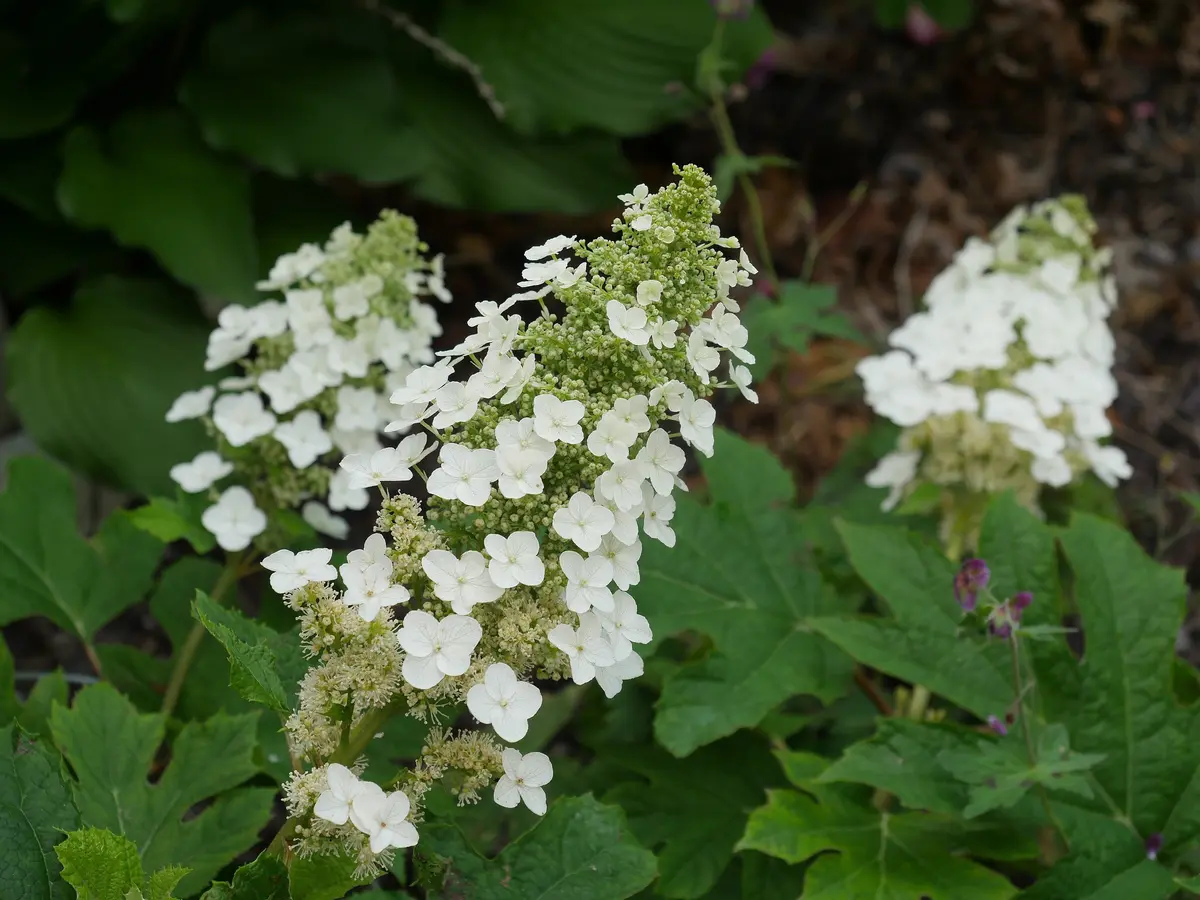
A compact native oakleaf hydrangea with upright flower panicles that age from white to ruby red, mahogany fall foliage, and peeling winter bark.
Keep reading Show less
Hydrangea quercifolia ‘Ruby Slippers’ is a compact selection of the native oakleaf hydrangea, a deciduous shrub of the southeastern United States. It keeps the species’ distinctive lobed leaves and peeling bark in a smaller plant suited to gardens where a full-size oakleaf hydrangea would take up too much room.
Flowers and fall color
In early summer, upright, cone-shaped panicles open white, then shift through pink to ruby red as they mature. The deeply lobed foliage turns mahogany red in autumn, and mature stems reveal attractive exfoliating bark in winter.
Care tips
Plant in organically rich, well-drained soil and keep it evenly moist, especially while it establishes. Full sun to part shade suits the shrub, with afternoon shade helpful in hot summers. It flowers on old wood, so prune only just after flowering if shaping is necessary; pruning later can remove next year’s buds.
The U.S. National Arboretum introduction sheet describes propagation by softwood cuttings, rooting in 4–6 weeks under mist.
Fun Fact
'Ruby Slippers' was introduced by the U.S. National Arboretum in 2010. Its flower panicles change from white to ruby red, while its oak-shaped leaves turn mahogany in fall.
Habitat & form
Where it's from and what to expect.
- Native range
- Southeastern United States (species)
- Plant type
- Shrub · Perennial
- Mature size
- 3–4 ft tall and 3–5 ft wide.
- Bloom
- Upright panicles open white in June and age through pink to ruby red by midsummer.
- Hardiness
- USDA zones 5–9.
Care
How to keep it happy.
- Sunlight
- Full sun to part shade; provide afternoon shade in hot climates.
- Water
- Medium moisture; keep evenly moist while establishing and mulch in summer to conserve moisture.
- Soil
- Organically rich, medium-moisture, well-drained soil.
- Fertilizer
-
Use slow-release shrub fertilizer only when soil is nutrient-deficient.
As spring growth begins
- Planting distance
- 3–5 ft apart, allowing room for its mature spread.
- Propagation
- Root softwood stem cuttings in late spring or early summer; cuttings preserve the cultivar.
- Pruning
- Blooms on old wood; prune immediately after flowering only if needed.
- Pet safety
- Mildly toxic
Keep pets from eating leaves or flowers.