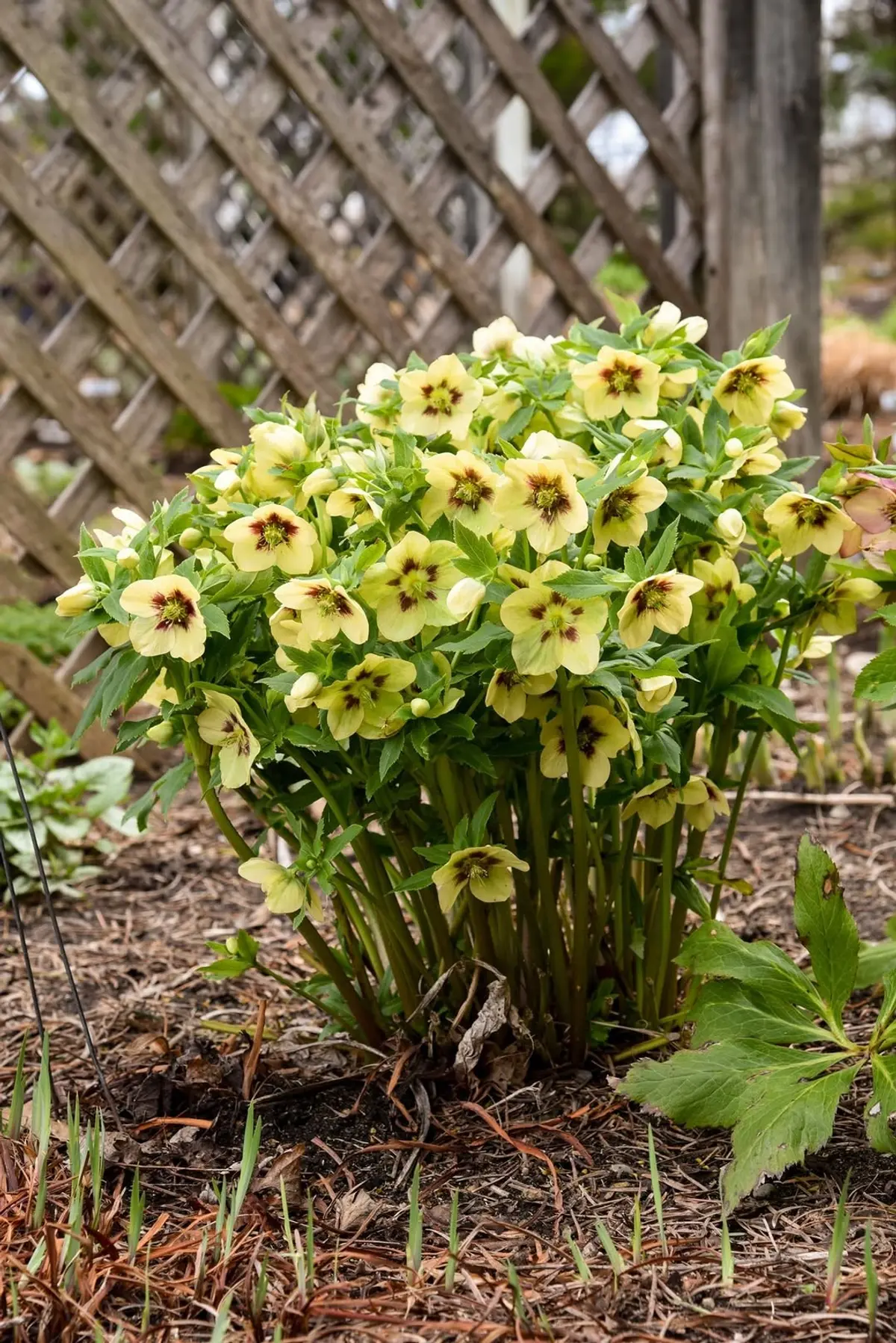
Hellebore 'Spanish Flare'
Helleborus 'Spanish Flare'
One of the very first perennials to bloom, with nodding, pale yellow flowers marked by bold maroon flares, held above handsome evergreen foliage in late winter.
Keep reading Show less
Helleborus ‘Spanish Flare’ is a Lenten rose hybrid grown for its striking, nodding flowers — pale yellow petals marked with bold maroon flares at the base — that open in late winter, often before almost anything else is blooming. Paired with leathery, deep green evergreen foliage, it provides color and structure through the coldest months of the year.
An early-blooming shade staple
Lenten roses are prized by shade gardeners for flowering so early, frequently pushing through late snow or frost to bring color to the garden when little else is stirring. ‘Spanish Flare’ keeps its handsome foliage through winter, so the plant offers year-round interest even between bloom cycles.
Care tips
Site in partial to full shade in rich, well-drained soil; established plants tolerate short dry spells but appreciate consistent moisture while in bloom. In late winter, cut away any tattered old leaves before the new flower stalks emerge to keep the display looking its best. As with all hellebores, all parts of the plant are toxic if ingested, and deer and rabbits generally leave it alone.
Fun Fact
Lenten rose gets its common name from its habit of blooming during the Christian season of Lent, in late winter to early spring — often pushing up flowers through the last of the snow, making it one of the earliest signs of the coming garden season.
Habitat & form
Where it's from and what to expect.
- Native range
- Garden hybrid; parent species native to Europe and western Asia
- Plant type
- Perennial
- Mature size
- Grows 12–18 in. tall and wide.
- Bloom
- Pale yellow, nodding flowers with maroon flares at the petal base, from late winter into early spring.
- Hardiness
- USDA zones 4–9.
Care
How to keep it happy.
- Sunlight
- Partial shade to full shade; tolerates more sun in cooler climates.
- Water
- Average water needs; drought-tolerant once established, but appreciates moisture during bloom.
- Soil
- Rich, well-drained soil; tolerates a range of soil types once established.
- Planting distance
- 12–18 in apart.
- Propagation
- Divide after flowering
- Pruning
- Remove tattered old foliage in late winter before new flower stalks emerge; otherwise low-maintenance.
- Pet safety
- Highly toxic
All parts toxic, especially roots