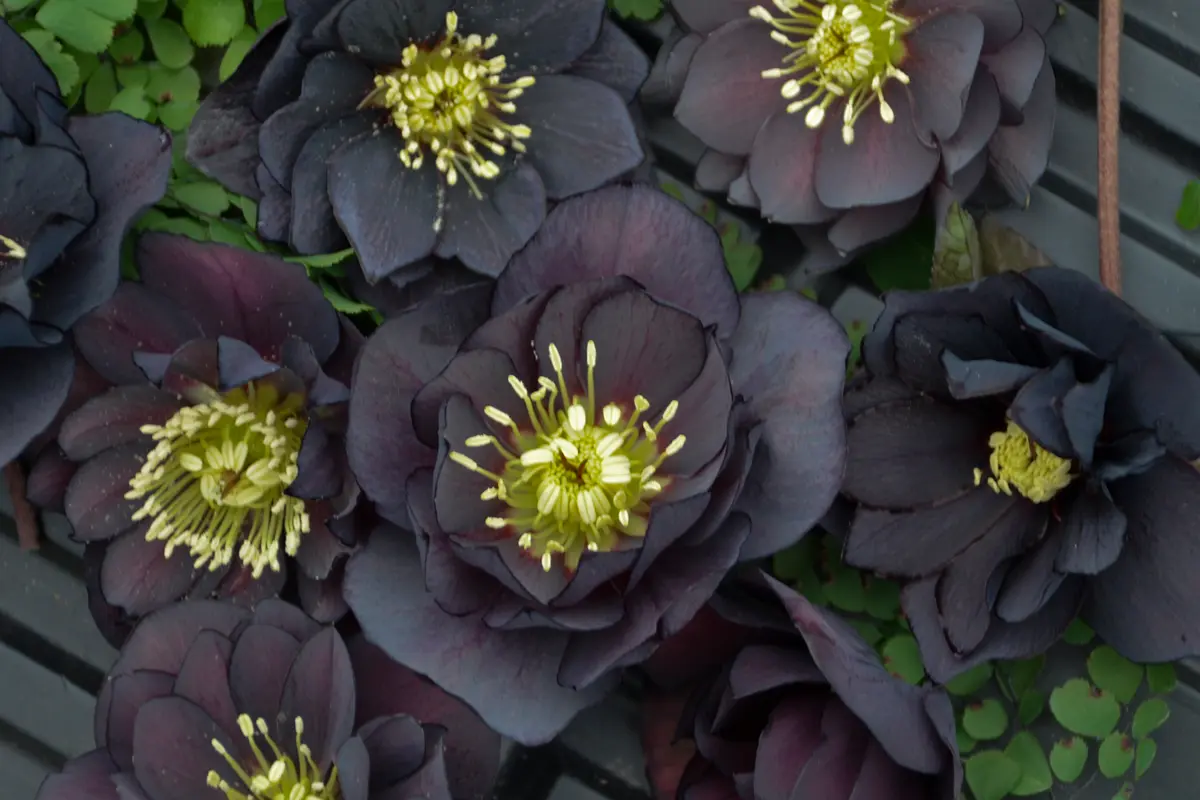
Hellebore 'Dark and Handsome'
Helleborus 'Dark and Handsome'
An evergreen hybrid hellebore with dramatic, double near-black flowers that open in late winter and early spring.
Keep reading Show less
Hellebore ‘Dark and Handsome’ is a compact evergreen perennial grown for its unusually dark, double flowers. Rounded, leathery foliage forms a year-round mound, and flower stems rise above it in late winter and early spring.
Dark flowers in the winter garden
The deep burgundy blooms can appear almost black, especially in shade, while their yellow-green centers bring out the detail of each flower. The long flowering season and persistent foliage make this hybrid a strong choice for a sheltered border or woodland edge.
Care tips
Grow it in part shade with rich, well-drained soil and moderate moisture. Avoid places where water stands around the crown. Before buds open, remove old or damaged leaves to display the flowers; cut spent stems back after blooming.
Heads up: all parts of hellebores are toxic if eaten, especially the roots. Keep the plant away from curious pets and children.
Spacing follows the Proven Winners cultivar profile; division timing and seedling variability follow the RHS hellebore growing guide.
Fun Fact
The flowers can look nearly black from a distance, but their centers reveal a contrasting yellow-green glow up close.
Habitat & form
Where it's from and what to expect.
- Native range
- Garden hybrid with no distinct wild native range
- Plant type
- Perennial
- Mature size
- 18–24 in. tall and wide.
- Bloom
- Double, near-black burgundy flowers bloom in late winter and early spring.
- Hardiness
- USDA zones 4–9.
Care
How to keep it happy.
- Sunlight
- Part shade to shade; protect from hot afternoon sun.
- Water
- Moderate water; keep the soil evenly moist but not waterlogged.
- Soil
- Humus-rich, well-drained soil.
- Planting distance
- 18–24 in. apart.
- Propagation
- Divide established clumps in early autumn or in spring after flowering to retain the parent's traits. Seedlings may differ from the parent.
- Pruning
- Remove old or damaged leaves before flower buds open and cut spent flower stems back after bloom.
- Pet safety
- Highly toxic
Keep all parts away from pets.
Through the year
Garden notes
10/17/26 Mahoney’s $17.49 (50%)