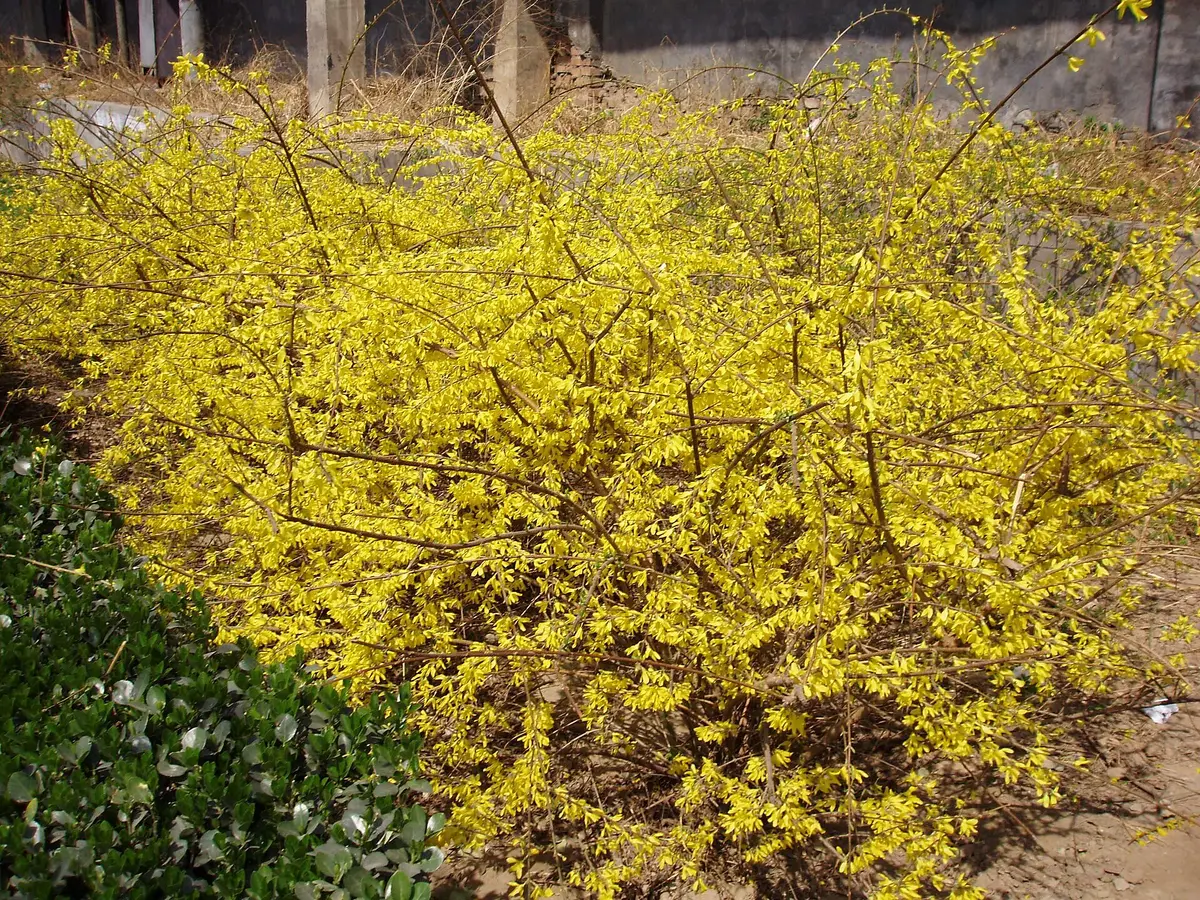
Greenstem Forsythia
Forsythia viridissima
One of the first shrubs to bloom each spring, smothering bare arching stems with bright yellow trumpet-shaped flowers before the leaves emerge — a bold, reliable herald of the new season.
Keep reading Show less
Forsythia viridissima — Greenstem Forsythia, also called Golden Bells — is a deciduous shrub in the olive family (Oleaceae), native to south China and South Korea. The species name viridissima means “very green,” referring to the distinctively green stems that set it apart from the more commonly planted hybrid forsythias.
The original forsythia
While hybrid forsythias have largely taken over the trade, Greenstem Forsythia is the straight species from which many cultivars descend. It grows into a dense, arching mound of multi-stemmed branches up to 6–10 feet tall, with long lance-shaped leaves that develop a hint of purple in fall. In late February through April — before a single leaf unfurls — the entire shrub erupts in bright yellow 4-lobed flowers, creating a vivid splash of color when little else in the garden stirs.
Tough and adaptable
Few flowering shrubs are as undemanding. Greenstem Forsythia tolerates clay, poor soil, urban compaction, drought, salt spray, and deer browsing. The arching stems are excellent for cutting and can be brought indoors in late winter to force blooms weeks early in a warm vase.
The one critical care rule: prune only immediately after flowering. Forsythia blooms on the previous year’s wood, so pruning in summer or fall cuts away the very buds that will flower next spring. A hard renovation prune right after bloom — cutting older stems to the ground — keeps the shrub dense and maximises the annual flower show.
Fun Fact
Forsythia was named posthumously after William Forsyth (1737–1804), a Scottish botanist who never visited Asia — the genus honored him decades after his death, when plant hunters first brought specimens back from China and Japan. Cut stems brought indoors in late winter will burst into golden bloom within days in a warm vase, one of the earliest and most reliable signs of the coming spring.
Habitat & form
Where it's from and what to expect.
- Native range
- South China and South Korea
- Plant type
- Shrub
- Mature size
- 6–10 ft. tall and wide, with arching, multi-stemmed, dense form.
- Bloom
- Bright yellow 4-lobed trumpet flowers appear in early spring (February–April) before foliage. Stems can be cut and forced indoors in late winter.
- Hardiness
- USDA zones 5–8.
Care
How to keep it happy.
- Sunlight
- Full sun to partial shade; more flowers in full sun.
- Water
- Low to moderate; drought tolerant once established. Water regularly the first season while roots settle in.
- Soil
- Adaptable to clay, loam, or sandy soils; tolerates poor and compacted sites; pH 6.0–8.5.
- Planting distance
- 6–10 ft apart as a specimen, based on mature spread (3–5 ft for a dense hedge).
- Propagation
- Root stem cuttings
- Pruning
- Prune immediately after flowering (April–May) to shape the shrub and promote vigorous new growth for next year's blooms. Do not prune in late summer or fall — this removes next year's flower buds.
- Pet safety
- Non-toxic