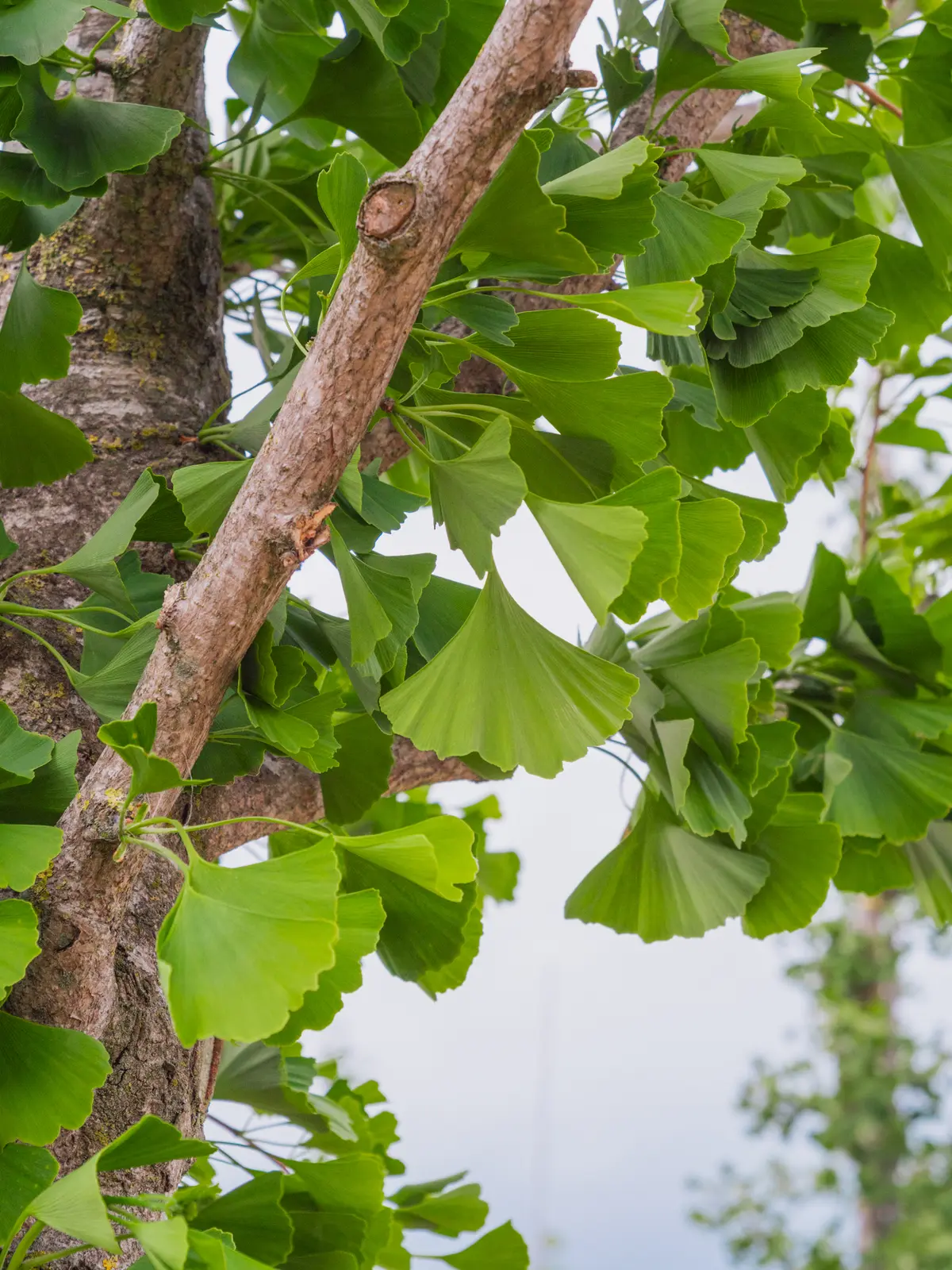
Ginkgo 'Blagon'
Ginkgo biloba 'Blagon'
A narrow, upright male ginkgo with fan-shaped green leaves that turn golden yellow in autumn.
Keep reading Show less
‘Blagon’, also sold as Goldspire or Fastigiata Blagon, forms a slender vertical accent with ascending branches. It is a male selection, avoiding the usual mess and odor of seeds produced by female ginkgos.
Plan for long-term height even when the young tree appears compact. Keep it away from overhead wires and give the roots uncompacted growing space rather than treating the narrow canopy as permission to squeeze it against a building.
Care sources: RHS: Fastigiata Blagon, Clemson Extension: ginkgo culture and ‘Blagon’, NC State Extension: ginkgo, Van den Berk: cultivar identity and eventual size, Iseli: cultivar description, RHS: winter grafting of ginkgo cultivars.
Fun Fact
Ginkgo's fan-shaped leaves have branching veins rather than the netted vein pattern of most broad-leaved trees.
Habitat & form
Where it's from and what to expect.
- Native range
- China (species); cultivar selected in France
- Plant type
- Tree · Perennial
- Mature size
- Eventually about 50 ft tall and 8–13 ft wide; long-lived specimens may approach 65 ft. The narrow crown does not make this a permanently small tree.
- Bloom
- No true flowers. Male pollen-bearing structures appear in spring; this male cultivar does not normally produce the fleshy seeds of female ginkgos.
- Hardiness
- USDA zones 4–8.
Care
How to keep it happy.
- Sunlight
- Full sun for a dense, upright crown and good autumn color.
- Water
- Water deeply while establishing and during prolonged dry spells. Established trees tolerate drought; avoid persistently wet or waterlogged soil.
- Soil
- Well-drained soil across a broad range of textures and pH, including acidic, neutral, and alkaline conditions. Avoid wet depressions.
- Fertilizer
- No routine fertilizer for healthy, established plants.
- Planting distance
- Allow about 13 ft between tree centers and at least 7 ft from structures for the eventual crown; keep clear of overhead wires.
- Propagation
- Propagate by specialist grafting in winter to retain the male cultivar and narrow habit. Seedlings will not preserve its identity or reliably be male.
- Pruning
- Little routine pruning is needed. Retain one central leader while young, remove competing leaders or damaged branches as needed, and avoid topping or shearing.
- Pet safety
- Non-toxic
This male cultivar is not considered toxic to pets; discourage chewing.