Fingerleaf Rodgersia
Rodgersia aesculifolia
A bold, moisture-loving shade perennial with huge palmate leaves and airy creamy flower plumes that give boggy borders a lush, almost tropical look.
Keep reading Show less
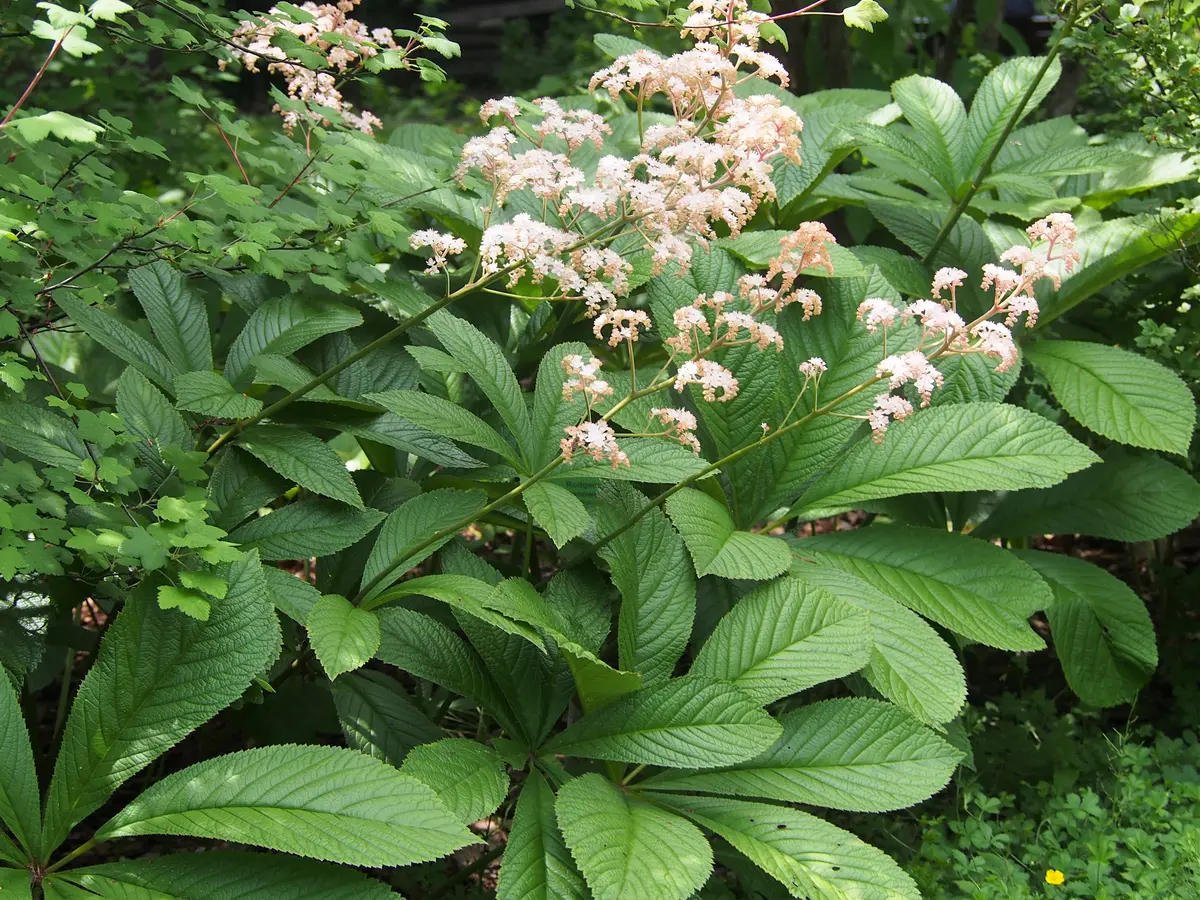
Rodgersia aesculifolia is one of those dramatic foliage perennials that can make a temperate shade garden feel almost subtropical. Each leaf is divided into broad, pleated leaflets like a horse chestnut, and the whole clump reads as bold and architectural even before it flowers.
In early to midsummer, airy branching plumes of tiny creamy-white to soft pinkish flowers rise above the foliage. The bloom is attractive, but the real show is the combination of those flower clouds with the oversized, heavily textured leaves, especially in a woodland border or beside water.
Give fingerleaf rodgersia what it wants most — rich soil that never dries out. It excels in part shade, rain-garden edges, and pondside plantings, where the root zone stays cool and damp. In dry ground or hot sun the leaf edges scorch, so this is a plant to site generously and water faithfully rather than test for toughness.
Fun Fact
The species name aesculifolia literally means 'with leaves like Aesculus' — a nod to the horse-chestnut-like leaf shape that makes this plant instantly recognizable.
Habitat & form
Where it's from and what to expect.
- Native range
- Moist woods and stream banks of China
- Plant type
- Perennial
- Mature size
- 3–5 ft tall and as wide, occasionally a bit larger in ideal moist sites.
- Bloom
- Fragrant creamy-white to blush-pink plumes from early to midsummer, above large palmate foliage.
- Hardiness
- USDA zones 5–7.
Care
How to keep it happy.
- Sunlight
- Part shade is ideal; full sun works only where the soil stays reliably moist.
- Water
- Keep consistently moist to wet; this is not a plant to let dry out.
- Soil
- Rich, humusy, moisture-retentive soil. Happy in boggy ground or at a pond edge.
- Planting distance
- 3–5 ft apart.
- Propagation
- Divide rhizomatous clumps in spring.
- Pruning
- Leave the foliage to feed the crown, then cut old leaves and spent stems back in late winter or early spring. Deadhead only if you want a tidier look.
- Pet safety
- Unknown
Prevent chewing.