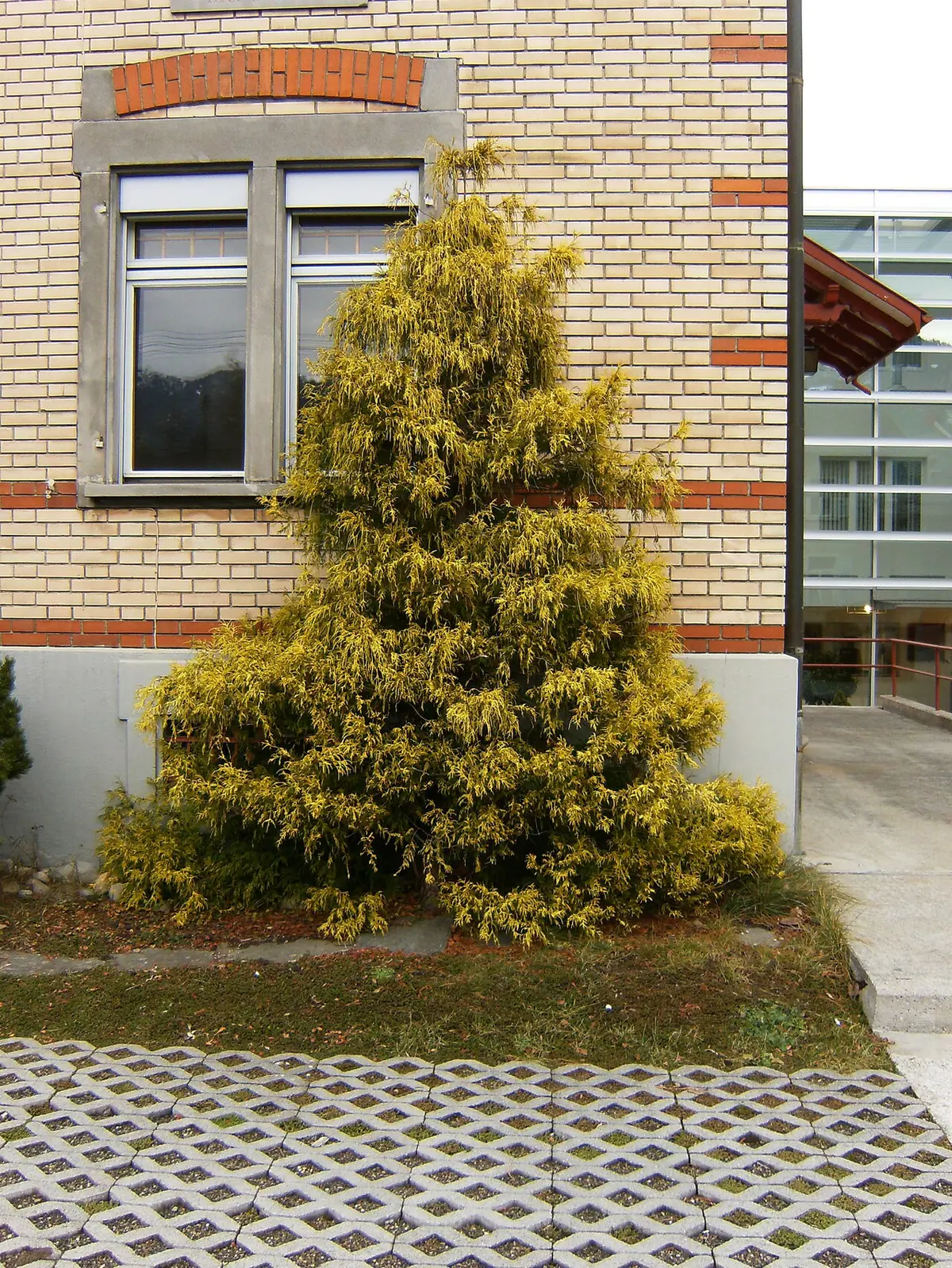
Golden Mop False Cypress
Chamaecyparis pisifera 'Golden Mop'
- Evergreen
- Small spaces
- Drought tolerant
- Slow growing
- Year-round interest
A slow-growing dwarf conifer with bright golden, thread-like foliage that mounds into a soft, mop-like shape.
Keep reading Show less
‘Golden Mop’ is a dwarf, golden-needled false cypress whose long, thread-like branchlets droop and tangle into a soft, mounded, mop-like form. The vivid chartreuse-gold color holds all year, making it a bright, low-maintenance accent for small gardens.
Slow and steady
This is a genuinely slow grower — it can take a decade to reach two feet — so it is perfect for rock gardens, foundations, and patio containers where you don’t want a plant to outgrow its spot.
Care tips
Give it full sun for the brightest gold color (it greens up in shade) and well-drained soil. It seldom needs pruning. Keep an eye out for bagworms, root rot, and juniper blight, to which it can be somewhat susceptible.
Fun Fact
Despite the name, it's not a true cypress. True cypresses (genus Cupressus) are native to the Mediterranean; 'False Cypress' (Chamaecyparis) is a separate genus native to Japan and eastern North America. The mix-up dates to early Western botanical exploration of Japan in the 1800s.
Habitat & form
Where it's from and what to expect.
- Native range
- Japan
- Plant type
- Shrub
- Mature size
- 2–5 ft tall and 2–5 ft wide — slow, taking up to 10 years to reach 2 ft.
- Bloom
- No true flowers; bright golden, thread-like evergreen foliage year-round, with reddish-brown exfoliating bark.
- Hardiness
- USDA zones 4–8.
Care
How to keep it happy.
- Sunlight
- Full sun to partial shade.
- Water
- Prefers moist to average soil; tolerates some drought once established.
- Soil
- Clay, loam, or sand with acid to neutral pH; prefers well-drained ground.
- Pruning
- Maintenance: seldom needed — trim lightly in spring to tidy the mound, staying within foliage-bearing growth. Renewal: not possible — like other false cypress it won't resprout from bare old wood, so avoid cutting into leafless branches.