Egyptian Walking Onion
Allium × proliferum
A perennial onion that 'walks' across the garden as its top-heavy bulbil clusters tip the stalks over and root themselves — all parts are edible, from tender spring shoots to pungent underground bulbs.
Keep reading Show less
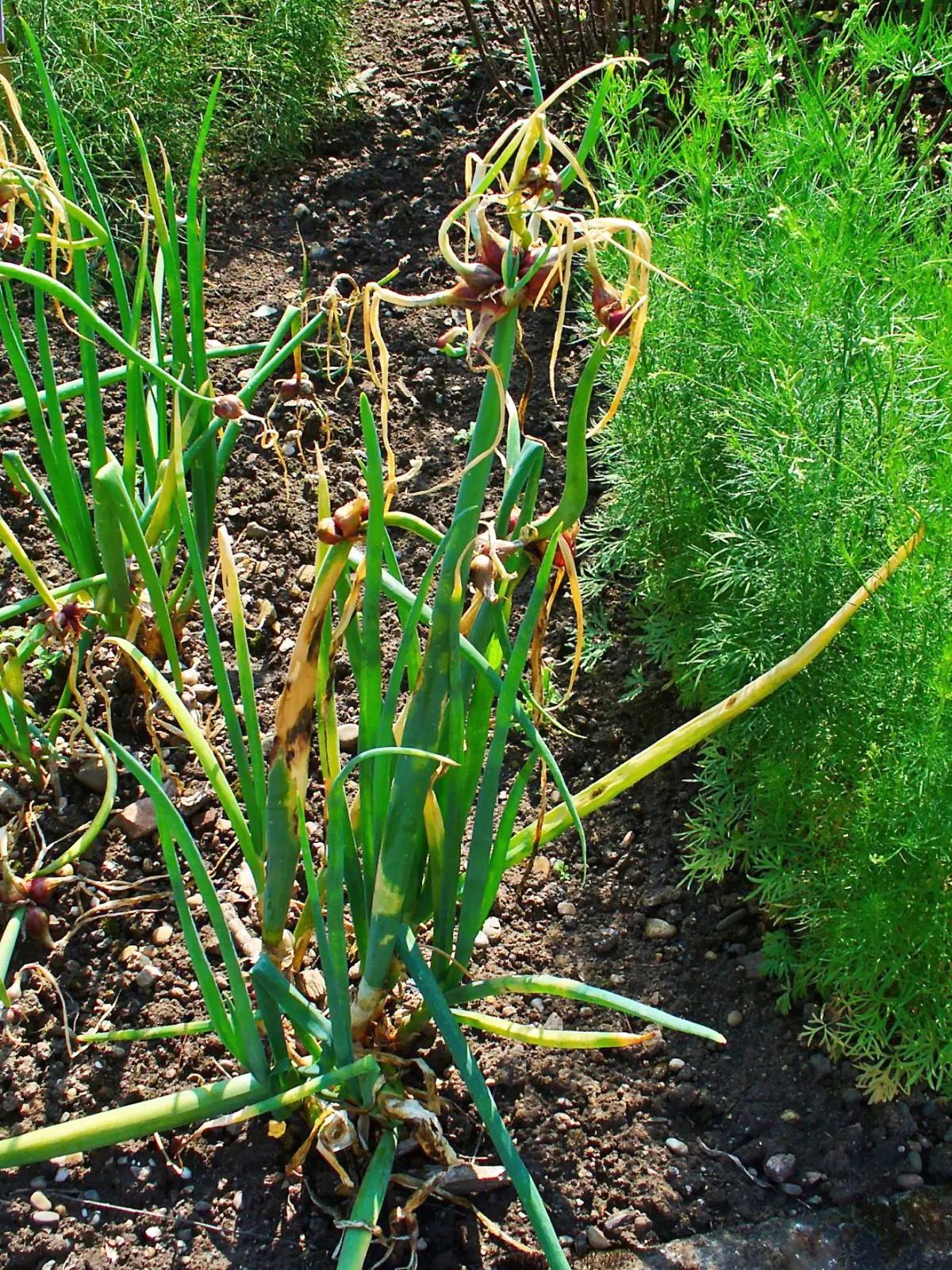
One of the most intriguing edible perennials for the kitchen garden, the Egyptian Walking Onion is a low-maintenance, self-propagating allium that returns reliably each year in zones 3–10. In early spring, hollow green leaves emerge from the brownish bases left over from the previous year; by late spring, spikes rise up to two feet, bearing clusters of small bulbils — miniature onion bulbs — at their tips instead of conventional flowers. If left unharvested, the spikes eventually topple under the weight of the bulbils and root where they land, beginning the “walk” that gives the plant its name.
Getting started is simple: plant topsets no more than an inch deep and 4–5 inches apart in a permanent, sunny location. Unlike regular bulb onions, these plants don’t need to be replanted each year. Established clumps multiply from the base as well and can be divided in spring. Plant it where you want it to stay — or give it room to roam.
All parts of the plant are edible: use tender young spring shoots as green onions, harvest fresh bulbils and eat them like scallions or store them for several months, and dig the small base bulbs for a pungent, spicy onion flavor. Egyptian Walking Onions are not susceptible to juglone, so they can be grown near black walnut trees where few other edibles thrive.
Fun Fact
Despite its name, the Egyptian Walking Onion is not native to Egypt — it likely originates from India or Pakistan and was introduced to Europe by the Romans. It gets its common name from its unusual propagation strategy: the bulbil-laden stalks grow top-heavy, tip over, and root themselves a short distance away, 'walking' the colony slowly across the garden season after season. It is a natural hybrid of the common onion (Allium cepa) and the Welsh onion (Allium fistulosum).
Habitat & form
Where it's from and what to expect.
- Native range
- Likely India or Pakistan; introduced to Europe by the Romans
- Plant type
- Perennial
- Mature size
- Up to 2 ft tall (bulbil-bearing stalks)
- Bloom
- Does not produce true flowers. Instead, clusters of small bulbils (topsets) form at the stalk tips in late spring to early summer. If unharvested, stalks topple under the weight of the bulbils, rooting them nearby.
- Hardiness
- Zones 3–10
Care
How to keep it happy.
- Sunlight
- Full sun.
- Water
- Average; keep soil consistently moist but well-drained. Shallow roots need regular watering during dry spells. Tolerates average garden conditions once established.
- Soil
- Well-drained, fertile; pH 6.0–7.0, high in organic matter. Plant bulbils no more than 1 inch deep, 4–5 inches apart. Does not need annual replanting — divide established clumps in spring.
- Planting distance
- Plant bulbils 4–5 in. apart; thin or divide established clumps to about 12 in. as they mature.
- Propagation
- Plant bulbils in late summer or fall
- Pruning
- Harvest young shoots as green onions in early spring. Harvest or replant bulbils in early summer before they self-propagate. Divide basal clumps in spring to control spread and rejuvenate plants.
- Pet safety
- Highly toxic
All parts toxic (bulbs, bulbils, leaves, stems, flowers)