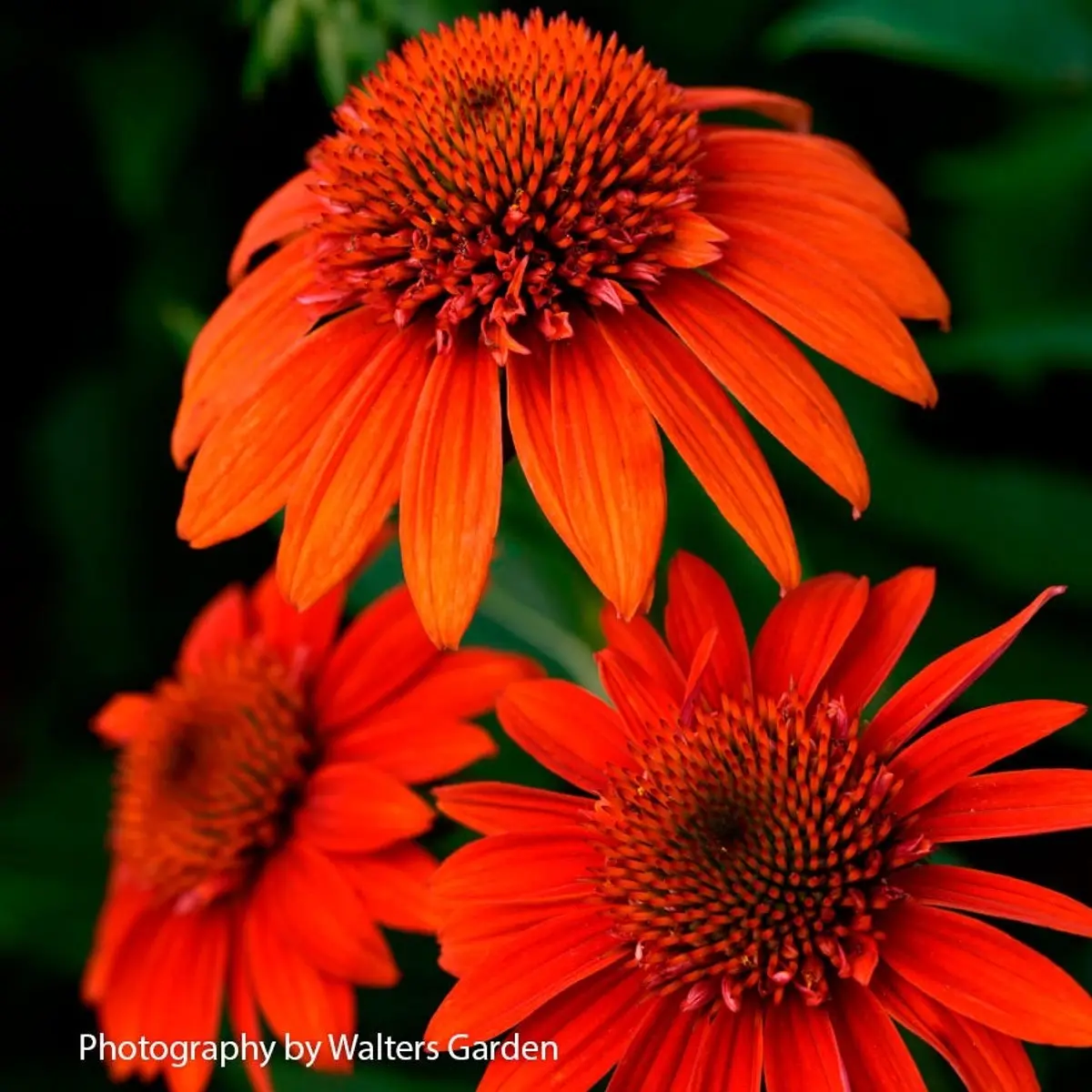
Coneflower 'Fiesta Orange'
Echinacea Sombrero® 'Fiesta Orange'
A vivid, sunset-orange coneflower bred for heavy branching and non-stop summer color, standing up to heat and drought while drawing in butterflies and bees.
Keep reading Show less
Echinacea Sombrero® ‘Fiesta Orange’ brings a vivid, sunset-orange twist to the classic prairie coneflower. Bred as part of Walters Gardens’ Sombrero® series (sold under the variety name ‘Balsomstor’), it’s heavily branched compared to older coneflower varieties, producing far more blooms over a longer season on sturdy, well-behaved stems.
Bred for more flowers, less flop
The Sombrero® series was developed to improve on older coneflower cultivars that tend to flop or bloom in a single flush. ‘Fiesta Orange’ instead branches freely, keeping fresh orange daisies coming from early summer well into fall, all while standing up to heat and dry spells better than the wild species.
Care tips
Plant in full sun in average, well-drained soil — it’s tolerant of poor and rocky ground once established. Water regularly through the first season to help it root in, after which it handles drought with ease. Deadhead through summer to keep the blooms coming, then leave the seed heads standing through fall and winter as a food source for goldfinches and other birds before cutting back in late winter.
Fun Fact
'Fiesta Orange' (sold under the variety name 'Balsomstor') is part of Walters Gardens' Sombrero® series, bred specifically for heavier branching than older coneflower varieties — meaning more flowers per plant and a longer season of color.
Habitat & form
Where it's from and what to expect.
- Native range
- Garden cultivar of the species native to central and eastern North American prairies
- Plant type
- Perennial
- Mature size
- Grows 18–24 in. tall and 16–20 in. wide, with heavily branched flowering stems.
- Bloom
- Vivid orange daisy flowers with dark centers from early summer through fall.
- Hardiness
- USDA zones 4–9.
Care
How to keep it happy.
- Sunlight
- Full sun.
- Water
- Drought-tolerant once established; regular water during the first season helps it settle in.
- Soil
- Average, well-drained soil; tolerates poor and rocky soils.
- Planting distance
- 16–20 in apart, based on mature spread.
- Propagation
- Divide in spring
- Pruning
- Deadhead to keep flowers coming; cut back in late winter or early spring, leaving seed heads through fall and winter for birds.
- Pet safety
- Non-toxic