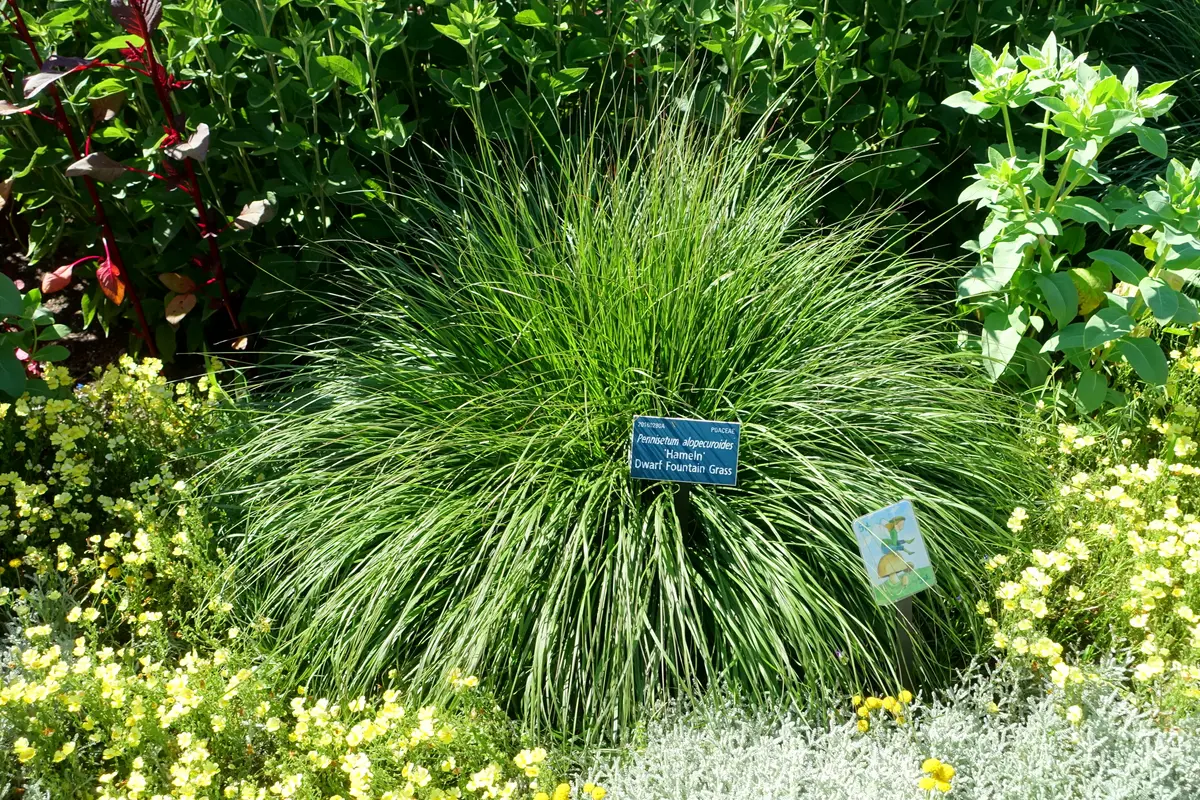
Dwarf Fountain Grass 'Hameln'
Pennisetum alopecuroides 'Hameln'
A compact, clump-forming ornamental grass with a fountain-like mound of fine foliage and foxtail-shaped flower plumes in late summer.
Keep reading Show less
Pennisetum alopecuroides ‘Hameln’ is a compact selection of Chinese fountain grass, native to open grasslands and meadows across East Asia and Australia. It forms a tidy, rounded mound of fine arching blades — smaller in every dimension than the straight species — topped from late summer into fall by silvery-tan, foxtail-shaped flower plumes that arch outward in a true fountain shape.
A tamer fountain grass
The wild species has a reputation for aggressive self-seeding and has escaped cultivation in some warmer regions, but ‘Hameln’ was specifically bred with sterile seed, making it a much better-behaved choice for home gardens. It also blooms about two weeks earlier than the species, extending its late-season display, and its shorter stature — under two feet — suits borders, mass plantings, and containers where the full-sized species would overwhelm the space.
Care tips
Give it full sun and well-drained soil for the densest form and best bloom; it tolerates a wide pH range and both dry and occasionally wet conditions once established. Cut the entire clump back to the ground in late winter before new growth emerges — leaving the tan foliage standing through winter provides texture and habitat in the meantime. Divide congested clumps in spring if needed, though ‘Hameln’ is slow to outgrow its space.
Fun Fact
The genus name Pennisetum comes from Latin penna ('feather') and seta ('bristle'), describing the feathery bristles on its flower spikes. 'Hameln' was bred with sterile seed specifically to avoid the aggressive self-seeding that has made the wild species weedy in some regions.
Habitat & form
Where it's from and what to expect.
- Native range
- East Asia and Australia
- Plant type
- Ornamental grass
- Mature size
- 1.5–2 ft tall and wide — notably more compact than the species.
- Bloom
- Silvery-tan to purplish-pink, foxtail-like plumes held above the foliage from late summer into fall, persisting as tan seed heads into winter.
- Hardiness
- USDA zones 5–9; site in a protected spot at the cold end of its range.
Care
How to keep it happy.
- Sunlight
- Full sun for best flowering; tolerates part shade with reduced bloom.
- Water
- Medium moisture; tolerates both dry and occasionally wet well-drained soils. Drought tolerant once established.
- Soil
- Adaptable to acidic, neutral, or alkaline soils; prefers average to fertile, well-drained ground.
- Planting distance
- 18–24 in apart.
- Propagation
- Divide clumps in spring. Seed is bred sterile, so 'Hameln' will not come true from seed (and rarely produces viable volunteers).
- Pruning
- Cut foliage back to the ground in late winter before new shoots emerge in spring.
- Pet safety
- Non-toxic