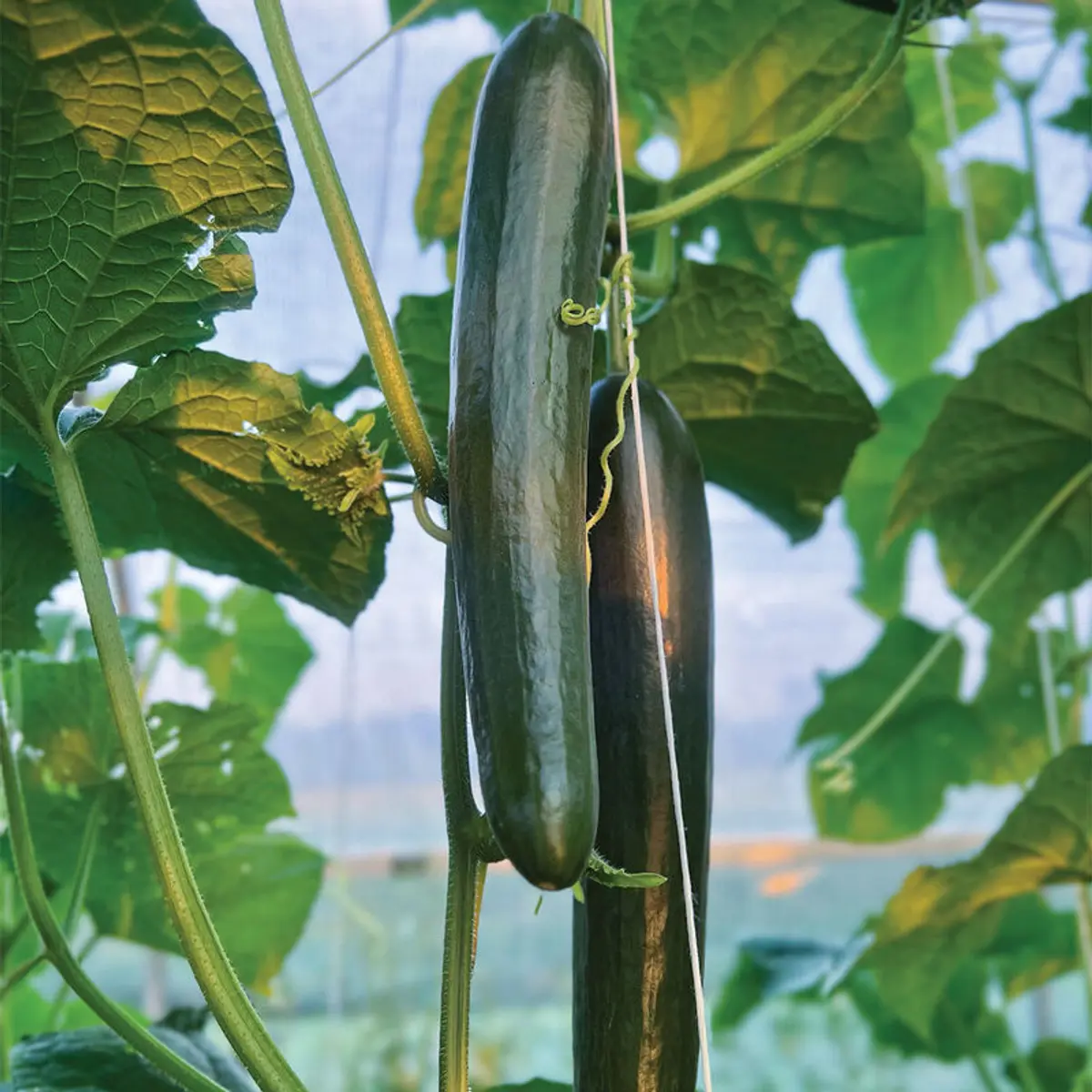
Cucumber 'Unagi'
Cucumis sativus 'Unagi'
A glossy, spineless, seedless slicing cucumber that produces crisp, straight fruit in abundance — ready in about 55 days.
Keep reading Show less
‘Unagi’ is an F1 hybrid slicing cucumber that delivers glossy, spineless, seedless fruit with a clean, crisp bite. It is a prolific producer of long, straight cucumbers and performs especially well under cover.
Reliable and productive
Being gynoecious and parthenocarpic, ‘Unagi’ sets fruit without pollination, which makes it a dependable choice for greenhouse and tunnel growing. It also carries high resistance to Cucumber Mosaic Virus, Powdery Mildew, and Target Spot.
Care tips
Grow in full sun and pick the fruit at 9–11 inches for the best texture, though it stays crisp up to about 14 inches. Trellising keeps the fruit straight and clean.
Cucumber care covers seed starting and cultivation.
Fun Fact
'Unagi' is Japanese for freshwater eel.
Habitat & form
Where it's from and what to expect.
- Native range
- South Asia (the species); this variety was bred in Japan
- Plant type
- Vine · Annual · Vegetable
- Mature size
- Harvest at 9–11 in. (still crisp up to 14 in.).
- Bloom
- Yellow flowers during the growing season.
- Harvest
- Glossy, spineless, seedless fruit; about 55 days to harvest.
- Hardiness
- Warm-season annual; frost-tender — plant out only after all danger of frost has passed.
Care
How to keep it happy.
- Sunlight
- Full sun.
- Water
- Even, consistent moisture — about 1 in. of water per week. Irregular watering makes the fruit bitter and misshapen.
- Soil
- Rich, fertile, well-drained soil high in organic matter; slightly acidic to neutral pH (about 6.0–6.8).
- Fertilizer
-
Use complete granular vegetable fertilizer only when soil is nutrient-deficient.
Before planting into warm soil
- Planting distance
- 12–18 in apart along a trellis.
- Propagation
- Direct-sow seed after the last frost, once the soil has warmed.
- Pruning
- Maintenance: train up a single string or trellis, removing the side shoots and lower leaves on the bottom of the stem for airflow, then let the upper laterals run.
- Pet safety
- Non-toxic
Discourage chewing.