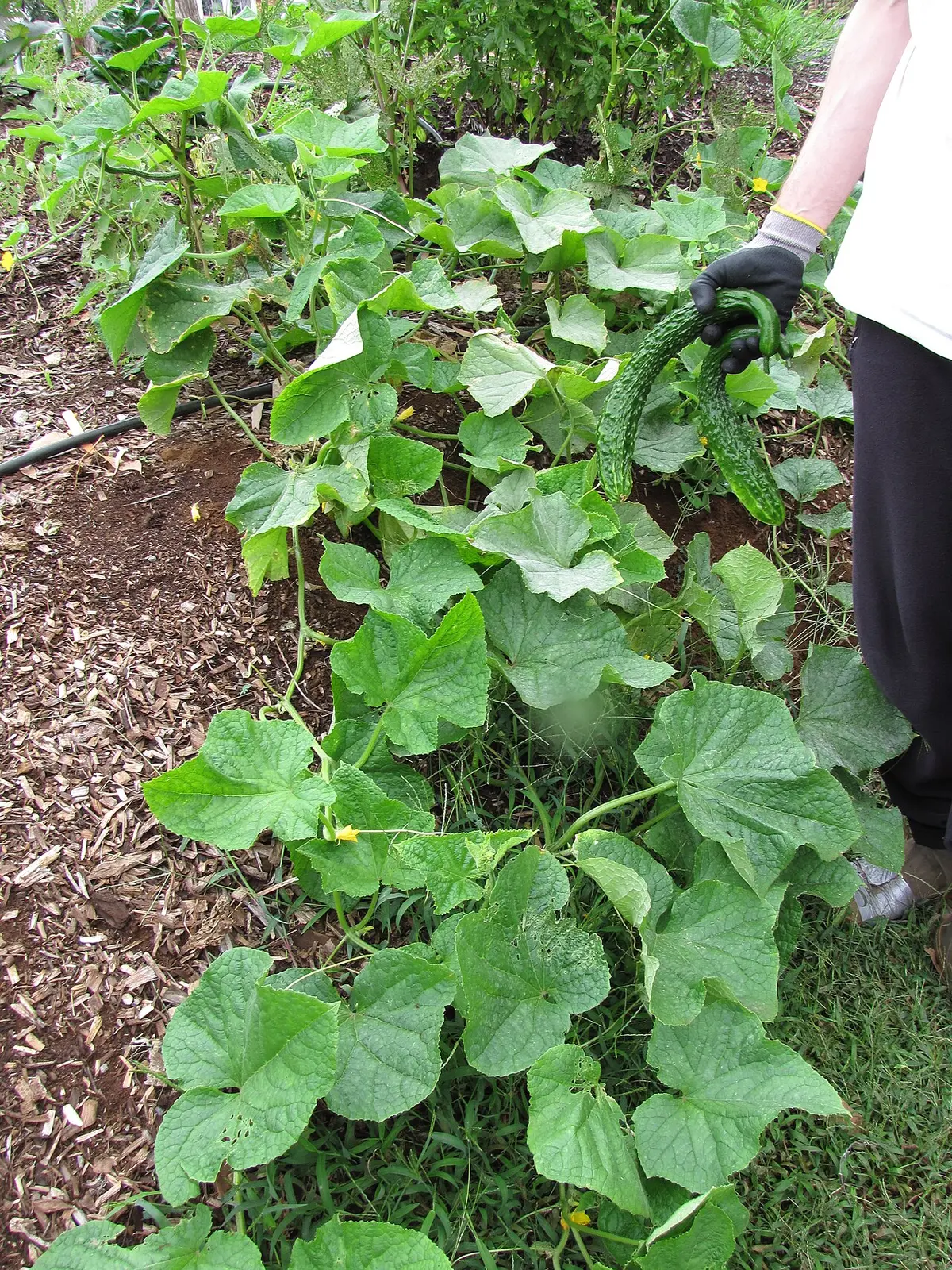
Cucumber 'Shintokiwa'
Cucumis sativus 'Shintokiwa'
A vigorous Japanese cucumber with long, slender, thin-skinned fruit that stays sweet, crisp, and bitter-free even when large.
Keep reading Show less
‘Shintokiwa’ is a vigorous Japanese cucumber that produces long, slender, thin-skinned fruit. It is prized for staying sweet, crisp, and entirely bitter-free even when the cucumbers grow large.
Sweet and crisp
The thin skin means there’s no need to peel, and the flavor stays mild and sweet across a wide range of sizes — a forgiving cucumber for the home garden.
Care tips
Grow it on a trellis to keep the long fruit straight and clean. For the most tender texture, pick around 8 inches, but don’t worry if a few get away from you — they hold their sweetness.
Cucumber care covers seed starting and cultivation.
Fun Fact
Cucumber bitterness comes from compounds called cucurbitacins.
Habitat & form
Where it's from and what to expect.
- Native range
- South Asia (the species); this variety was bred in Japan
- Plant type
- Vine · Annual · Vegetable
- Mature size
- Best picked at 8 in. or smaller, though it stays sweet when larger.
- Bloom
- Yellow flowers during the growing season.
- Harvest
- Long, slender, thin-skinned fruit.
- Hardiness
- Warm-season annual; frost-tender — plant out only after all danger of frost has passed.
Care
How to keep it happy.
- Sunlight
- Full sun.
- Water
- Even, consistent moisture — about 1 in. of water per week. Irregular watering makes the fruit bitter and misshapen.
- Soil
- Rich, fertile, well-drained soil high in organic matter; slightly acidic to neutral pH (about 6.0–6.8).
- Fertilizer
-
Use complete granular vegetable fertilizer only when soil is nutrient-deficient.
Before planting into warm soil
- Planting distance
- 12–18 in apart along a trellis.
- Propagation
- Direct-sow seed after the last frost, once the soil has warmed.
- Pruning
- Maintenance: train the vine up a trellis and pinch off the lowest side shoots and leaves for airflow, keeping the long fruit straight and clean.
- Pet safety
- Non-toxic
Discourage chewing.