Cryptomeria 'Mushroom'
Cryptomeria japonica 'Mushroom'
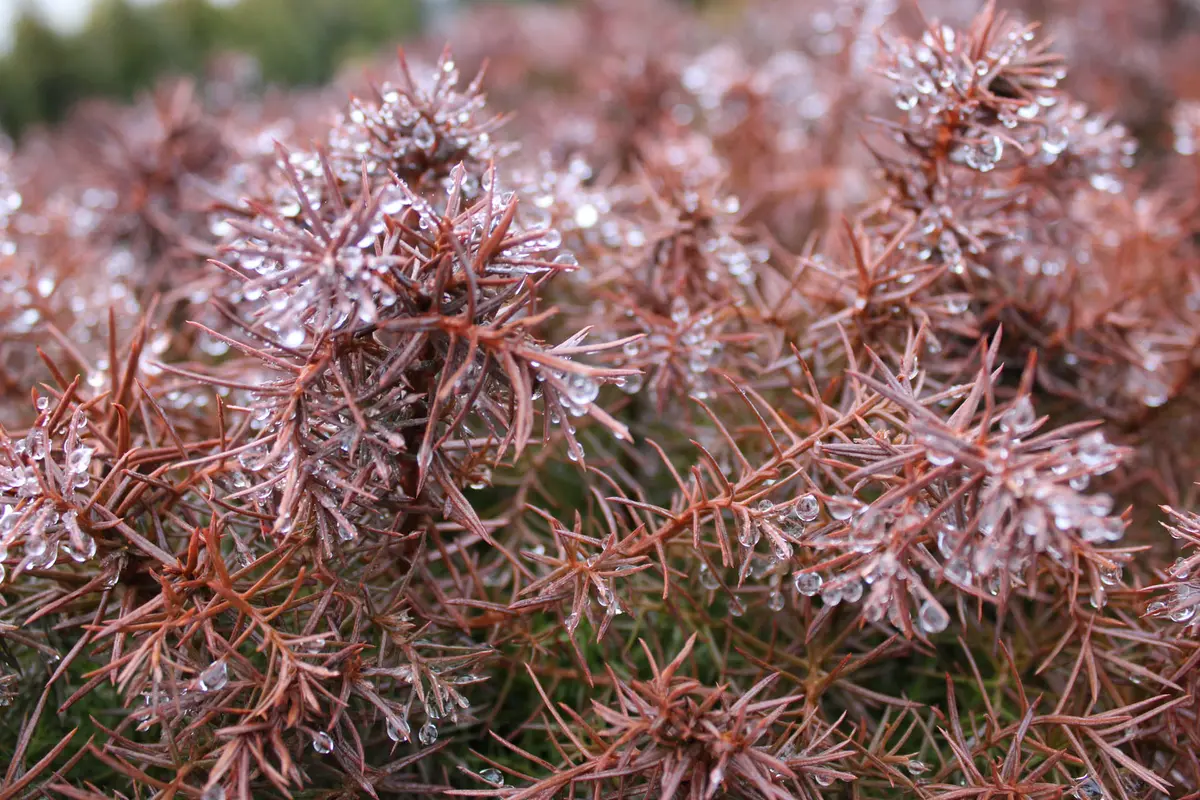
A slow-growing dwarf Japanese cedar that forms a dense, mushroom-shaped dome of fine evergreen needles, bronzing red-brown in winter.
Keep reading Show less
‘Mushroom’ is a dwarf form of Japanese cedar selected for its unusually broad, rounded silhouette — more a layered dome than the tall spire most people associate with Cryptomeria japonica. The fine awl-like needles give it a soft, almost heather-like texture that reads beautifully in rock gardens, troughs, and small conifer collections.
Through spring and summer the foliage is fresh green, then cool weather brings on the reddish-bronze tones that make this cultivar especially appealing in winter. It grows slowly and steadily, so the plant keeps its neat shape for a long time without constant clipping.
Site it in sun or light shade with rich, well-drained soil and protection from dry winter wind. Like many dwarf conifers, it resents both waterlogged roots and repeated hard pruning. Given a sheltered spot and steady moisture, it is an easy specimen for small spaces where year-round structure matters.
Fun Fact
Japanese cedar is not a true cedar at all — it is the sole species in Cryptomeria and is honored as the national tree of Japan.
Habitat & form
Where it's from and what to expect.
- Native range
- Japan and southern China
- Plant type
- Shrub · Perennial · Conifer
- Mature size
- About 20–24 in tall and 30–36 in wide in 10 years, gradually nearing 3 ft by 3 ft with age.
- Bloom
- No showy flowers; grown for dense, fine-textured evergreen foliage that turns reddish bronze in winter.
- Hardiness
- USDA zones 5b–7.
Care
How to keep it happy.
- Sunlight
- Full sun to part shade; give it a sheltered spot out of drying winter wind.
- Water
- Average to even moisture; do not let it dry out hard, especially in wind or containers.
- Soil
- Rich, slightly acidic, well-drained soil. Dislikes soggy ground and drying winter exposure.
- Fertilizer
-
Use Espoma Holly-tone only when soil is nutrient-deficient.
Late winter to early spring
- Planting distance
- 3–4 ft apart.
- Propagation
- Semi-hardwood cuttings.
- Pruning
- Usually unnecessary. If needed, trim lightly in spring to neaten the dome and avoid hard cuts into old wood.
- Pet safety
- Unknown
Prevent chewing.