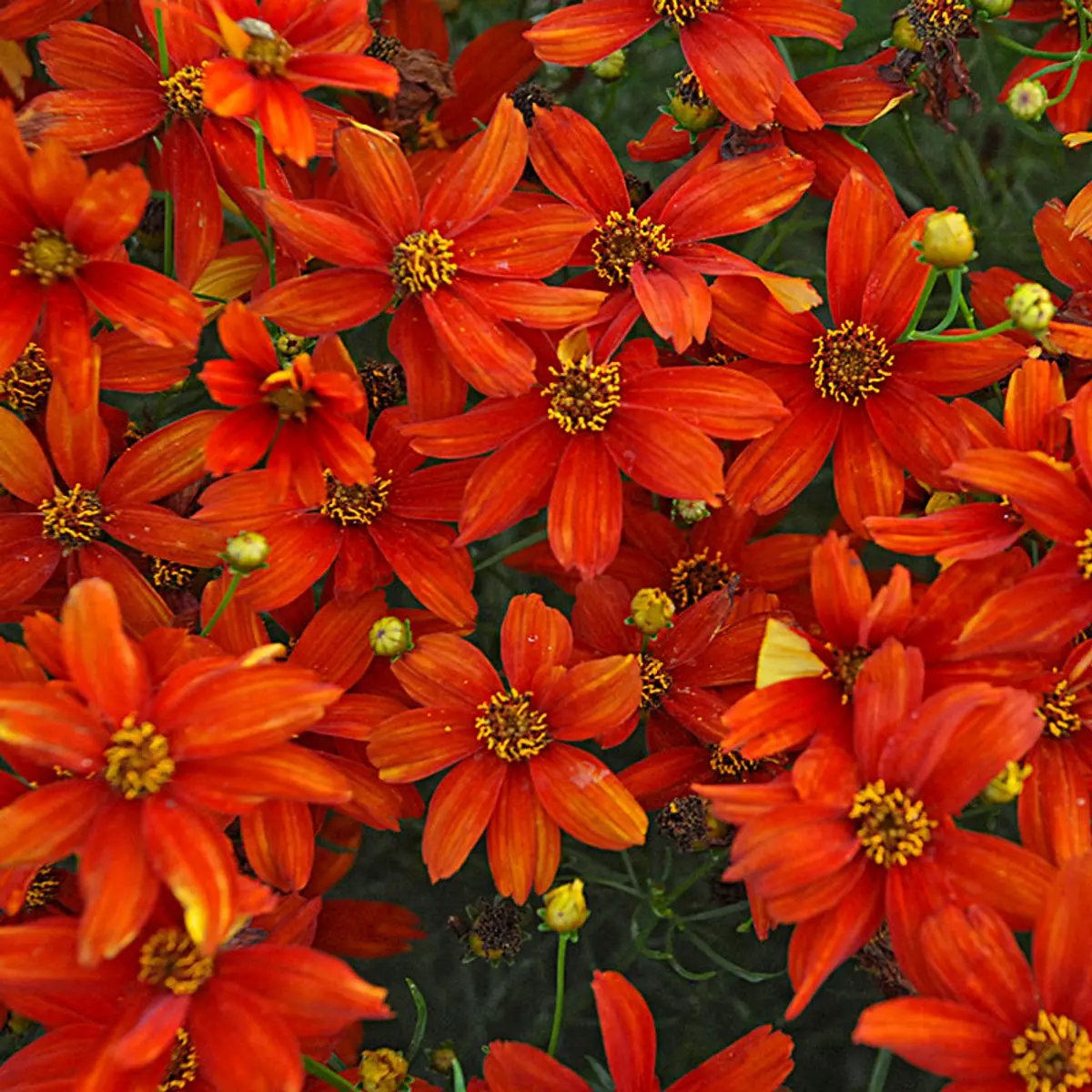
Tickseed 'Crazy Cayenne'
Coreopsis verticillata 'Crazy Cayenne'
A threadleaf coreopsis prized for its fine, ferny foliage and abundant orange-red daisy-like flowers that bloom from early summer well into fall.
Keep reading Show less
Coreopsis verticillata ‘Crazy Cayenne’ is a threadleaf coreopsis grown for its fine, ferny foliage and its abundant, brightly-colored flowers — a striking orange-red that stands out among the softer yellows typical of the genus. It blooms generously from early summer well into fall.
Fine foliage, fiery color
The narrow, thread-like leaves give this cultivar a light, airy texture that works beautifully massed in a border or mixed with bolder perennials. Against that fine foliage, the daisy-like orange-red flowers practically glow, and they keep coming for months rather than fading after a single early-summer flush.
Care tips
Plant in full sun in average to lean, well-drained soil — it’s naturally tolerant of poor and sandy ground and dislikes wet feet. Water regularly the first season to help it establish, then it shrugs off drought on its own. Shear the plant back by about a third after its first big flush of bloom to tidy it up and coax out a strong second round, then cut it to the ground in late winter before new growth emerges.
Fun Fact
'Crazy Cayenne' packs some of the most intense orange-red color found in any threadleaf coreopsis, a genus better known for softer yellows and pinks — its fine, needle-like foliage stays airy and never overwhelms the flower show.
Habitat & form
Where it's from and what to expect.
- Native range
- Eastern and central United States (parent species)
- Plant type
- Perennial
- Mature size
- About 18–22 in. tall and wide.
- Bloom
- Bright orange-red daisy-like flowers from early summer through fall.
- Hardiness
- USDA zones 5–9.
Care
How to keep it happy.
- Sunlight
- Full sun.
- Water
- Drought-tolerant once established; average water while getting settled.
- Soil
- Average to lean, well-drained soil; tolerates poor and sandy sites.
- Planting distance
- 18–22 in apart.
- Propagation
- Divide in spring or fall
- Pruning
- Shear back by about a third after the first flush of bloom to encourage rebloom; cut to the ground in late winter.
- Pet safety
- Non-toxic