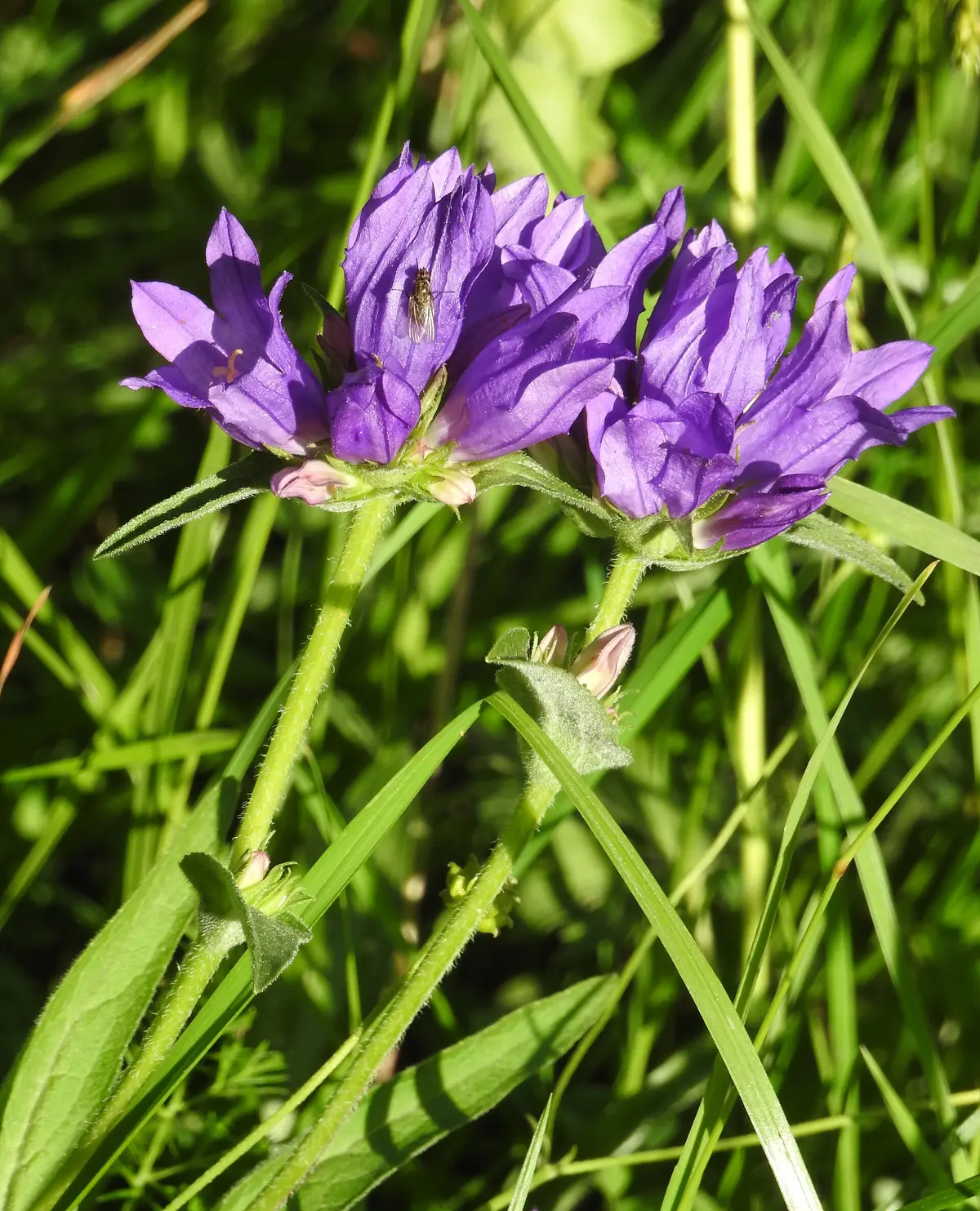
Clustered Bellflower 'Superba'
Campanula glomerata 'Superba'
Dense spherical clusters of rich violet-purple bell-shaped flowers crown upright stems in late spring and early summer — a bold, wildlife-friendly perennial for cottage gardens and borders.
Keep reading Show less
Campanula glomerata ‘Superba’ — Clustered Bellflower, also known as Dane’s Blood — is an upright, clumping herbaceous perennial in the bellflower family (Campanulaceae), native to meadows, open woodlands, and rocky slopes across most of Europe and temperate western Asia. ‘Superba’ is the tallest and most floriferous of the named cultivars, sending up stems to 2–3 feet in flower with large, intensely colored violet-purple clusters.
Strikingly clustered blooms
The common and scientific names describe the plant’s most distinctive feature: the flowers are tightly bunched into spherical heads (the epithet glomerata means “gathered into a ball”) atop medium-green, lance-shaped, slightly hairy stems. Each terminal cluster can hold up to 15 upward-facing, bell-shaped flowers, creating a bold, almost geometric effect. Smaller clusters bloom simultaneously from the upper leaf axils, extending the display from May into July. The vivid blooms attract bees, butterflies, hummingbirds, and specialized plasterer bees, while deer and rabbits tend to leave the plant alone.
Care tips
Plant in average, consistently moist, well-drained soil in full sun or partial shade. In hot, humid climates, afternoon shade extends bloom and prevents stress — the plant does not tolerate drought. Deadheading spent flower stems promptly and reliably triggers a second flush later in summer.
The main caution with Clustered Bellflower is its enthusiasm for spreading: it spreads by rhizomes and can naturalize aggressively, particularly in moist soils, and may also self-seed. Dividing the clumps every 3–5 years in fall keeps growth contained, prevents die-out at the center, and produces plenty of new plants for elsewhere in the garden.
Fun Fact
One of this plant's old English folk names is 'Dane's Blood' — rooted in the legend that it sprang from the ground where Danish Viking invaders were slain in battle. The story was used to explain why the plant grew in conspicuous clusters along ancient earthworks and hillforts in England. The Latin species name glomerata simply means 'clustered' or 'gathered into a ball' — the same root that gives us 'agglomerate' and 'conglomerate.'
Habitat & form
Where it's from and what to expect.
- Native range
- Europe and temperate Asia
- Plant type
- Perennial
- Mature size
- 'Superba' reaches 2–3 ft tall and 1–2 ft wide in bloom; basal foliage mound is lower.
- Bloom
- Dense spherical clusters of up to 15 upward-facing, violet-purple bell-shaped flowers at stem tips and in upper leaf axils from late spring to early summer. Good for cutting.
- Hardiness
- USDA zones 3–8.
Care
How to keep it happy.
- Sunlight
- Full sun to partial shade. In hot, humid summers, afternoon shade prolongs bloom and prevents stress.
- Water
- Regular; prefers average, consistently moist, well-drained soil. Not drought tolerant — keep it moist, especially in summer heat.
- Soil
- Loamy or sandy, well-drained; neutral to slightly alkaline pH (6.0–8.5). Avoid waterlogged sites where it can rot.
- Planting distance
- 12–18 in apart.
- Propagation
- Divide in spring or fall
- Pruning
- Deadhead spent flower stems promptly to encourage rebloom. Divide clumps every 3–5 years in fall to keep plants vigorous and prevent aggressive spread.
- Pet safety
- Non-toxic