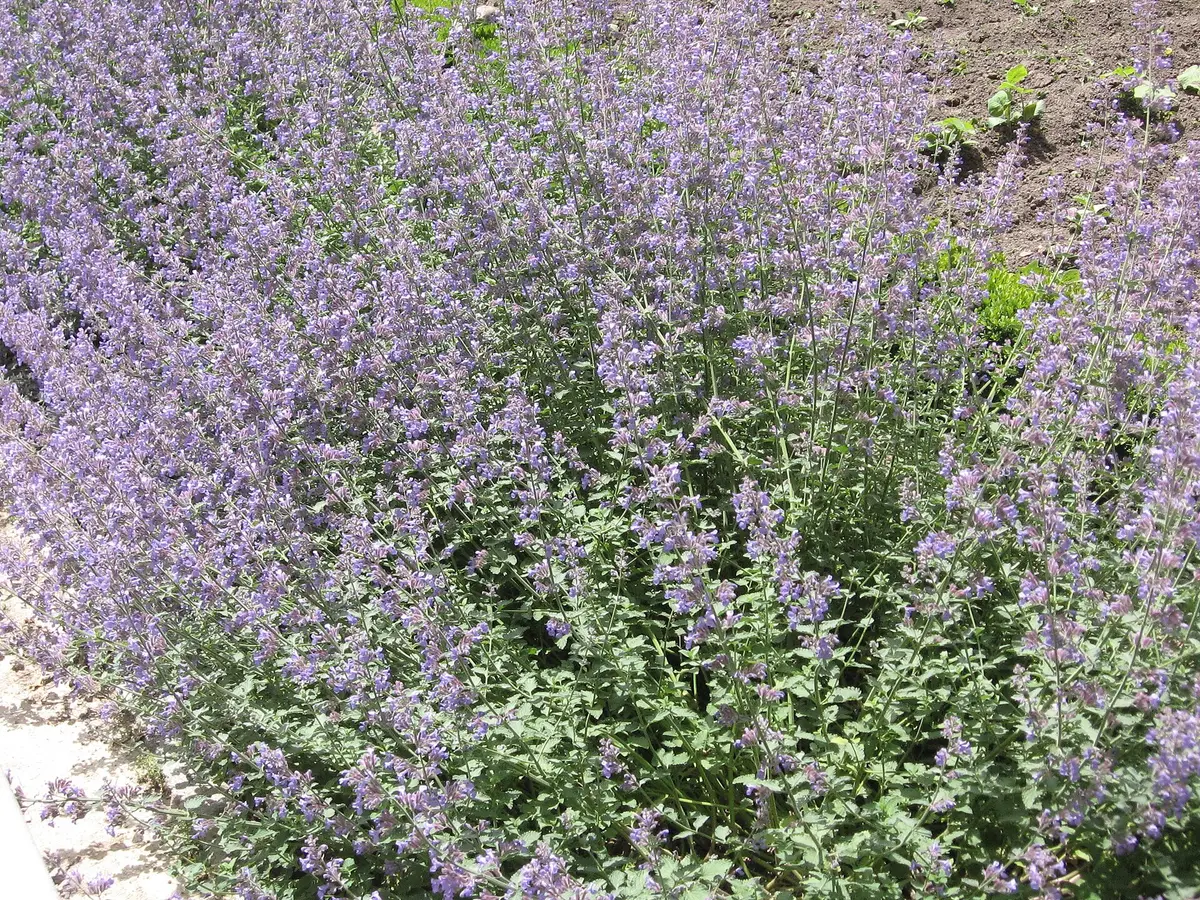
Catmint 'Junior Walker'
Nepeta x faassenii 'Junior Walker'
A compact, mounding perennial that billows with aromatic grey-green foliage and a seemingly endless supply of lavender-blue flower spikes — drought tolerant, deer resistant, and beloved by bees.
Keep reading Show less
Nepeta × faassenii ‘Junior Walker’ is a compact cultivar of Faasen’s catmint, a sterile hybrid perennial in the mint family (Lamiaceae). A garden cross of Nepeta racemosa and N. nepetella first raised at Faassen Nurseries in the Netherlands, ‘Junior Walker’ is valued for its tidier, lower-growing habit compared to the taller ‘Walker’s Low’ — making it ideal for the front of a border, edging paths and walkways, and containers. As a sterile hybrid that sets no seed, it channels all its energy into flowering rather than fruiting, which means it blooms for a very long time.
Fragrant foliage, long-season color
The plant forms a low, spreading mound of softly aromatic grey-green leaves that billow pleasantly over the edge of a path or bed. From late spring through midsummer, the stems are blanketed in small, two-lipped lavender-blue flowers that bees visit constantly. Cats are inevitably drawn to the crushed foliage — the scent, which to humans is pleasantly minty, is irresistible to felines, who will roll in it and chew on stems given the chance. Deer, however, dislike the fragrance and give it a wide berth.
Care tips
Catmint is one of the most undemanding garden perennials. It thrives in full sun with good drainage and is highly drought tolerant once established. In the South, light afternoon shade helps in the hottest months.
The one key care task is the midsummer shearing: once the first flush of bloom fades, cut the whole plant back by one-third to one-half. Within a few weeks, it rebushes with fresh foliage and a full second wave of flowers that often carries through to frost. Skip the shearing and the plant looks tatty for the rest of the season. The only failure mode is wet, poorly drained winter soil, which can cause crown rot — ensure good drainage and the plant is virtually maintenance-free.
Fun Fact
Despite the name, catmint is not catnip — catnip (Nepeta cataria) produces high concentrations of nepetalactone, the compound behind feline euphoria, while catmint has far lower levels and most cats ignore it entirely. The cultivar name 'Junior Walker' is a deliberate nod to the wildly popular 'Walker's Low' — same parentage, just a more compact habit.
Habitat & form
Where it's from and what to expect.
- Native range
- Garden hybrid (sterile cross of European Nepeta species)
- Plant type
- Perennial
- Mature size
- 'Junior Walker' grows 1–1.5 ft tall and 1.5–2 ft wide; compact, low, and mounding (smaller than the related 'Walker's Low').
- Bloom
- Small, two-lipped lavender-blue flowers in dense spike-like terminal clusters from late spring through midsummer. Shearing after the first flush triggers a strong second wave of bloom.
- Hardiness
- USDA zones 5–9.
Care
How to keep it happy.
- Sunlight
- Full sun preferred; tolerates partial shade, especially in the South where afternoon shade reduces heat stress.
- Water
- Low to moderate; drought tolerant once established. Good drainage is essential — the plant tolerates dry conditions far better than wet winter soils.
- Soil
- Adaptable to clay, loam, sandy, or shallow rocky soils; good drainage is the key requirement. Tolerates poor, dry soils well.
- Planting distance
- 18–24 in apart.
- Propagation
- Divide in spring
- Pruning
- Shear plants back by one-third to one-half after the first bloom flush fades (typically July) to encourage a full second flush. Clean up dead growth in early spring. Division every few years keeps plants vigorous.
- Pet safety
- Non-toxic