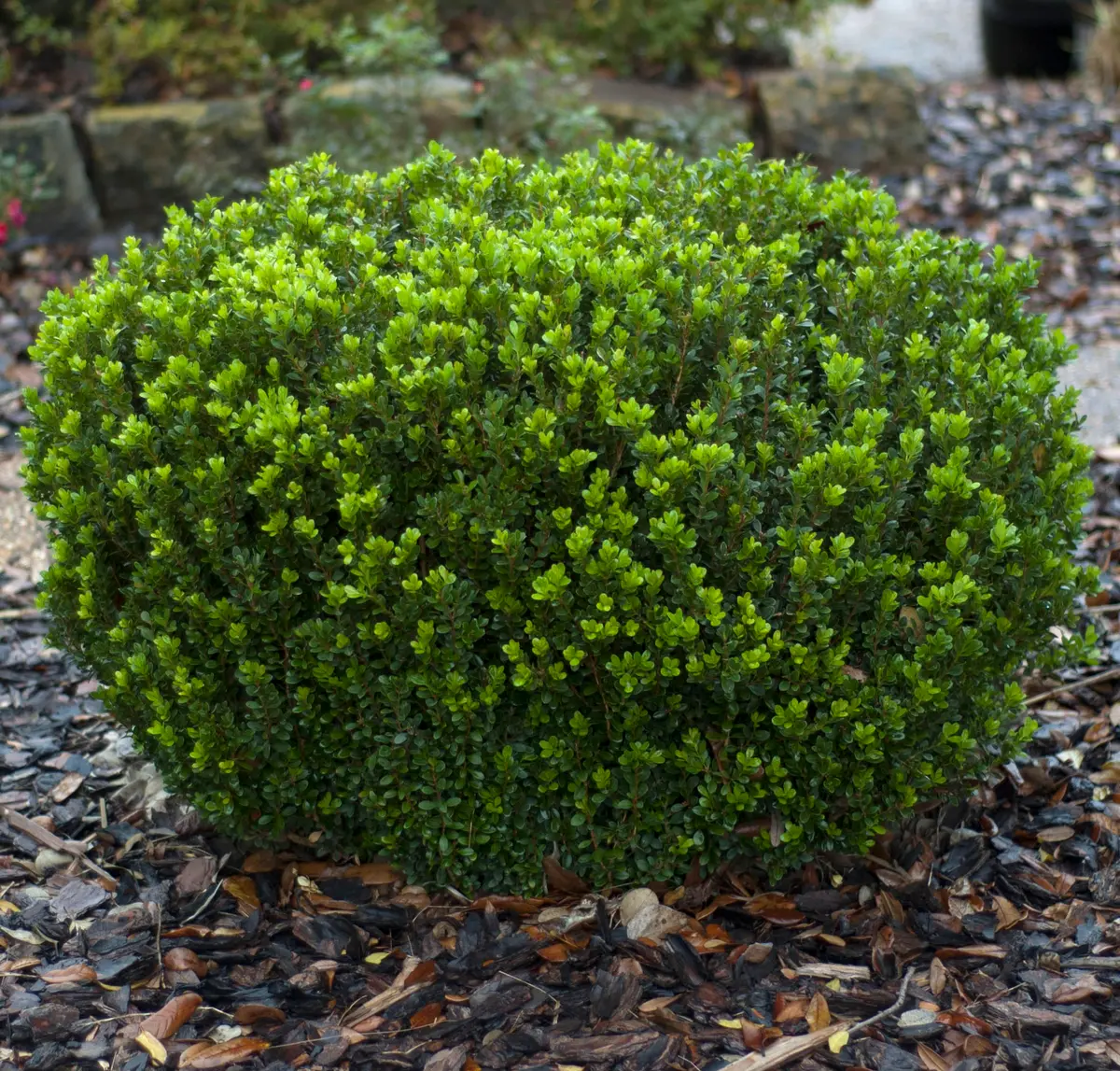
Boxwood 'Baby Gem'
Buxus microphylla var. japonica 'Gregem'
A dense, rounded evergreen boxwood selected for small leaves, tidy habit, and lighter pruning needs.
Keep reading Show less
Baby Gem is a compact Japanese boxwood grown for its naturally dense, rounded habit and small glossy leaves. It has the familiar look of a classic boxwood hedge, but on a scale that fits foundation beds, knot gardens, and other smaller spaces more easily than older, larger selections.
Its spring flowers are tiny and not especially ornamental, but they can be lightly fragrant up close. The real appeal is year-round structure: a full evergreen mound that takes shaping well yet usually stays neat with only occasional trimming. Once established, it is tougher about deer and dry spells than its polished appearance suggests.
Give it well-drained soil and avoid chronically wet sites, which are the quickest way to stress or lose a boxwood. It grows in full sun to part shade, though some afternoon protection helps in hot climates. A layer of mulch over the shallow roots and a light annual thinning or trim are usually all it needs.
Fun Fact
Baby Gem became popular because it keeps a formal-looking dome with noticeably less clipping than many older boxwoods.
Habitat & form
Where it's from and what to expect.
- Native range
- Japan (species), with this dense dwarf selection maintained in cultivation
- Plant type
- Shrub · Perennial
- Mature size
- Typically 3–4 ft tall and 4–5 ft wide, forming a dense rounded mound.
- Bloom
- Tiny, greenish-yellow spring flowers are fragrant but not showy; the evergreen foliage is the main feature.
- Hardiness
- USDA zones 5–8; some growers rate it hardy in sheltered zone 4 sites.
Care
How to keep it happy.
- Sunlight
- Full sun to part shade. Part shade or morning sun keeps foliage freshest in hot or exposed sites.
- Water
- Water regularly while establishing, then deeply during extended dry spells. It is drought tolerant once rooted but looks best with even moisture.
- Soil
- Moist, well-drained loam is ideal; tolerates a range of soils from slightly acidic to slightly alkaline if drainage is good.
- Fertilizer
-
Use Espoma Plant-tone only when soil is nutrient-deficient.
Late winter to early spring
- Planting distance
- 3–5 ft apart, based on mature spread; plant closer for a tight low hedge.
- Propagation
- Stem cuttings; named cultivars are propagated vegetatively to stay true.
- Pruning
- Low maintenance and naturally dense. If shaping is needed, prune after the last spring frost or lightly shear in early summer.
- Pet safety
- Mildly toxic
Keep pets from chewing leaves or twigs.