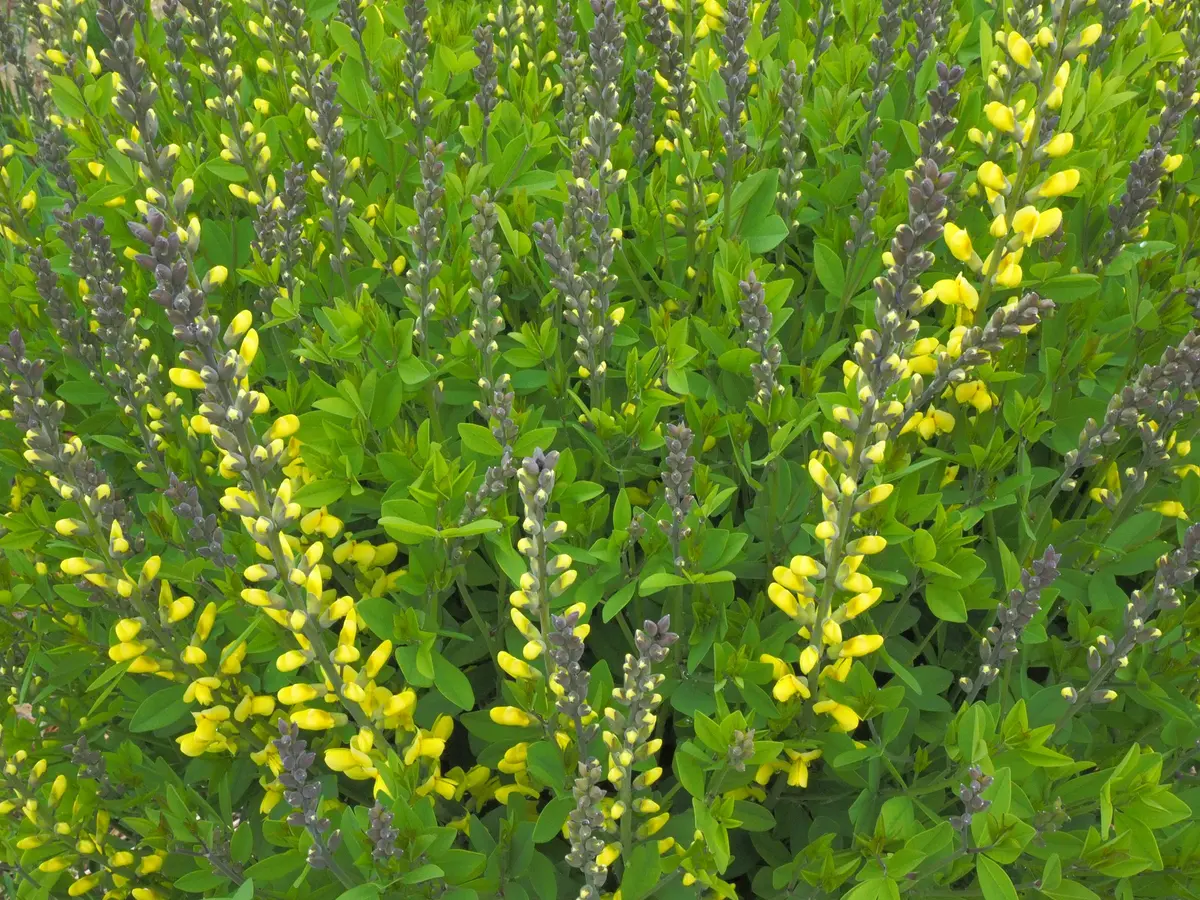
Wild Indigo 'Lemon Meringue'
Baptisia Decadence® 'Lemon Meringue'
A vigorous, long-lived wild indigo with charcoal stems and lupine-like spires of soft lemon-yellow flowers over mounded blue-green foliage — tough, drought-tolerant, and nearly maintenance-free once established.
Keep reading Show less
Baptisia Decadence® ‘Lemon Meringue’ is a wild indigo prized for its soft lemon-yellow flower spikes, held on near-black stems above a lush, rounded mound of blue-green, clover-like foliage. It’s a long-lived, low-drama perennial: once its deep taproot is established, it shrugs off drought, poor soil, deer, and rabbits, and asks for almost nothing in return.
A faster-maturing wild indigo
Baptisias are famous for taking their time to bulk up, but ‘Lemon Meringue’ was specifically bred to reach a full, floriferous clump faster than most cultivars in the genus. In late spring, tall spires of soft yellow, lupine-like flowers open from charcoal-gray buds, drawing bees and other pollinators for several weeks. As the blooms fade, plump seed pods take over, rattling in the wind and holding their good looks well into fall — leave them standing rather than deadheading.
Care tips
Give it full sun and average, well-drained soil; it tolerates sand, clay, and rocky ground alike and needs no fertilizer or staking once established. Because of its deep taproot, site it where it can stay put — established plants resent being moved. The only real maintenance is an annual cutback to the ground in late fall or early spring; otherwise, simply enjoy the flowers, the seed pods, and the deer- and rabbit-proof foliage.
Fun Fact
'Lemon Meringue' is a 2011 Hans Hansen hybrid in the Decadence® series, bred to grow into a full, floriferous clump faster than most wild indigos — a genus notorious for taking several years to hit its stride thanks to that deep, slow-to-establish taproot.
Habitat & form
Where it's from and what to expect.
- Native range
- Garden hybrid (the genus is native to eastern and central North America)
- Plant type
- Perennial
- Mature size
- Reaches about 3 ft tall and 3–4 ft wide in a broadly vase-shaped mound.
- Bloom
- Spikes of clear lemon-yellow, lupine-like flowers open from dark charcoal-gray buds on nearly black stems in late spring to early summer, followed by attractive seed pods that persist into fall.
- Hardiness
- USDA zones 4–9.
Care
How to keep it happy.
- Sunlight
- Full sun to part sun (6+ hours ideal) for the sturdiest stems and best flowering; tolerates light shade but may flop and bloom less.
- Water
- Average water while establishing; deeply drought-tolerant once its taproot is established. Avoid soggy or poorly drained sites.
- Soil
- Average, dry-to-medium, well-drained soil; tolerates poor, sandy, rocky, or clay soil. Prefers slightly acidic to neutral pH. Does not transplant well once established, due to a deep taproot.
- Planting distance
- 3–4 ft apart, based on mature spread.
- Propagation
- Softwood cuttings in late spring
- Pruning
- Maintenance: very low. No deadheading needed — let seed pods stand for fall interest. Cut the whole clump back to the ground in late fall or early spring.
- Pet safety
- Mildly toxic
All parts contain alkaloids; roots, seeds, and pods main concern