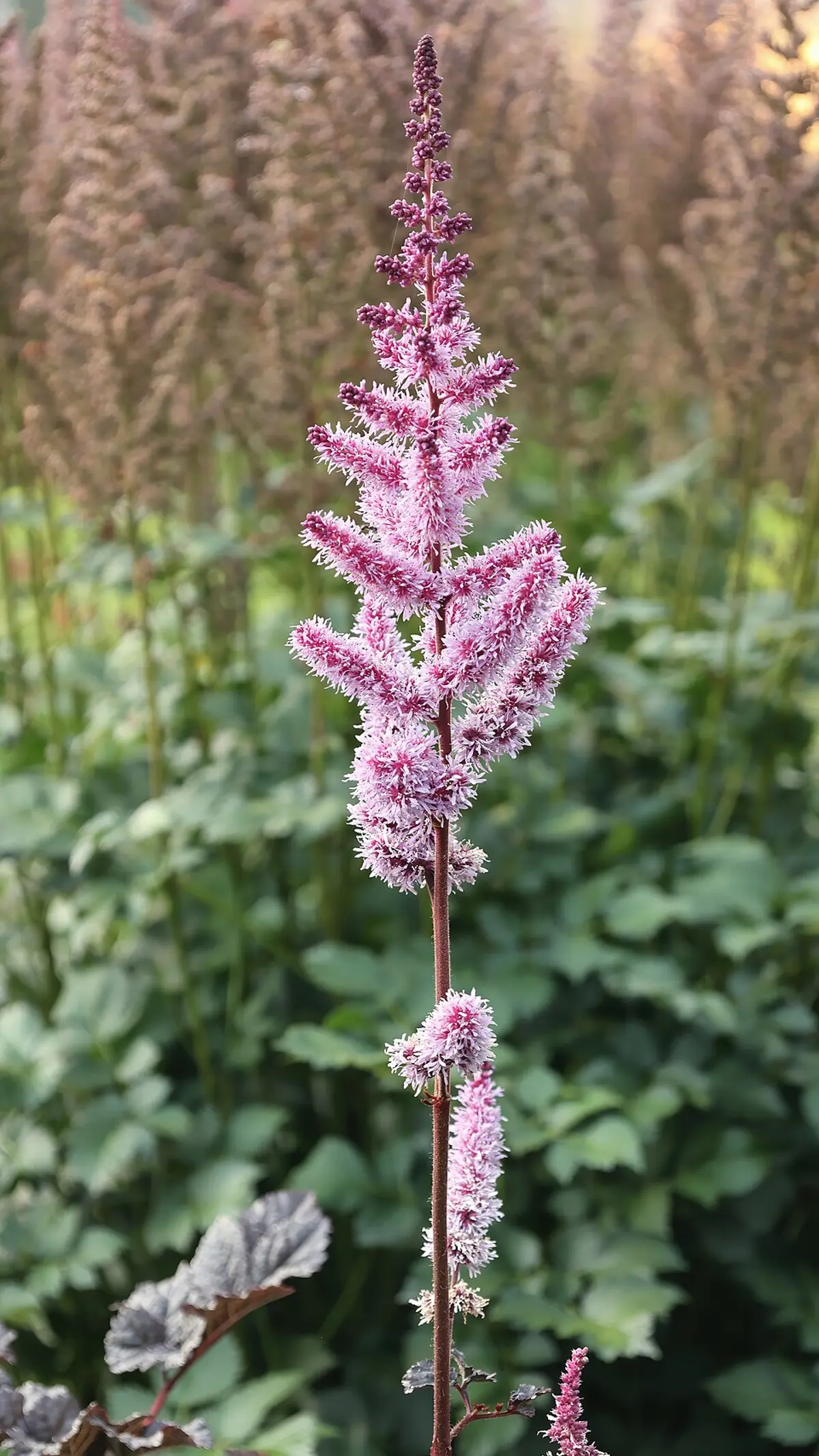
Astilbe 'Dark Side of the Moon'
Astilbe chinensis 'Dark Side of the Moon'
A shade-loving astilbe with near-black, glossy foliage and dusky pink-purple plumes that light up damp, shaded corners of the garden in summer.
Keep reading Show less
Astilbe chinensis ‘Dark Side of the Moon’ pairs feathery, dusky pink-purple flower plumes with strikingly dark, glossy foliage — a rare astilbe selection where the leaves are as much of a draw as the bloom. It’s a reliable choice for adding texture and season-long color to the shady, damp spots where many other perennials struggle.
A thirsty shade lover
Like all astilbes, this hybrid wants consistent moisture. It’s not a plant to tuck into a dry shade bed and forget — give it rich, humus-heavy soil that stays evenly damp, and it will reward you with dense plumes over near-black foliage from mid- to late summer. A layer of mulch helps retain moisture through hot spells.
Care tips
Plant in partial to full shade with some morning sun if the soil can keep up. Water deeply during dry stretches rather than letting the soil dry out between waterings. Cut back spent flower stalks in late winter or early spring, and divide congested clumps every three to four years to keep them vigorous.
Fun Fact
'Dark Side of the Moon' is a hybrid selection prized as much for its near-black, glossy leaves as for its flowers — the foliage holds its dark color from spring through fall, long after the summer plumes have faded.
Habitat & form
Where it's from and what to expect.
- Native range
- Garden hybrid; parent species native to China, Japan, and Korea
- Plant type
- Perennial
- Mature size
- Reaches roughly 18–24 in. tall and wide in flower.
- Bloom
- Feathery plumes appear in mid- to late summer above dark, almost purple-black foliage.
- Hardiness
- USDA zones 4–9.
Care
How to keep it happy.
- Sunlight
- Partial to full shade; some morning sun is fine if the soil stays moist.
- Water
- Keep consistently moist; astilbes are thirsty plants and will scorch or wilt quickly in dry soil.
- Soil
- Rich, humusy, well-drained soil that holds moisture; add compost to sandy soil.
- Planting distance
- 18–24 in apart.
- Propagation
- Divide in spring or fall
- Pruning
- Cut back flower stalks and foliage after they fade, or leave the seed heads for winter interest; divide clumps every 3–4 years in early spring.
- Pet safety
- Non-toxic