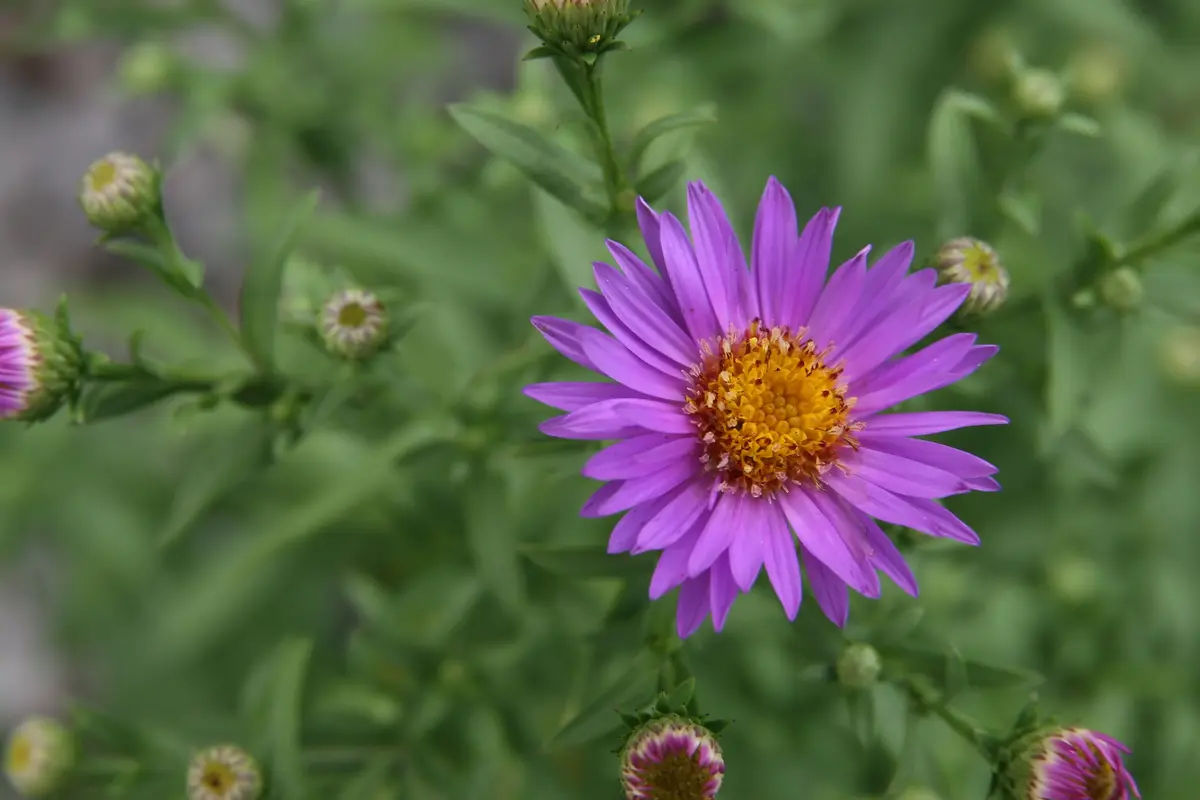
Aster 'Wood's Purple'
Symphyotrichum 'Wood's Purple'
A compact, mildew-resistant New York aster that smothers itself in small violet-purple daisies from late summer into fall, a favorite last stop for pollinators before winter.
Keep reading Show less
Symphyotrichum ‘Wood’s Purple’ is a compact New York aster that erupts into a mound of small violet-purple daisies just as most of the garden is winding down, providing one of the last big pollinator meals of the season.
Bred to stay clean and compact
Taller, older aster varieties are notorious for powdery mildew by late summer. ‘Wood’s Purple’ belongs to the “Wood’s” series, bred specifically to resist that disease while staying dense and compact — no staking or pinching required to keep it tidy.
Care tips
Plant in full sun in average, well-drained soil with good air circulation to further discourage mildew. Water regularly, especially during dry spells, though established plants tolerate some drought. Cut the plant back to the ground after it finishes flowering, and divide congested clumps every two to three years in spring to keep it vigorous and floriferous.
Fun Fact
'Wood's Purple' belongs to the 'Wood's' series of dwarf New York asters, bred specifically for strong resistance to powdery mildew — a problem that plagues many taller, older aster varieties by late summer.
Habitat & form
Where it's from and what to expect.
- Native range
- Garden cultivar of species native to eastern North America
- Plant type
- Perennial
- Mature size
- Compact mound, 12–18 in. tall and wide.
- Bloom
- Violet-purple daisy flowers with yellow centers from late summer to fall.
- Hardiness
- USDA zones 4–8.
Care
How to keep it happy.
- Sunlight
- Full sun.
- Water
- Medium moisture; regular water is best, though it tolerates some drought once established.
- Soil
- Average, well-drained soil; tolerates clay, sandy, and loam soils. Good air circulation reduces disease.
- Planting distance
- 12–18 in apart, based on mature spread.
- Propagation
- Divide in spring
- Pruning
- Cut to the ground after flowering; divide clumps every 2–3 years in spring to maintain vigor.
- Pet safety
- Non-toxic