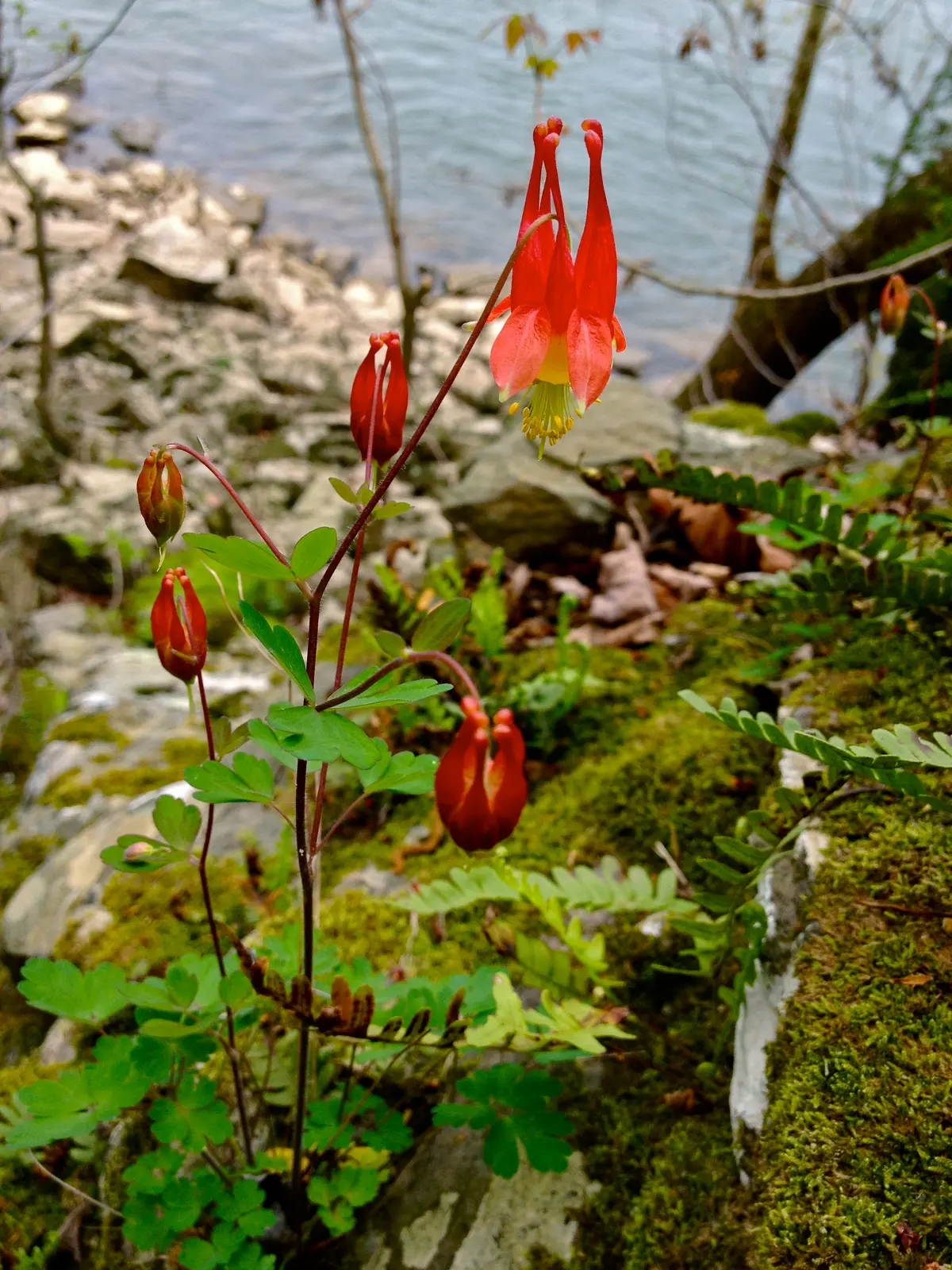
Eastern Red Columbine
Aquilegia canadensis
A dainty native woodland wildflower with nodding red-and-yellow bell flowers on wiry stems, a magnet for hummingbirds in spring.
Keep reading Show less
Aquilegia canadensis, or eastern red columbine, is a native woodland wildflower found from Canada south to Florida and west to Texas. It brings a light, airy presence to shady borders and rock gardens, with delicate compound foliage and nodding, spurred flowers held on wiry branching stems.
Spring color for hummingbirds
In April and May, columbine sends up loose sprays of nodding, bell-shaped flowers — red sepals and spurs surrounding a yellow center — that dangle above the foliage like little lanterns. The long spurs store nectar that only long-tongued visitors like hummingbirds and certain bees and moths can reach, making this an excellent early-season nectar source just as hummingbirds arrive from migration.
Care tips
Columbine prefers organically rich, moist, well-drained soil in partial or dappled shade, such as a woodland edge, though it tolerates full sun if kept consistently moist. It’s drought tolerant once established and largely pest-free, showing good resistance to deer, rabbits, and columbine leaf miner. Deadhead spent flowers to tidy the plant and encourage a bit of rebloom, and don’t be surprised if it self-seeds — established colonies will fill in nearby open ground over a few seasons.
Fun Fact
Eastern Red Columbine was named North Carolina's Wildflower of the Year in 1987. Its nodding red-and-yellow flowers are a favorite of hummingbirds returning north in spring, and the plant self-seeds readily to form loose colonies.
Habitat & form
Where it's from and what to expect.
- Native range
- Eastern and central North America
- Plant type
- Perennial
- Mature size
- 1–3 ft tall, roughly 1–1.5 ft wide.
- Bloom
- Nodding, bell-shaped red-and-yellow flowers with long backward-pointing spurs, in mid-spring.
- Hardiness
- USDA zones 3–8.
Care
How to keep it happy.
- Sunlight
- Partial or dappled shade is ideal, as at a woodland edge; tolerates full sun where soil stays consistently moist.
- Water
- Regular water to establish; drought tolerant once rooted in. Avoid soggy, poorly-drained soil.
- Soil
- Organically rich, moist, well-drained soil. Adaptable to loam, sand, or rocky ground, and tolerant of a wide pH range.
- Planting distance
- 12–18 in apart.
- Propagation
- Readily grown from seed
- Pruning
- Deadhead for tidiness and possible rebloom. Foliage can be cut back if it declines in summer heat — it regrows the following spring.
- Pet safety
- Mildly toxic
Seeds and roots most toxic; rest of plant may also cause upset