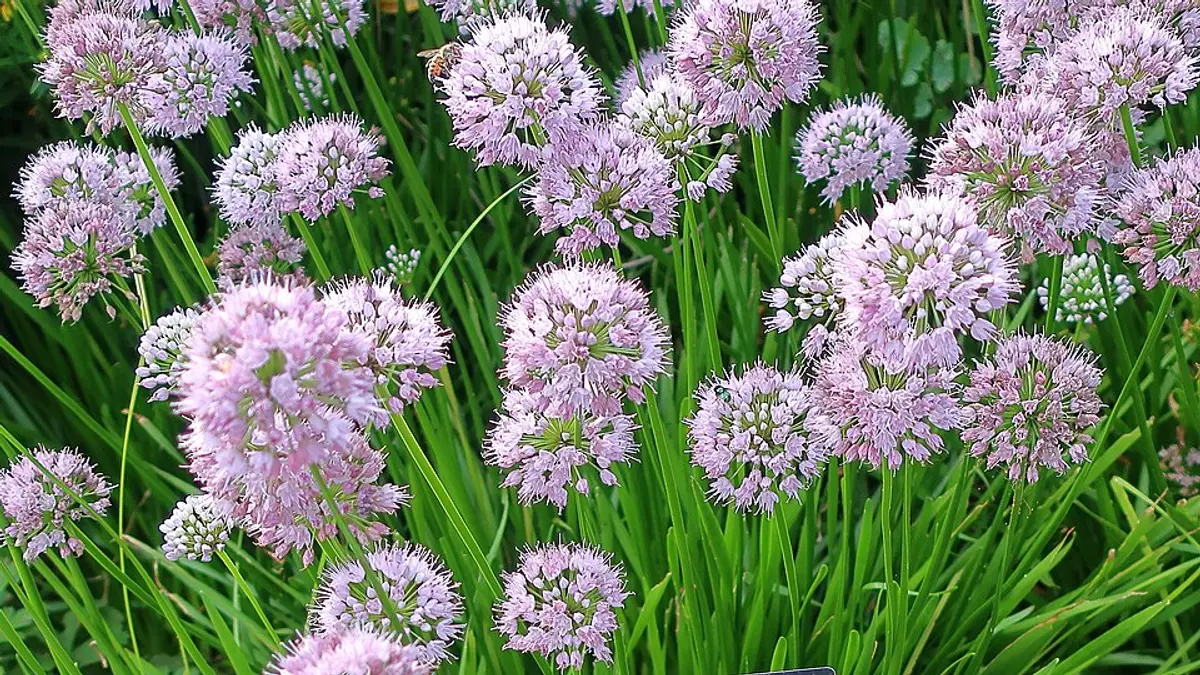
Allium 'Avatar'
Allium tanguticum 'Avatar'
A patented ornamental onion prized for its long-lasting, rounded lavender-pink flower clusters atop clumps of narrow, grass-like foliage from mid to late summer.
Keep reading Show less
Allium tanguticum ‘Avatar’ is a patented ornamental onion valued for its long season of rounded, lavender-pink flower clusters held above clumps of narrow, grass-like foliage. It blooms reliably from mid-summer into early fall, well after most spring-flowering alliums have finished.
A bud sport with staying power
‘Avatar’ arose as a bud sport of the popular ‘Summer Beauty’ allium — a spontaneous genetic variant discovered growing on an otherwise typical plant. Once its distinct, more compact habit proved stable through propagation, it was released and patented in its own right. The two cultivars share the same easy care and long bloom time.
Care tips
Plant in full sun to partial shade in average, well-drained soil. Water regularly the first season to help it settle in, then it tolerates brief dry spells without complaint. Deadhead spent flower clusters through the season to keep the planting tidy, and cut the foliage back once it yellows in fall.
Fun Fact
'Avatar' is a bud sport of the popular 'Summer Beauty' ornamental onion — a spontaneous genetic variant discovered growing on an otherwise typical plant and propagated separately once its distinct traits proved stable, and it's protected under U.S. Plant Patent.
Habitat & form
Where it's from and what to expect.
- Native range
- Central Asia (parent species); this cultivar originated as a bud sport in cultivation
- Plant type
- Perennial
- Mature size
- About 15–18 in. tall and wide.
- Bloom
- Rounded, lavender-pink flower clusters from mid-summer into early fall.
- Hardiness
- USDA zones 4–8.
Care
How to keep it happy.
- Sunlight
- Full sun to partial shade.
- Water
- Average water needs; tolerates brief dry spells once established.
- Soil
- Average, well-drained soil.
- Planting distance
- 12–18 in apart.
- Propagation
- Divide bulb offsets in fall
- Pruning
- Deadhead spent flower heads to tidy the planting; cut foliage back after it yellows in fall.
- Pet safety
- Highly toxic
All parts toxic in all forms (bulbs, leaves, raw, cooked, dried)