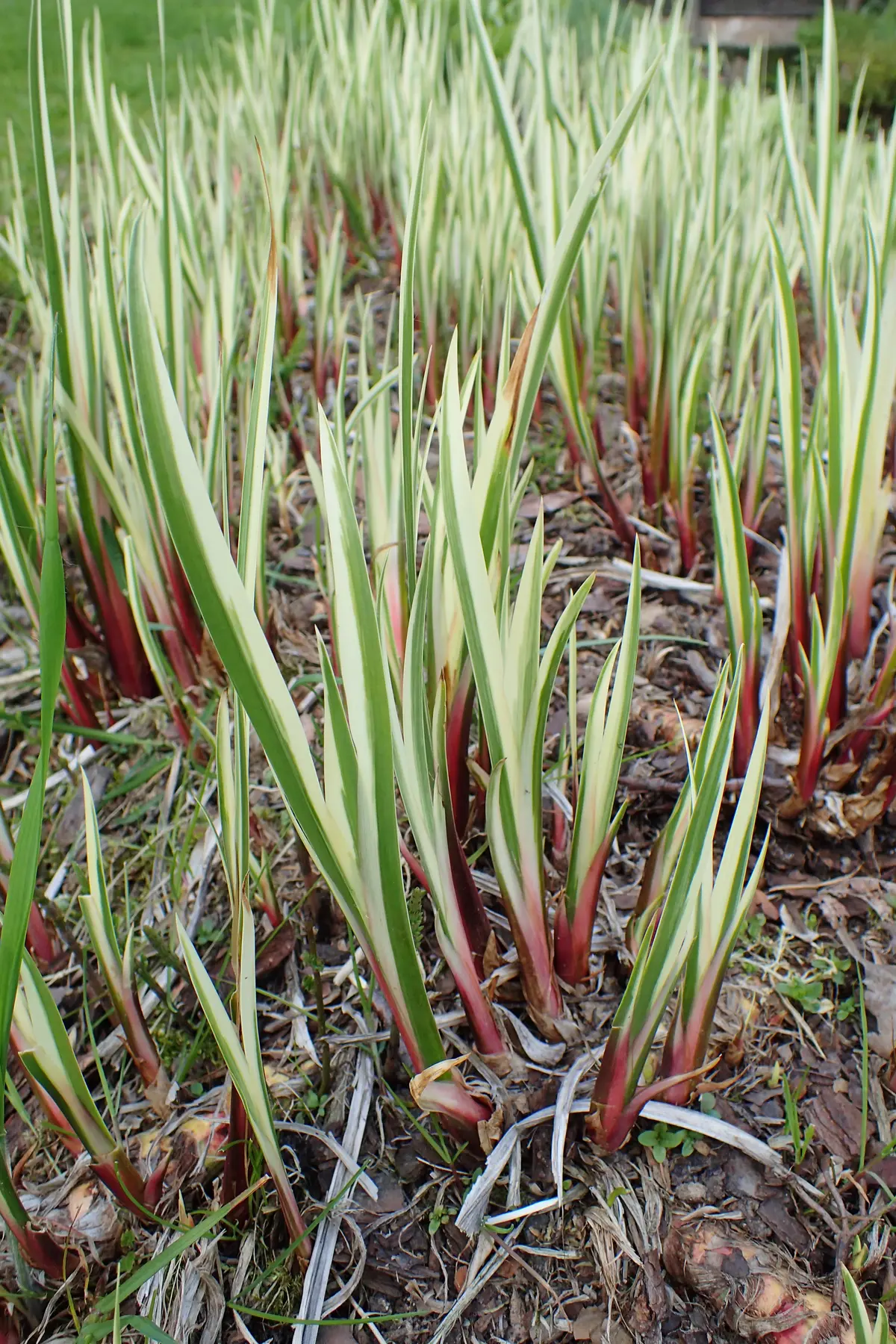
Variegated Sweet Flag
Acorus calamus 'Variegatus'
A moisture-loving, iris-like perennial with fragrant, sword-shaped leaves striped in cream and green — an accent plant for pond margins, rain gardens, or any spot that stays reliably wet.
Keep reading Show less
Acorus calamus ‘Variegatus’ — variegated sweet flag — is a clumping, rhizomatous perennial grown for its narrow, arching, sword-shaped leaves striped boldly in cream and green, with reddish leaf bases that add color even before the foliage unfurls. It reads like an ornamental grass or a small iris, but is happiest with far wetter feet than either.
A plant for wet ground
Sweet flag is a true wetland plant: it wants consistently moist to downright boggy soil and tolerates a few inches of standing water, making it a natural for pond margins, rain gardens, low spots that never quite dry out, or containers set in shallow water. Full sun brings out the strongest variegation, though some afternoon shade is welcome in hot climates to keep the leaf tips from scorching.
Care tips
The single non-negotiable is moisture — this is not a plant to let dry out, even briefly. Beyond that it is easygoing: average fertility is fine as long as the site stays wet, it has no serious pests or diseases, and deer generally leave it alone. Clean up any winter-damaged foliage in early spring, and divide the clump every few years once it becomes congested.
Fun Fact
Bruise or crush the foliage and it releases a sweet, spicy fragrance — the source of both the common name 'sweet flag' and the historical use of its rhizomes in perfumes and traditional remedies. Despite the grassy, iris-like leaves, Acorus is actually more closely related to philodendrons than to true grasses or irises.
Habitat & form
Where it's from and what to expect.
- Native range
- Species native to wetlands across North America, Europe, and Asia; this variegated form is a garden selection
- Plant type
- Perennial
- Mature size
- Clumping habit, 2–3 ft tall and 1.5–2 ft wide, spreading slowly by rhizomes.
- Bloom
- Flowers are small and insignificant; grown for its variegated, fragrant foliage rather than bloom.
- Hardiness
- USDA zones 4–11.
Care
How to keep it happy.
- Sunlight
- Full sun to part shade; give afternoon shade in hot climates to prevent leaf scorch.
- Water
- Keep consistently moist to wet; thrives in boggy soil or even a few inches of standing water. Leaf tips scorch if it's allowed to dry out.
- Soil
- Fertile, humus-rich, organic soil; tolerates average garden soil as long as moisture is constant. Prefers pH about 5.5–7.5.
- Planting distance
- 18–24 in apart.
- Propagation
- Divide clumps in spring
- Pruning
- Maintenance: low. Cut back winter-damaged or spent foliage in early spring, and divide congested clumps every few years.
- Pet safety
- Mildly toxic